




Improving and perfecting the regulations for the development of gas, power projects and energy storage systems in Vietnam for the period 2026 – 2030
12:37 | 26/04/2026
Opening the Forum, Mr. Nguyễn Anh Tuấn, First Vice Chairman and Secretary General of the Vietnam Energy Association, welcomed delegates and congratulated Dr. Nguyễn Thị Thanh Bình, Vice Chairwoman of the Association, on being elected as a member of Vietnam’s 16th National Assembly for the period 2026 - 2031.
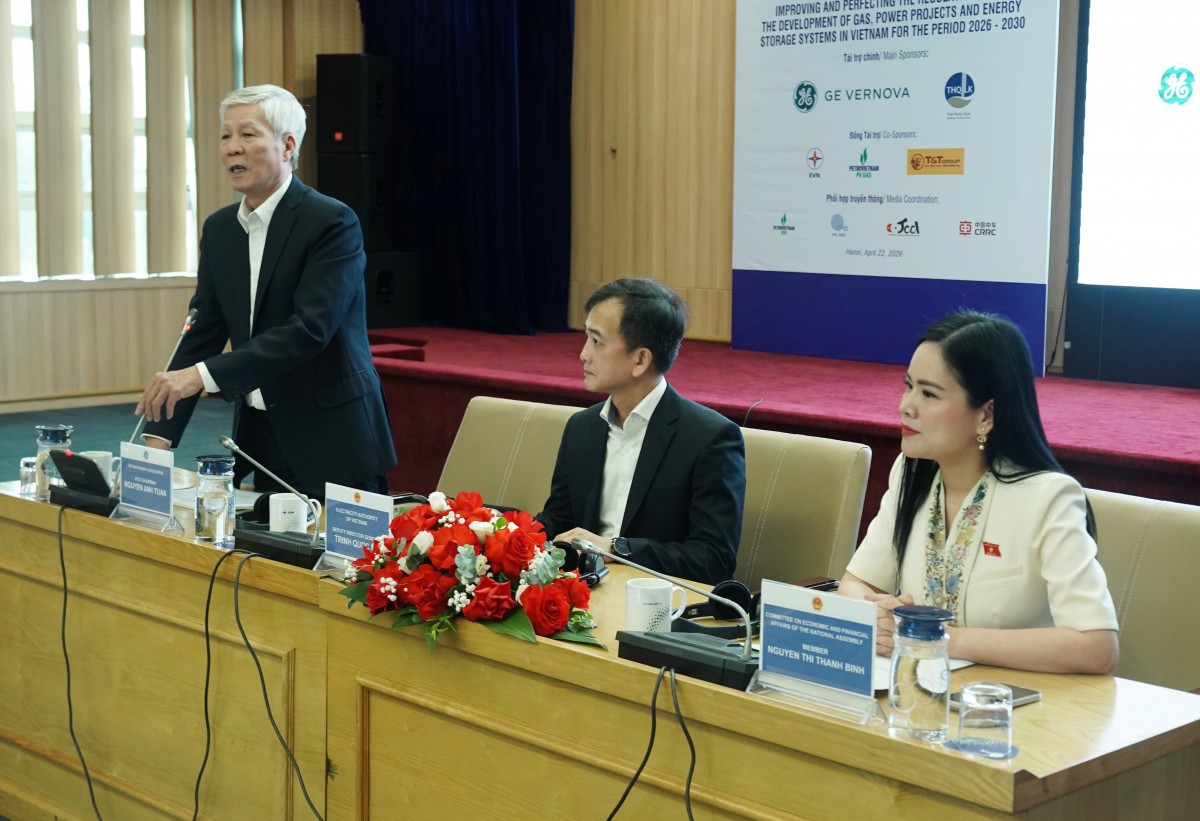 |
| The Forum Presidium. |
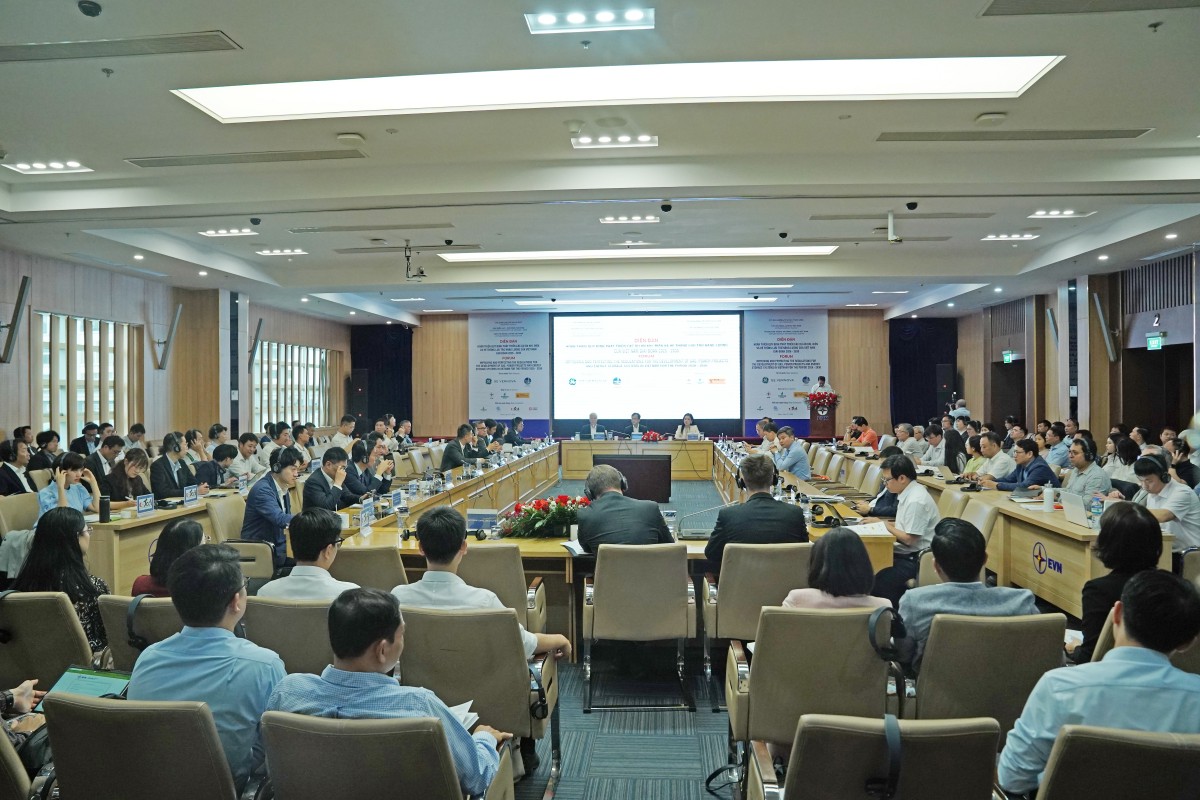 |
| Overview of the Forum. |
In his opening remarks, Mr. Trinh Quoc Vu, Deputy Director General of the Electricity Authority of Vietnam, emphasized that Vietnam is advancing toward Net Zero. To increase the share of renewables in line with national targets, renewable energy deployment must be supported by Battery Energy Storage Systems (BESS) and LNG-to-power projects.
He noted that investment in BESS and imported LNG power projects still faces challenges, as regulatory mechanisms have yet to keep pace with market signals. The Ministry of Industry and Trade, through the Electricity Authority, is working on solutions and new regulations to ensure sufficient power supply for double-digit economic growth.
The forum also served as a platform for stakeholders to exchange experiences, hold open discussions, and identify practical solutions aligned with Vietnam’s legal framework.
 |
| Mr. Trinh Quoc Vu, Deputy Director General of the Electricity Authority of Vietnam. |
Opening the forum’s presentation session, Mr. Nguyen Quang Minh, Head of Electricity Market and Power System Department at the Electricity Authority of Vietnam, presented on Improving and developing the electricity market to promote LNG-to-power development.
According to the Electricity Authority, electricity is a special commodity that requires a real-time balance between supply and demand, so policy design must balance stakeholder interests while ensuring the power market operates under transparent and fair rules. Although the market was established 14 years ago - before large-scale renewables - its core goals remain unchanged: reasonable electricity prices, reduced monopoly, and greater transparency.
He noted that the Qc mechanism should not be viewed as a take-or-pay model like past BOT projects, nor as the sole solution for LNG challenges. The presentation also clarified two key concepts: BNE (Best New Entrant power plant) and CAN (capacity pricing mechanism for BNE plants), while acknowledging that current CAN mechanisms remain limited and need improvement.
A key message was that LNG should be viewed not just as a power source, but as part of an integrated energy infrastructure chain. LNG power has a strategic role, supporting baseload when needed today and potentially serving peak demand in the future, but faces high costs and geopolitical risks. To improve viability, costs and risks should be reduced across the value chain, including shared infrastructure such as ports and terminals, rather than concentrating risk in Power Purchase Agreements (PPAs).
Looking ahead, the Electricity Authority plans to review planning assumptions, revise minimum Qc requirements, update standard PPAs, improve BNE and CAN mechanisms, and study a dedicated Capacity Market Mechanism (CAM) for LNG power.
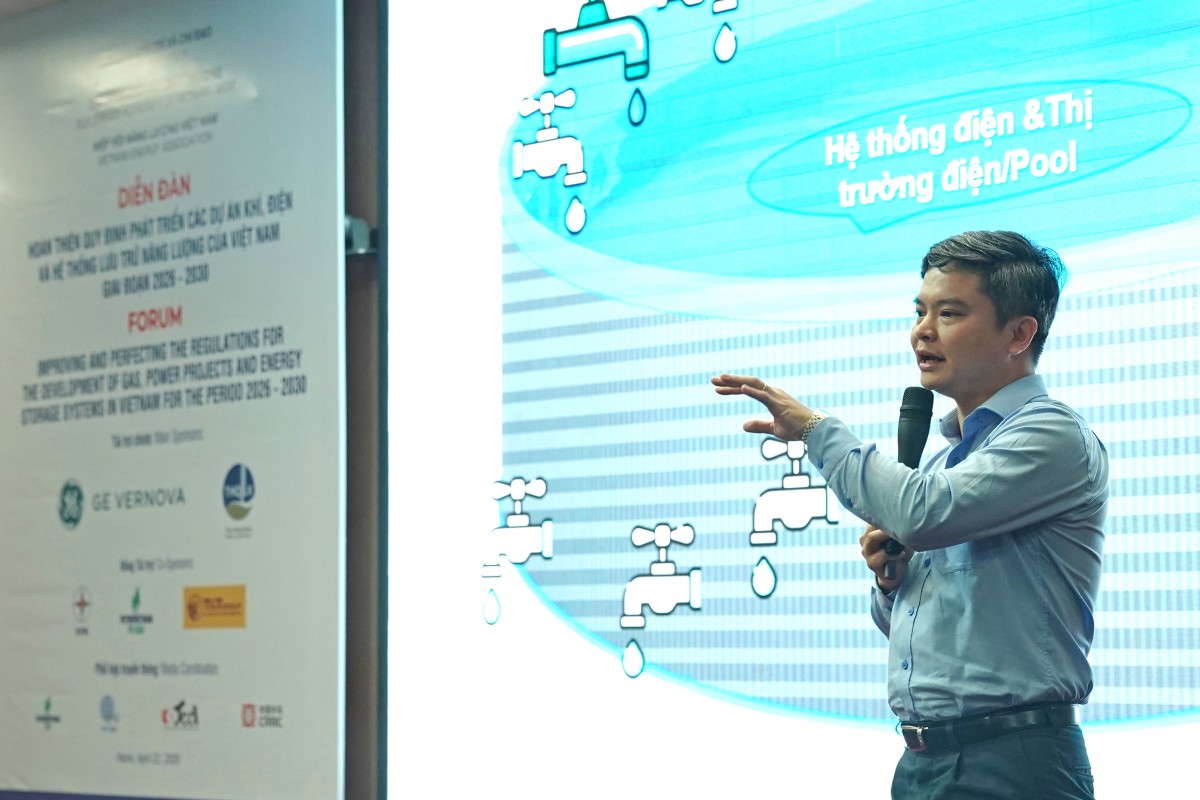 |
| Mr. Nguyễn Quang Minh, Head of Electricity Market and Power System Department at the Electricity Authority of Vietnam |
Ms. Shanshan Liang, Technology Specialist for Aero Gas Turbines at GE Vernova, presented A Pathway to support energy transition in Viet Nam: Flexible Power & Grid Firming with Aeroderivative Gas Turbine.
From GE Vernova’s perspective, as Vietnam’s power demand grows, ensuring reliability and grid stability is increasingly critical. The company highlighted aero-derivative gas turbines as a flexible solution, capable of reaching full output in just five minutes from a cold start. With a modular, containerized design, systems can be deployed rapidly, while still achieving over 40% efficiency in simple-cycle operation and readiness for future hydrogen use.
Mobile modular systems such as TM2500 and LM2500XPRESS are positioned as effective solutions to balance renewable intermittency, support grid stability, enable fast ramping, flexible dispatch, and lower emissions - making them well aligned with growing renewable integration and future gas power optimization.
GE Vernova also emphasized that even solar paired with BESS cannot fully ensure a continuous power supply due to daily and seasonal solar variability, while gas turbines can help address both short-term and seasonal supply gaps.
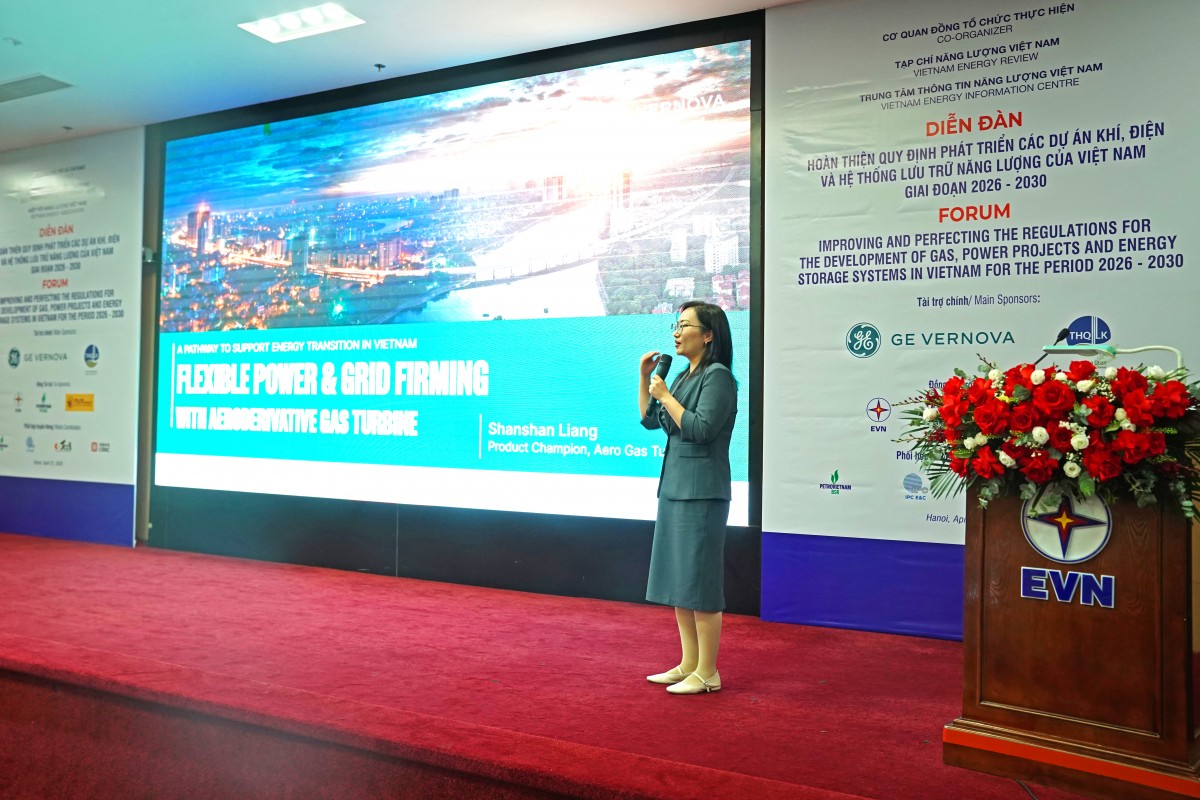 |
| Ms. Shanshan Liang, Technology Specialist for Aero Gas Turbines at GE Vernova |
Building on the LNG discussions, experts from the Asia Zero Emission Community and a group of Japanese companies presented Recommendations for removing obstacles for urgent development of Gas/LNG to Power Projects & necessity of long-term basis LNG procurement. A key recommendation was the need to establish a Capacity Availability Mechanism (CAM) for LNG power.
Speakers noted that with an effective CAM in place, LNG delivery schedules should not be rigidly tied to the 65% Qc requirement, but should allow greater flexibility based on actual operating conditions and demand forecasts. This is critical given the significant penalties associated with failing to receive LNG cargoes or causing vessel delays, while poor planning could also lead to fuel shortages for power generation.
The presentations stressed that CAM and a fuel cost pass-through mechanism are two fundamental, interdependent mechanisms needed to support long-term LNG contracting for gas-to-power projects. They also outlined around 11 critical issues that, if unresolved, could undermine investor and lender confidence and hinder project financing.
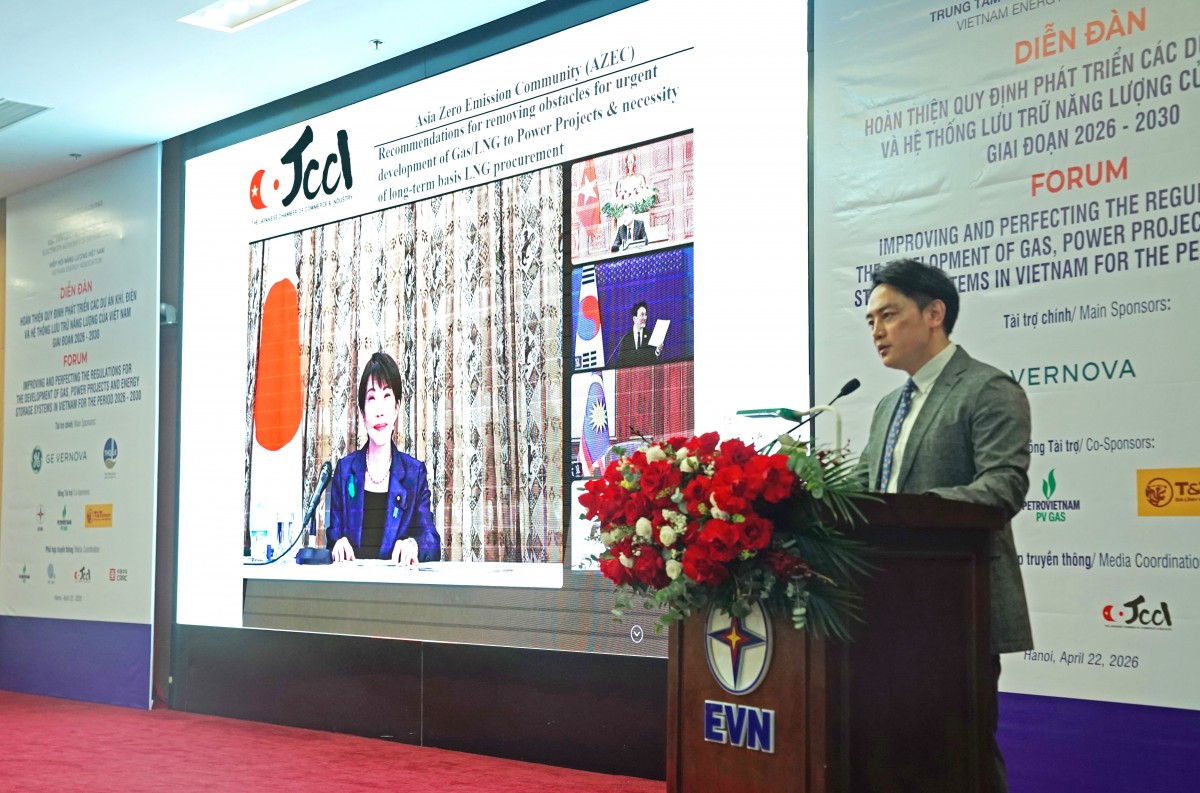 |
| Mr. Tomoya Kawabata - Deputy General Director of Operations - Marubeni Asian Power Vietnam and General Director - O Mon 2 Power Company Limited. |
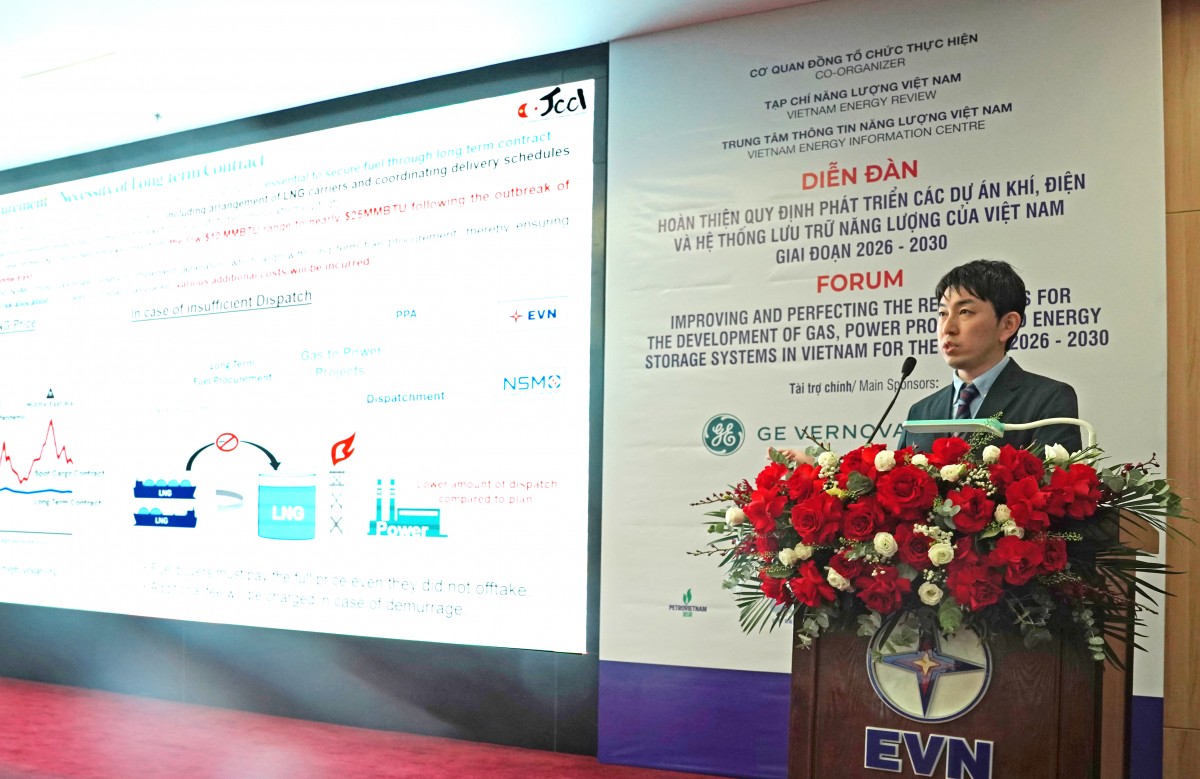 |
| Mr. Kota Nakamura - Deputy Chief Representative - Tokyo Gas Asia PTE. Ltd Representative Office in Hanoi. |
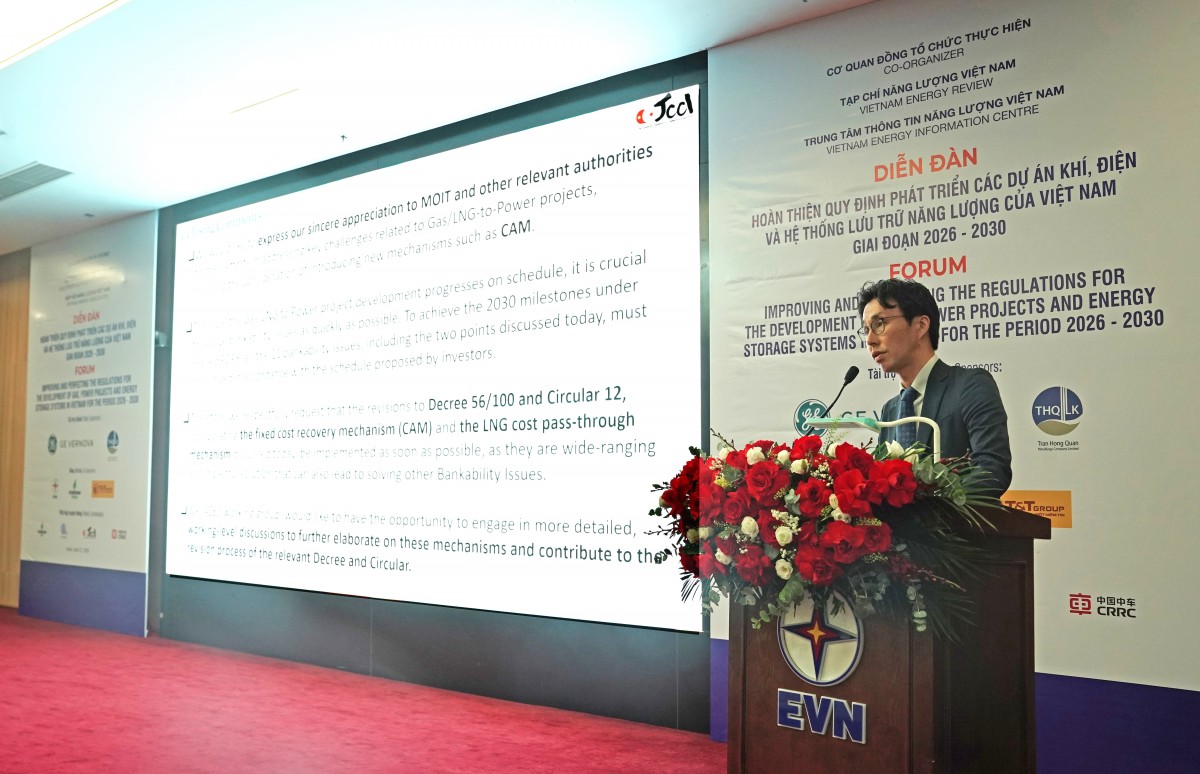 |
| Mr. Teppei Fukuhara - Counselor of the Japanese Embassy, concluding the presentation. |
Concluding the gas-to-power session, Mr. Hồ Diên Vượng, Deputy Director of LNG Trading Branch at PV GAS, presented on Solutions to ensure LNG supply for power plants under PDP VIII amid geopolitical and global economic challenges.
He highlighted growing risks to LNG supply, including disruptions linked to geopolitical conflicts, and noted that even after conflicts end, supply recovery can take weeks. Proposed solutions included diversifying LNG sources and developing major supply hubs, led by large state-owned enterprises with integrated terminal infrastructure, to centralize LNG sourcing and trading.
Against a volatile global LNG market, he stressed the need for long-term import strategies alongside investment in storage, port, and gas distribution infrastructure. To support fuel supply planning, LNG power developers also proposed approval of fuel cost pass-through mechanisms and take-or-pay coverage of 75-80%.
The core message was clear: without a secure LNG supply, sustainable LNG-to-power development is not possible.
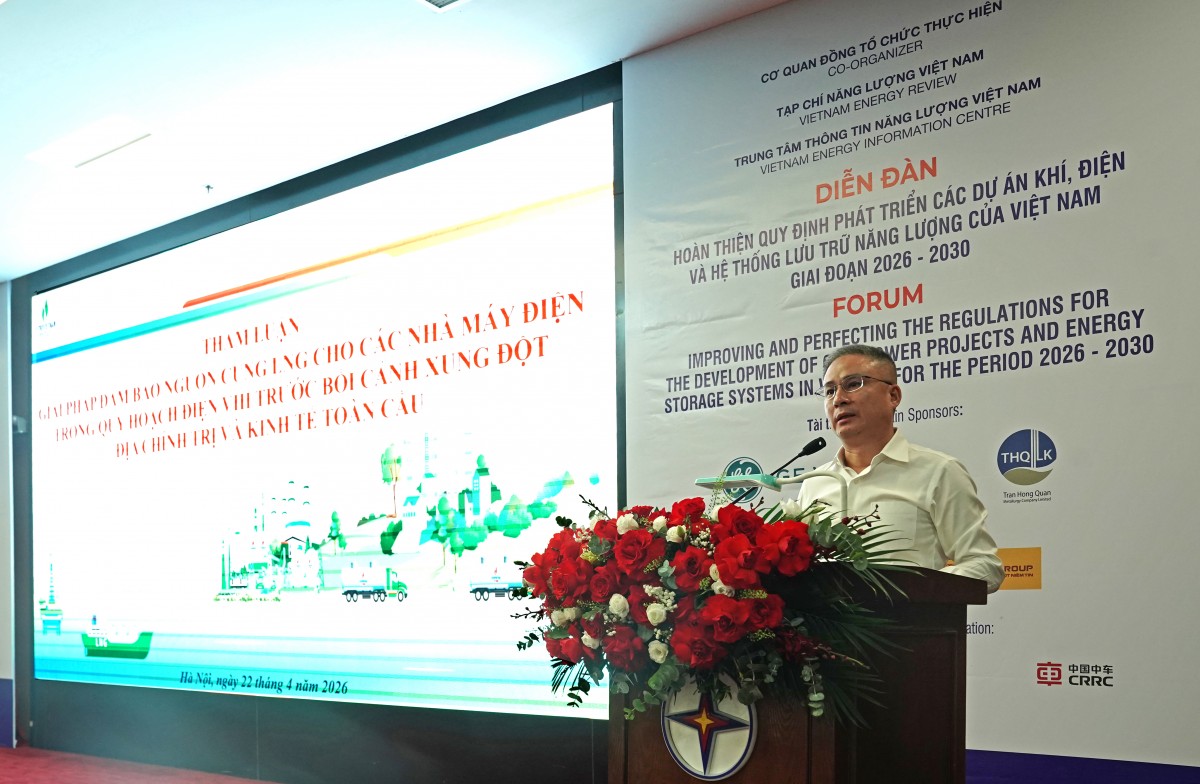 |
| Mr. Ho Dien Vuong, Deputy Director of LNG Trading Branch at PV GAS. |
Shifting to the energy storage session, Mr. Nguyễn Anh Tú, Deputy Head of Planning at Vietnam Electricity, presented Solutions for deploying energy storage systems (BESS) of EVN towards 2030.
EVN outlined a 2030 target of 10,000–16,300 MW of BESS, with the most urgent demand in northern Vietnam. The utility has identified sites for around 1.3 GW of installations, mainly at substations. BESS is expected to serve five key functions: peak shaving, grid congestion relief, frequency regulation, voltage support, and optimizing renewable integration.
He highlighted five major barriers to deployment: defining appropriate BESS scale by application, operational challenges, technical standards, investment capital, and regulatory mechanisms. Additional challenges include accounting for around 15% charge-discharge losses within transmission loss targets, as well as issues related to safety, environmental requirements, financing, and investment structures.
EVN is working with the National System and Market Operator to assess BESS deployment needs and operations. Plans include 300–400 MW in 2026, primarily in Hanoi and northern provinces, scaling to 800 MW by 2027, while studying up to 2,000 MW as a minimum system requirement during 2026–2030.
The presentation also outlined implementation bottlenecks and proposed six recommendations for the Ministry of Industry and Trade to consider in supporting BESS development.
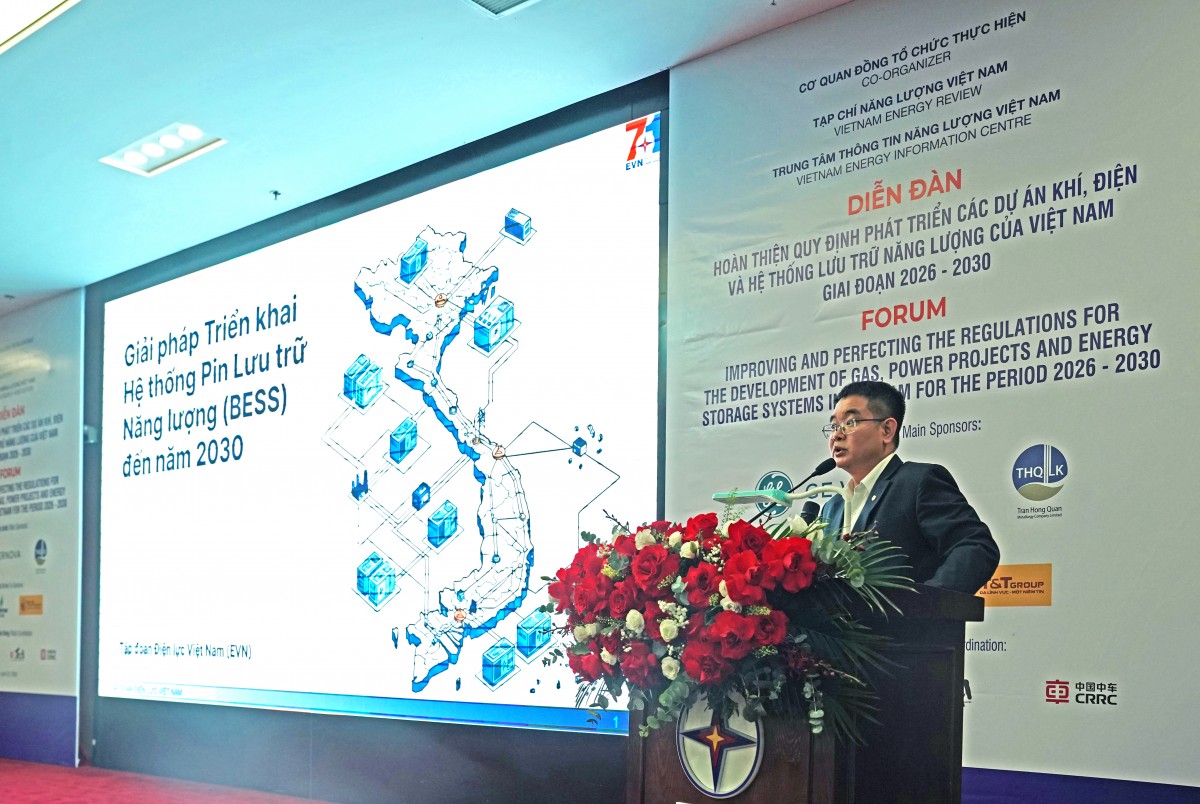 |
| Mr. Nguyen Anh Tu, Deputy Head of Planning, Vietnam Electricity. |
Mr. Nguyen Ngoc Tu, Business Development and Project Director at IPC Construction JSC, presented on the Current Status of Energy Storage Development and Proposed Solutions for Vietnam.
Drawing from IPC’s experience deploying BESS alongside renewables and behind-the-meter applications, he noted that storage technologies are evolving rapidly across multiple pathways, requiring continuous tracking of commercialization trends.
A key challenge raised was the absence of a clear electricity pricing mechanism for BESS, while investment costs remain high, around USD 150,000/MWh, limiting project bankability. His central message was clear: without storage, renewable energy cannot scale sustainably.
IPC’s recommendations focused on improving the legal framework, establishing pricing mechanisms, and accelerating the development of the ancillary services market to support BESS deployment.
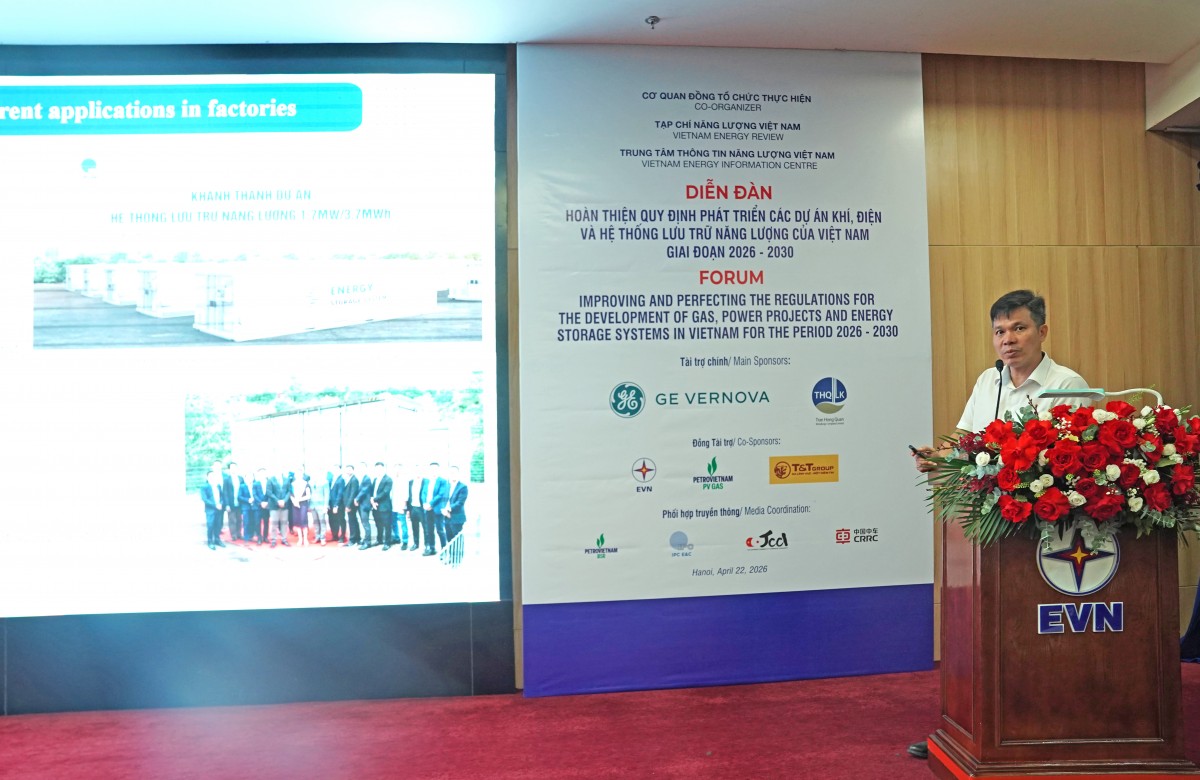 |
| Mr. Nguyen Ngcc Tu, Business Development and Project Director, IPC Construction JSC. |
Mr. Zhao Yue, Director of International Service Supply Center at CRRC BESS, presented CRRC BESS Technology Empowering Vietnam’s Energy Transition.
He introduced CRRC’s experience beyond rail manufacturing, including supplying metro systems in Phu Quoc and diesel locomotives for Vietnam, while highlighting the company’s Zhuzhou Institute as a provider of large-scale BESS solutions in China and internationally, including projects in Uzbekistan, Bulgaria, and Germany. This includes one of China’s largest storage projects at 500 MW / 2,000 MWh.
The presentation emphasized that energy storage is not only critical for balancing supply and demand but also a key enabler of smart grid development. Drawing from China’s experience, he noted BESS has evolved from an initial phase where storage was mandated alongside renewables to a second phase where both operate under market-based mechanisms.
CRRC also highlighted its ability to provide end-to-end BESS solutions, including potential project financing support, with systems designed to meet high fire safety standards.
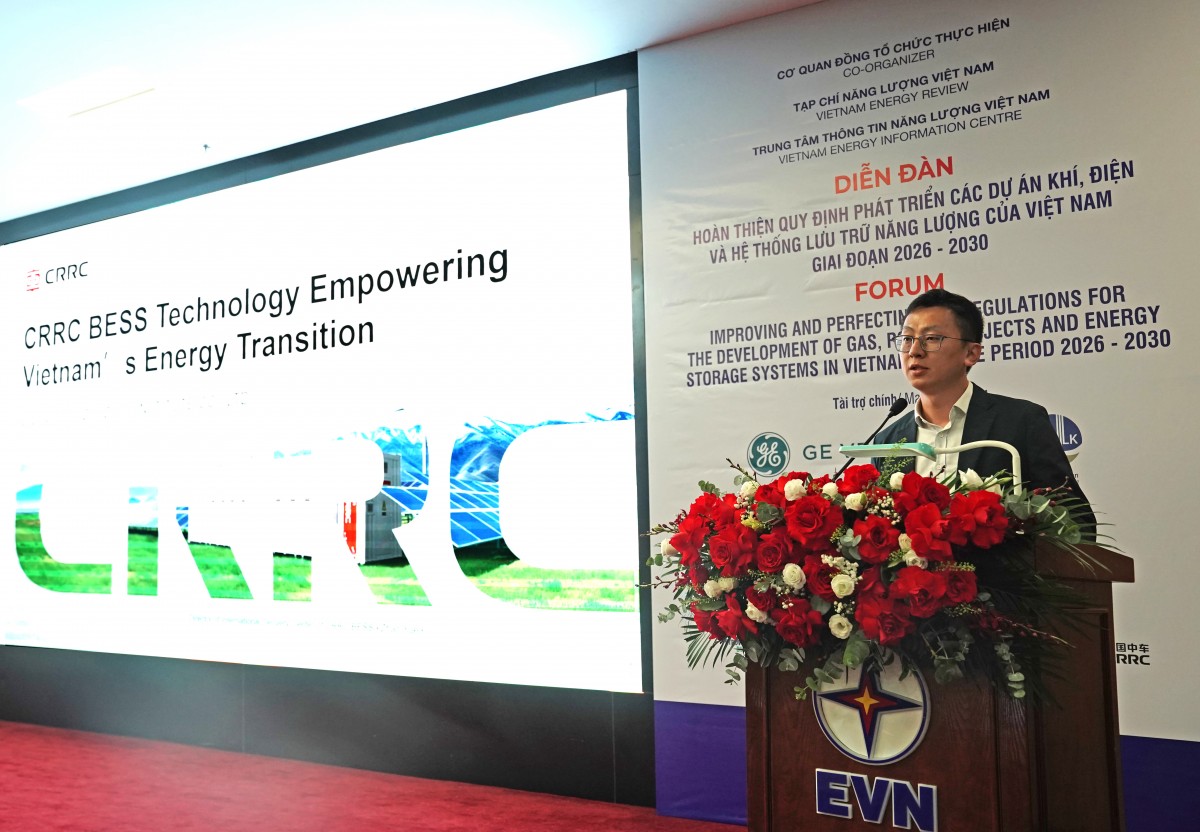 |
| Mr. Zhao Yue, Director of International Service Supply Center, CRRC BESS. |
In the forum’s final presentation, Mr. Nguyen Van Thien, Deputy CEO of GG Power, shared Solutions for Developing and Mastering Vietnamese-Branded Energy Storage (BESS) Technology.
Representing one of the first Vietnamese companies with a domestic BESS manufacturing plant, he highlighted GG Power’s efforts toward technology self-reliance, including contributions to developing BESS technical standards in Vietnam. The company has developed in-house engineering capabilities for system design, configuration, and operations tailored to the Vietnamese market, rather than relying solely on imported standard configurations.
Its product portfolio ranges from 16 kWh residential systems to 261 kWh and 836 kWh industrial systems, and 5–6 MWh containerized solutions for grid applications. He also emphasized that the company’s Energy Management System (EMS) servers are located in Vietnam, enabling domestic data control and operational response. Mastering the technology, he noted, supports both cost reduction and long-term growth of Vietnam’s energy industry.
Looking ahead, GG Power plans to increase localization and develop battery recovery and recycling facilities serving not only its own systems, but the broader BESS market.
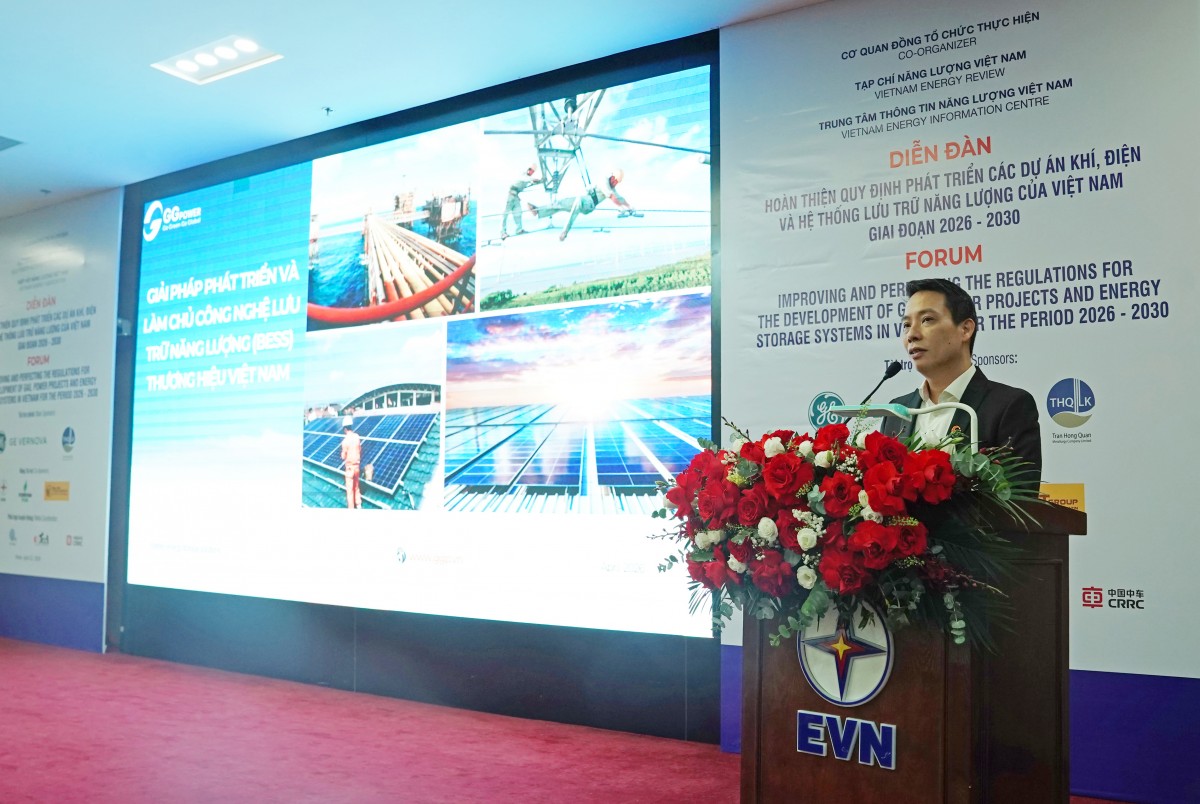 |
| Mr. Nguyen Van Thien, Deputy CEO of GG Power. |
In addition to the presentations delivered at the forum, the organizers also compiled several contributed papers from participating organizations and speakers. While these were not presented live due to time constraints, they were included in the official forum proceedings as part of the event’s knowledge base. These included:
1. Improving the Institutional Framework for Vietnam’s Gas-to-Power Value Chain: From Current Realities to Policy Recommendations - prepared by the Vietnam Energy Association.
2. Operation of Gas-Fired Power Plants in the Competitive Electricity Market - prepared by Petrovietnam.
3. From T&T Group’s Perspective: Improving Legal Mechanisms and Power Purchase Agreements to Unlock Challenges for the Hải Lăng LNG-to-Power Project (Phase 1) - prepared by T&T Group.
4. Assessment of Power Supply Sources for the Aluminum Electrolysis Complex in Lam Dong Province - prepared by Tran Hong Quan Metallurgy Co., Ltd..
5. Demand and Conditions for BESS Development in Vietnam - prepared by Vietnam Energy Review.
6. BESS Dispatch Mechanisms: A Driver for Energy Storage Development in Vietnam - prepared by Petrovietnam.
Panel Discussion:
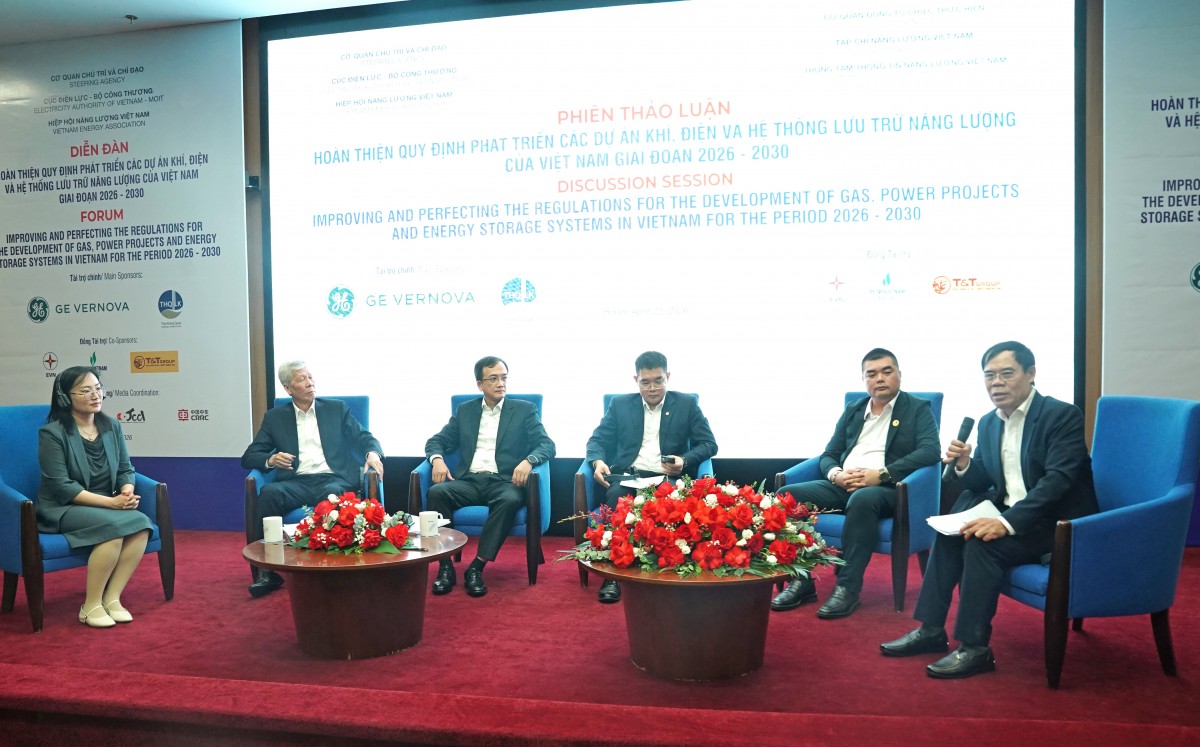 |
| Panelists in the Discussion Session. |
During the panel discussion, Mr. Nguyen Thai Son, Standing Vice Chairman of the Vietnam Energy Association, moderated the session, raising consolidated questions from participants to speakers and the forum presidium.
Question: What “breakthrough policies” will the Ministry of Industry and Trade introduce to encourage private and international investors to participate in large-scale gas-to-power projects? As new regulations are being drafted to replace Decree 56 and Decree 100/2025, what key issues are being prioritized for resolution? Will capacity payment mechanisms and fuel cost recovery mechanisms be central considerations, and what is the direction of these regulations?
Responding, Mr. Trinh Quoc Vu, Deputy Director General of the Electricity Authority of Vietnam, clarified that the 65% Qc level for LNG reflects a long-term average based on roughly 6,000 operating hours. He noted the Ministry is revising the two decrees to better address market realities. While some investors have proposed increasing Qc to 75–90%, extending commitments beyond 10 years, or introducing capacity pricing, the current 10-year Qc commitment has been aligned with typical project financing tenors.
He also stressed that as renewable penetration rises under Power Development Plan VIII, conventional thermal generation will run fewer hours and increasingly serve as balancing power when renewables are unavailable. In this context, LNG dispatch will depend partly on market conditions, with higher-price periods helping offset lower Qc utilization.
To improve project bankability, the Electricity Authority is studying mechanisms that allow investors to recover part of their capital through capacity payments, with the balance through the competitive market. Two options under consideration are: 65% Qc plus capacity payments (CAM), 75% Qc without capacity payments.
Question: EVN signs the PPA with power plant investors, but dispatch is managed by the National System and Market Operator - how would payment be handled if NSMO does not dispatch the plant?
Response: NSMO conducts dispatch based on fair, transparent, and non-discriminatory market rules, rather than operating in the interest of Vietnam Electricity alone.
Question: What institutional mechanisms still need to be improved regarding cost recovery and risk allocation?
Responding on behalf of the Vietnam Energy Association, Mr. Nguyễn Anh Tuấn noted that many of the key issues had already been raised during the forum, particularly by the Electricity Authority of Vietnam. He emphasized that expanding renewables requires firm supporting power sources, while current LNG regulations remain largely framework-level and need deeper refinement. A central point was that risks should be shared across stakeholders, rather than concentrated entirely in Power Purchase Agreements (PPAs). He noted the Ministry of Industry and Trade is considering improvement options to submit to the government, while stressing that, despite geopolitical disruptions, Vietnam still needs to advance diversified power development and attract foreign capital.
He also underscored that a Capacity Availability Mechanism (CAM) may offer greater advantages than simply increasing Qc levels.
Question: Some objectives of flexible generation appear to overlap with BESS in supporting grid stability and reliability. Why are aero gas turbines considered particularly suitable for flexible generation compared with other gas turbine technologies? And at what renewable penetration level does the system need flexible resources?
A representative from GE Vernova responded that flexible generation plays a critical role in maintaining system stability. Aero-derivative gas turbines are well-suited for this role because they can start rapidly at any time, provide rotational inertia, and handle frequent cycling, similar to aircraft engines that can start and stop multiple times a day. The company noted it offers different technologies to support varying grid needs.
The speaker emphasized that each technology has its role: BESS supports the grid, while flexible gas generation provides additional balancing and reliability services. As for renewable penetration levels requiring flexible resources, the threshold depends on system conditions and support requirements, but as a broad indication, once renewables exceed around 20% of the generation mix, flexible resources become increasingly necessary.
Question for PV GAS: What key assumptions and conditions underpin PV GAS’s LNG supply model in Vietnam, and what are its three main policy recommendations?
In response, PV GAS shared that it has already imported five LNG cargoes, providing initial operating experience for the model. The company expressed hope that sufficient demand can be aggregated to support five-year LNG supply contracts, while currently engaging with around 20 potential suppliers in negotiations.
PV GAS also noted that its LNG terminal and port infrastructure are operating safely and stably, with additional LNG terminal projects under study for future development. These developments were presented as foundational conditions supporting the expansion of Vietnam’s LNG supply ecosystem.
Question for Asia Zero Emission Community: Are CAM and a fuel cost pass-through mechanism truly the two prerequisite conditions for LNG project viability? How has Japan addressed this, and can LNG cargoes be redirected between destinations when needed?
The AZEC representatives reaffirmed that, as outlined in their presentation, both CAM and fuel cost pass-through are fundamental preconditions. In Japan, CAM is addressed through a capacity market mechanism, which helps support investment and system reliability.
They also noted that Japan’s large-scale storage capacity allows it to absorb fluctuations in LNG supply more effectively. While LNG cargo redirection is possible, if storage capacity is limited, rerouting vessels can incur very high differential costs.
Question: How is Vietnam Electricity approaching BESS investment and development, and what are the current barriers? Are the lack of detailed regulations and fire safety requirements the main procedural obstacles?
In response, EVN noted it has been proposing BESS investment since 2019, with these proposals now reflected in planning and linked with the Just Energy Transition Partnership mechanism. Distribution subsidiaries, including EVNHANOI and EVNNPC, are already moving forward with implementation. In Hanoi, five pilot projects totaling 50 MW have completed bidding evaluation.
EVN emphasized that while challenges exist, as previously outlined, they are not seen as the primary barriers preventing progress and can be gradually resolved. A key point made was that waiting for every regulation to be fully completed before acting would slow deployment too much.
Question for GG Power: How can the company increase BESS localization toward its targeted 52%?
A GG Power representative explained that battery cells, still not likely to be produced in Vietnam in the near term, account for 40–60% of BESS costs, and with current cell prices high, reaching 52% localization immediately is highly challenging. As a result, the company is pursuing a phased approach.
GG Power noted it has already gained control over system control technologies through technology transfer arrangements with foreign partners, and plans to expand localization through manufacturing mechanical components using domestic supply chains, drawing on experience built in other industries. The strategy is to increase local content gradually each year, which the company sees as essential for remaining competitive with international suppliers.
The company also raised concerns over potential low-quality BESS assemblies entering the market and called on regulators to strengthen quality control for BESS products.
Question and comment from Phạm Hoàng Lương, head of the Thermal Energy Systems Group at Hanoi University of Science and Technology:
He noted the forum focused on two key elements, BESS and LNG, both of which should be viewed as infrastructure assets supporting energy security. He also observed that LNG is often seen as a transition fuel toward Net Zero, with a possible longer-term shift to hydrogen and ammonia around 2040, raising questions about the economic lifespan of LNG power assets.
He further asked: if LNG operates mainly as flexible generation, with limited annual operating hours depending on seasonal needs, what electricity pricing model can ensure investment viability?
A representative from GE Vernova responded that flexible generation can provide multiple grid support services beyond energy production. If those services are appropriately compensated, investment can remain viable. Examples such as Australia and Hawaii were cited, where higher-value electricity market frameworks have supported the economics of AERO-GT turbine investments.
A representative from the Lam Dong Wind and Solar Power Association raised concerns that the investment environment for power generation remains challenging. A key point was the need to resolve the 173 outstanding renewable energy projects, warning that prolonged uncertainty could undermine investor confidence.
The speaker noted growing hesitation among both foreign and domestic investors toward renewable energy investment in Vietnam. Concerns were also raised about current electricity pricing, arguing that if tariffs remain too low, Vietnam Electricity faces financial pressure to buy high and sell low, limiting its ability to invest in transmission infrastructure and negotiate viable PPAs with renewable developers. Ultimately, the speaker argued, these risks fall heavily on project investors.
The forum organizers noted these concerns would be consolidated and reflected in reports submitted to relevant authorities.
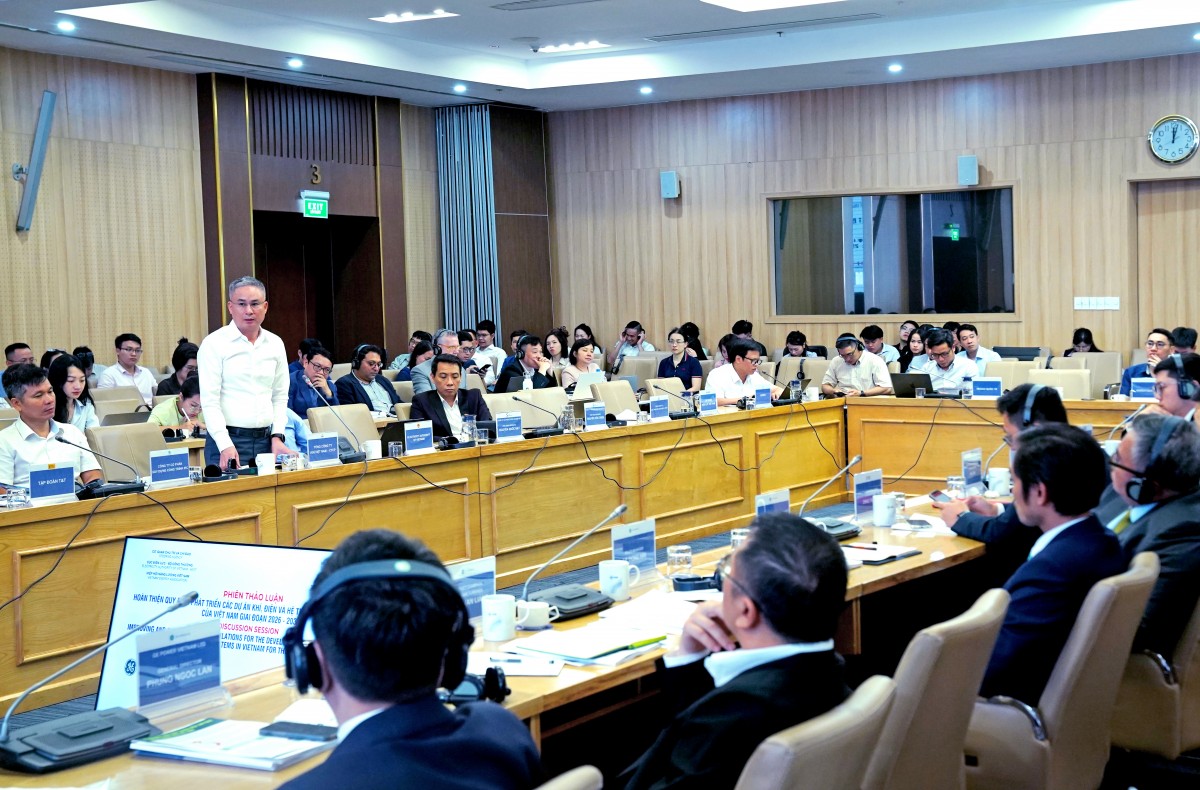 |
| Hồ Diên Vượng, Deputy Director of LNG Trading Branch, PV GAS. |
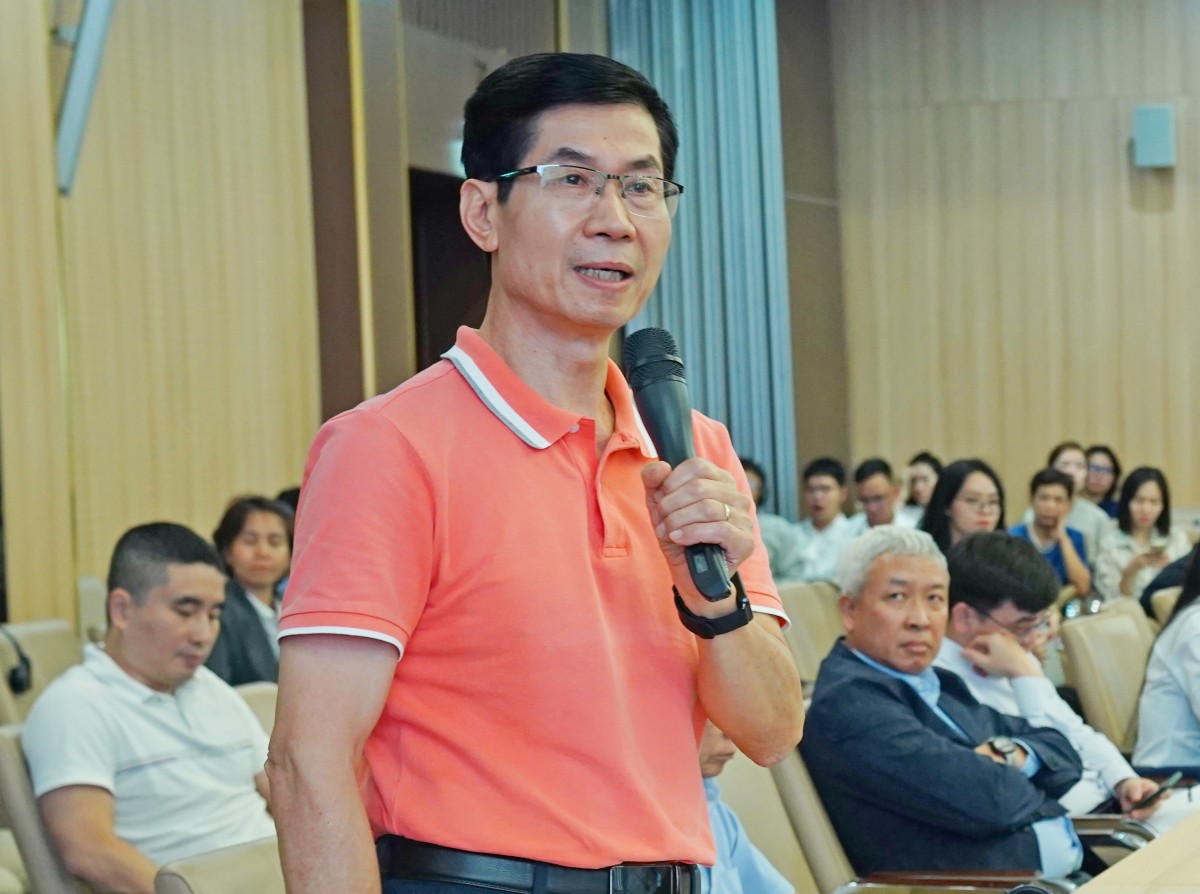 |
| Assoc. Prof. Pham Hoang Luong - Hanoi University of Science and Technology. |
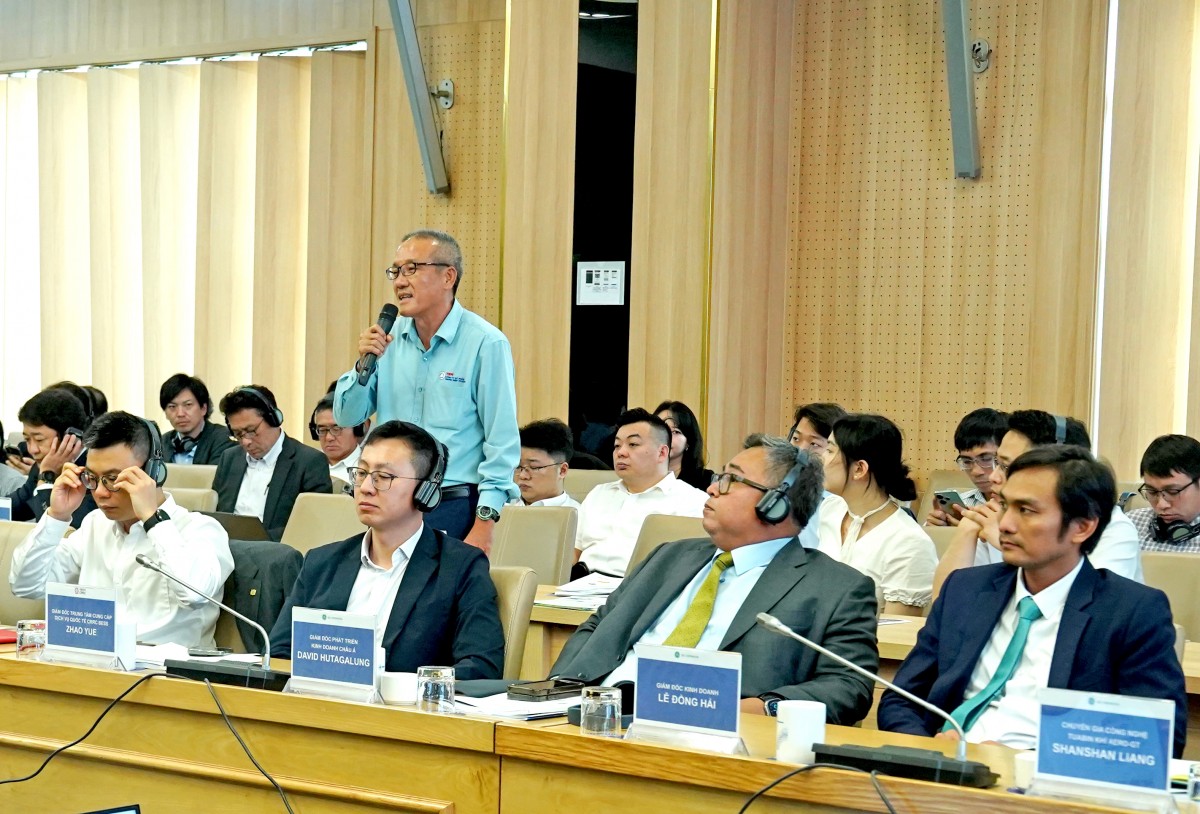 |
| Mr. Bui Van Thinh - Chairman of the Lam Dong Wind and Solar Power Association. |
Forum Conclusion:
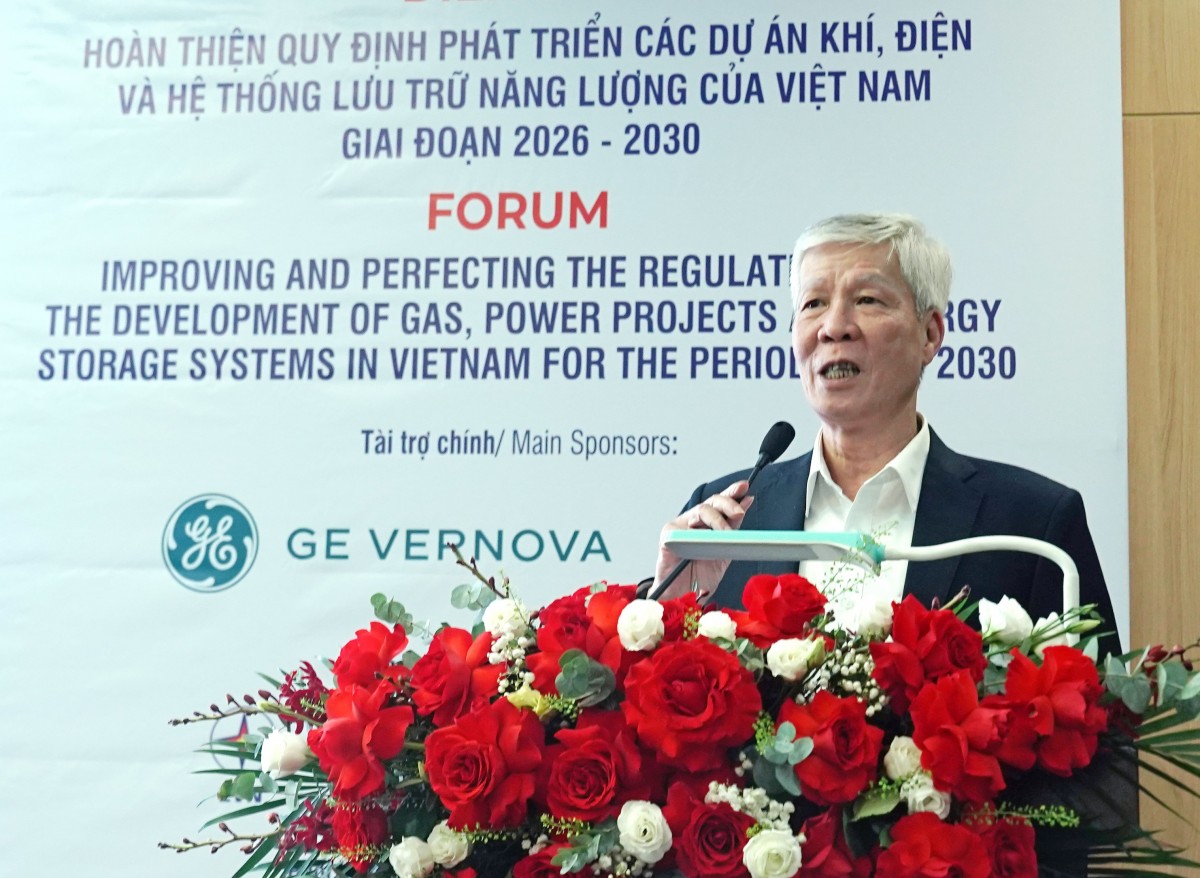 |
| Mr. Nguyen Anh Tuan (A) - First Vice Chairman and General Secretary of VEA. |
Closing the forum on behalf of the presidium, Mr. Nguyễn Anh Tuấn, Vice Chairman and Secretary General of the Vietnam Energy Association, noted that through a focused day of discussion, participants heard extensive input from the Electricity Authority of Vietnam, Vietnam Electricity, and domestic and international businesses. A central conclusion was that regulatory frameworks for LNG power and BESS remain incomplete, with many issues still requiring refinement, alongside more balanced risk-sharing among stakeholders.
Key recommendations highlighted for further consideration included:
1. Review and amend regulations on electricity pricing and PPAs, including under the revised Electricity Law, Circular 12/2025/TT-BCT, and amendments to Decrees 56/2025 and 100/2025. Recommendations also included adding support mechanisms in PPAs related to credit, foreign exchange convertibility, payment guarantees, and offshore transferability for LNG payments and debt obligations.
2. Reassess electricity market design and operating rules, including potential adjustments or special mechanisms to enable imported LNG-to-power projects to participate more effectively in the competitive power market.
3. Consider introducing Contracts for Difference (CfD) and Capacity Availability Mechanisms (CAM) to help compensate LNG power costs and improve project viability.
4. Develop regulations for BESS participation in the power market, including electricity buy/sell pricing for storage and flexible resources, clearer legal recognition of BESS in the power system, and mechanisms for ancillary service payments or energy arbitrage business models.
5. Establish policy support for BESS deployment, including tax incentives, access to green finance and concessional credit, and prioritizing BESS deployment in industrial zones and industrial parks.
6. The forum organizers noted that all comments and recommendations would be consolidated and submitted to the Prime Minister and relevant authorities for consideration./.
