


Report proposing the implementation of the Politburo’s Resolution No. 70 on national energy security
10:15 | 14/03/2026
The forum focused on three major topics: (1) Capital mobilization mechanisms and investor selection for large-scale energy projects under the revised Power Development Plan VIII; (2) Investor selection for renewable energy projects; (3) Wind resource assessment, offshore wind development potential, and national marine spatial planning.
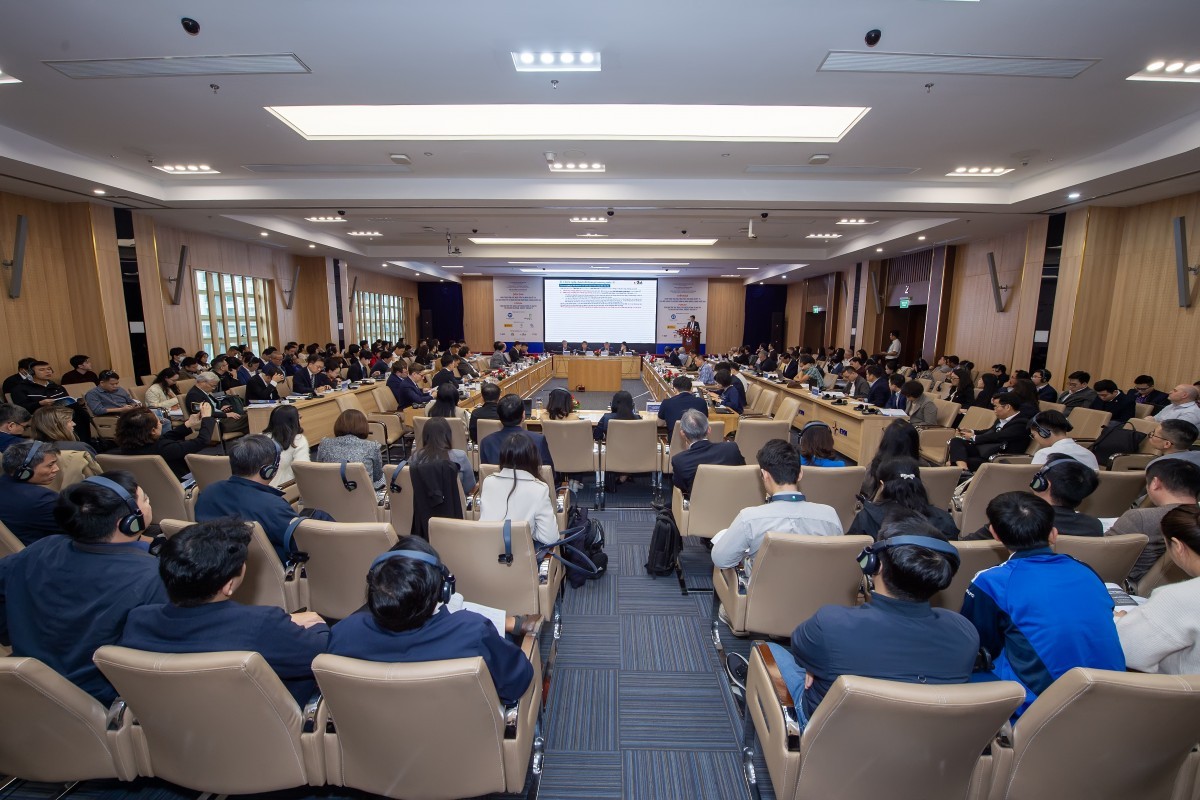 |
| The forum “Realizing the objectives of the Politburo’s Resolution No. 70 on Ensuring National Energy Security,” jointly led by the Electricity Authority of Vietnam under the Ministry of Industry and Trade and the Vietnam Energy Association, and organized by Vietnam Energy Magazine, was held on January 21, 2026, in Hanoi. |
Below are the main contents of the report submitted to the Prime Minister:
I. CONTEXT AND RATIONALE FOR THE RECOMMENDATIONS
The forum took place as Vietnam enters a period of strong economic growth, creating a dual challenge: ensuring adequate electricity supply for development while fulfilling the country’s commitment to achieving net-zero emissions. Although the National Assembly’s Resolution No. 253/2025/QH15 introduced several breakthrough mechanisms, such as allowing private investment in small modular reactors (SMRs) and decentralizing planning adjustments, practical implementation continues to face significant obstacles.
Based on presentations and discussions involving international policy frameworks (including AZEC and JETP), state-owned enterprises, private investors, foreign companies operating in Vietnam, and energy experts, the forum’s organizing committee concluded that: The biggest challenge in implementing Resolution 70 currently lies in institutional bottlenecks and investment capital constraints, which are slowing the progress of energy projects planned under national development strategies.
II. KEY INSTITUTIONAL BOTTLENECKS IDENTIFIED
1. Regulatory instability and unclear delegation of authority
Frequent regulatory changes and unclear division of responsibilities increase legal risks and directly affect the ability to mobilize long-term financing for large-scale energy projects.
2. Lack of fair and effective risk-sharing mechanisms
Investors currently bear the risk of fuel offtake commitments for domestic gas and imported LNG, which are generally more expensive than coal and hydropower sources that still dominate the electricity market. However, existing power purchase agreements (PPAs) do not allow the transfer of these fuel commitments into electricity contracts in cases where generation is curtailed for reasons beyond the control of power plants. Nor are there adequate mechanisms to recover fixed costs, which threaten the viability of baseload power plants. Therefore, improvements to PPA revenue structures are needed to reflect minimum cash flows and compensation mechanisms for fuel offtake obligations.
We believe the proposal by Japanese investors for a “contingency guarantee payment” could help address these issues.
3. Absence of a legal framework for offshore wind surveys
Vietnam currently lacks clear regulations governing marine site surveys, sea-area allocation, project development priority rights, and cost recovery mechanisms. As a result, developers face substantial pre-investment risks that may amount to tens of millions of dollars.
4. Energy storage is not yet recognized as an essential service
Energy storage has not been formally recognized as an essential system service. The current electricity market design does not compensate technologies that provide flexibility and system support, such as frequency regulation or synthetic inertia, hindering the development of storage solutions critical for the future power system.
5. Domestic credit limits and barriers to international financing
Domestic banks have nearly exhausted their lending capacity for power projects. While international capital is abundant, it requires strict ESG (Environmental, Social and Governance) standards, balanced risk allocation, and government-backed guarantees that the current regulatory framework has yet to provide.
III. POLICY RECOMMENDATIONS TO THE GOVERNMENT
Based on the forum’s discussions, the organizing committee respectfully proposed six key recommendations to the Prime Minister:
First, develop mechanisms for recovering fuel and fixed costs for baseload and flexible power sources, particularly domestic gas, imported LNG, and large-scale energy storage systems, based on fair risk allocation, while avoiding unreasonable fiscal burdens on the state budget.
Second, reform electricity pricing mechanisms so that tariffs more accurately reflect investment costs and risks, accompanied by strengthened public communication to build social consensus on the necessary costs of ensuring national energy security.
Third, issue clear regulations on investor rights in conducting offshore surveys, including cost recovery mechanisms or incentives during investor selection, while easing restrictions on survey sea areas and clarifying approval procedures to reduce overlaps among authorities.
Fourth, further develop the electricity market and ancillary service markets to properly compensate system stability services and flexibility value, thereby creating a viable market environment for energy storage and advanced grid-support technologies.
Fifth, establish conditional government guarantee mechanisms and blended finance frameworks for strategic national energy projects, such as nuclear power and large-scale baseload generation, to unlock concessional international financing through initiatives like JETP and AZEC, share project risks, and reduce capital costs.
Sixth, consider amendments to the Law on Credit Institutions to increase lending limits for a single borrower and related parties, enabling enterprises and their affiliates to access financing for power generation projects.
IV. CONCLUSION
Removing the institutional bottlenecks identified above is not merely a technical solution but a prerequisite for implementing Politburo Resolution 70-NQ/TW and the National Assembly’s Resolution 253/2025/QH15.
The forum’s organizing committee respectfully recommends that the Prime Minister and relevant ministries consider these proposals to create institutional breakthroughs, mobilize social resources more effectively, ensure sufficient electricity supply for economic growth, accelerate the sustainable energy transition, and maintain Vietnam’s long-term national energy security./.