


Realizing the Goals of Politburo Resolution No. 70 on Ensuring National Energy Security
07:00 | 27/01/2026
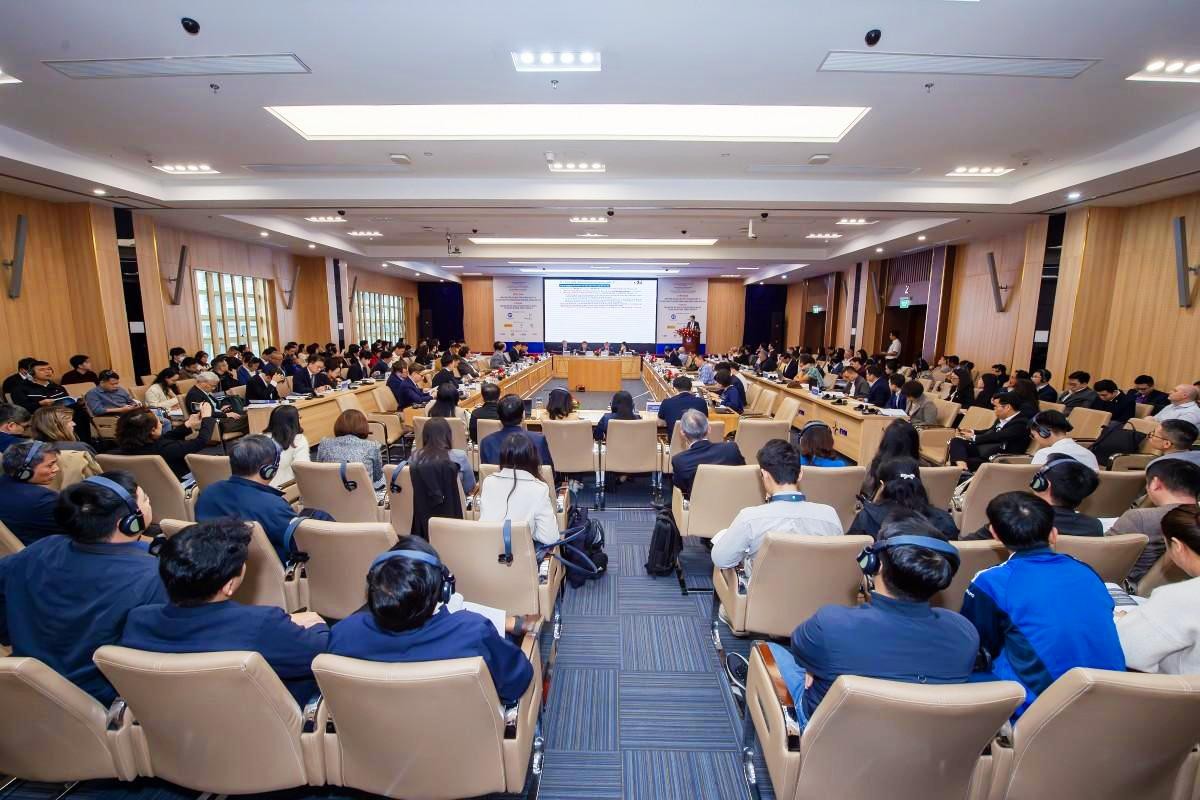 |
| Overview of the Forum. |
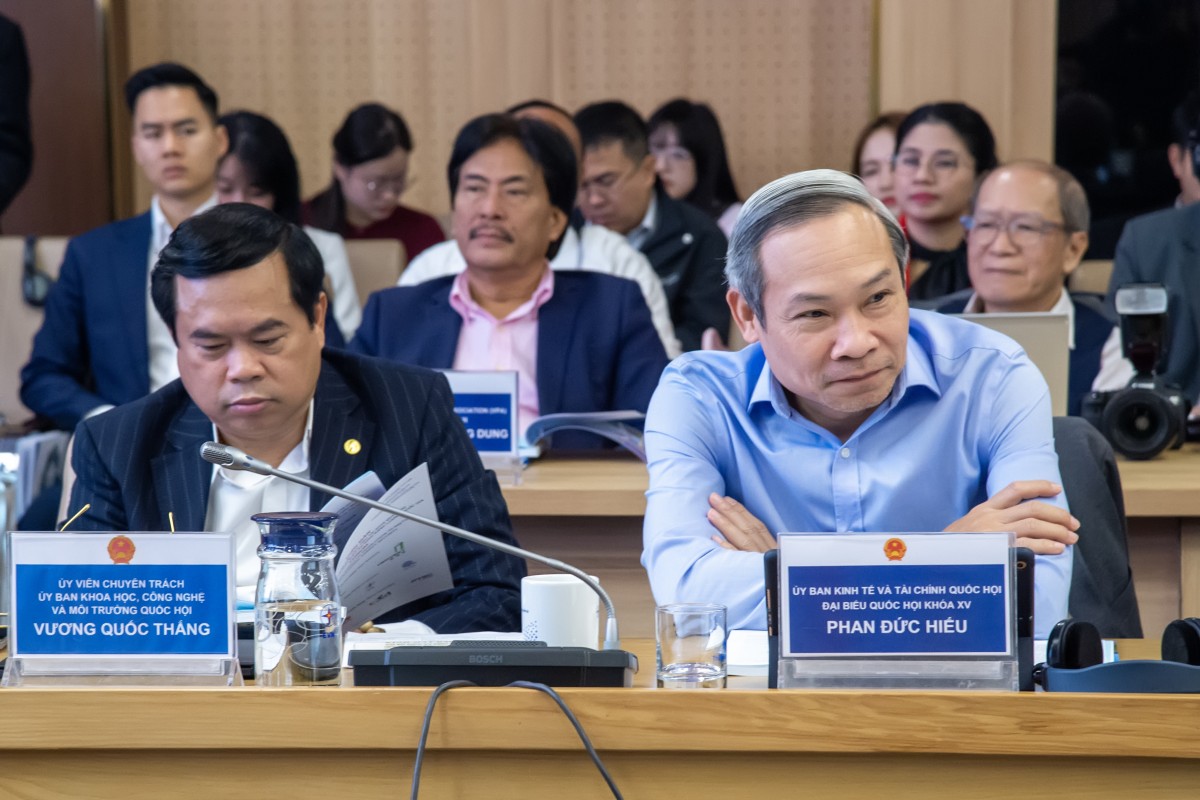
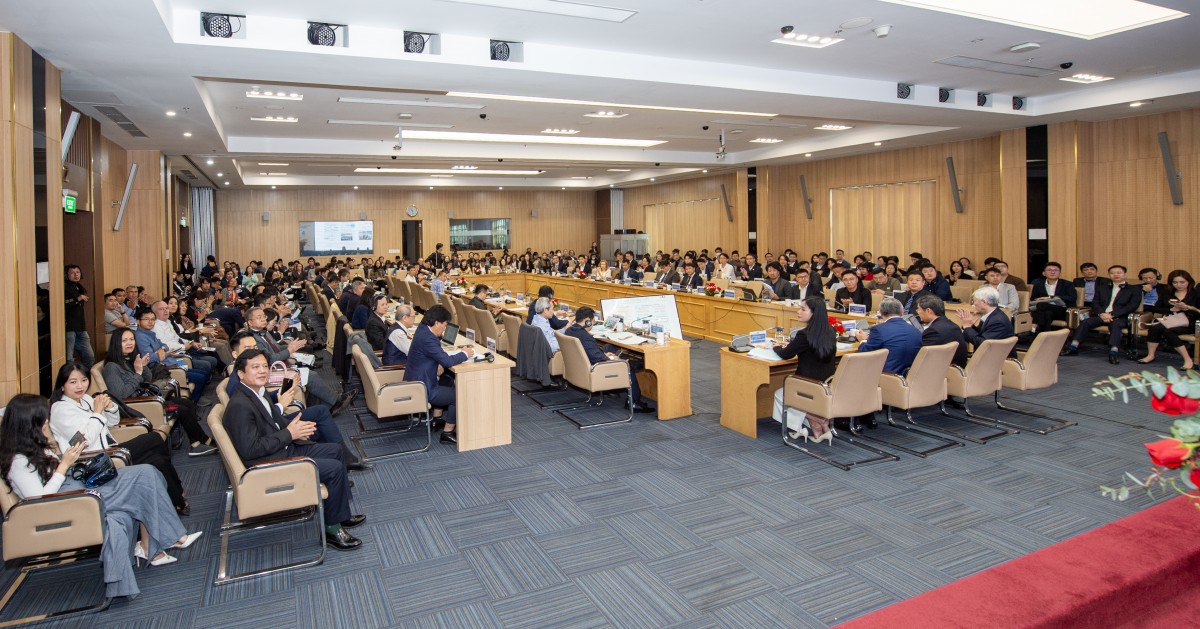
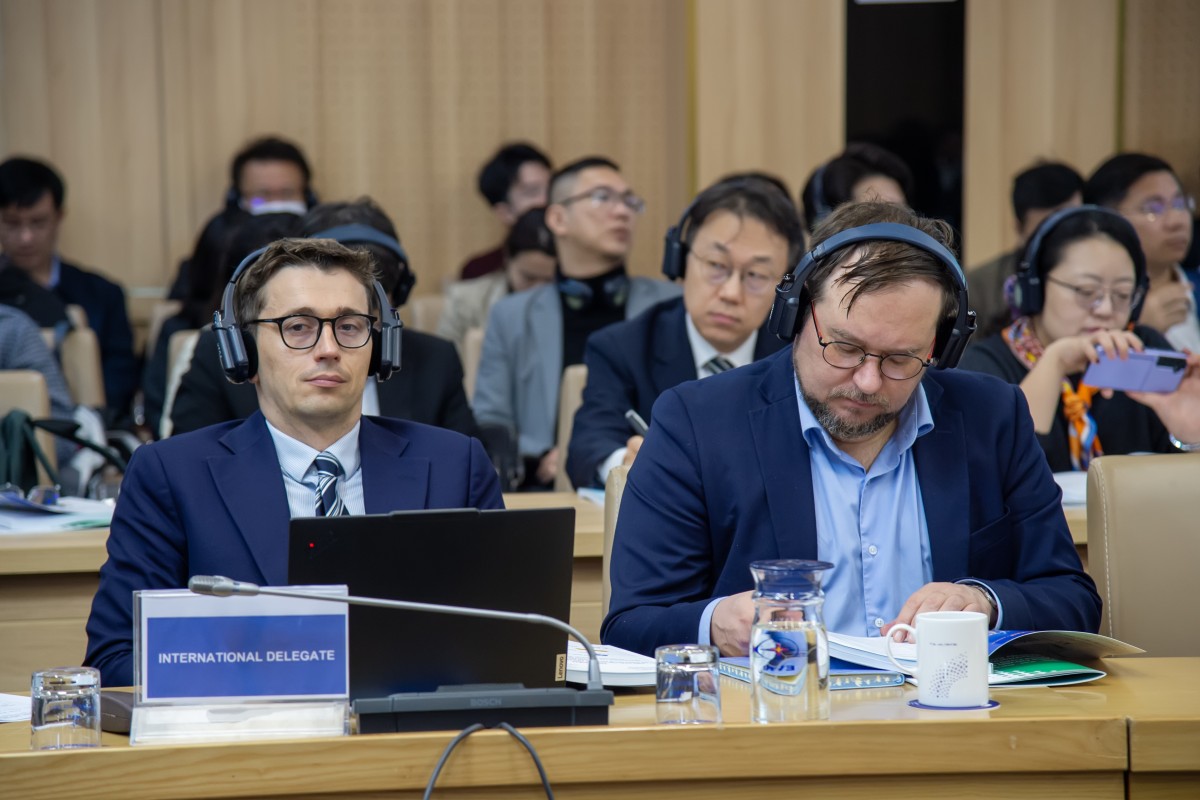
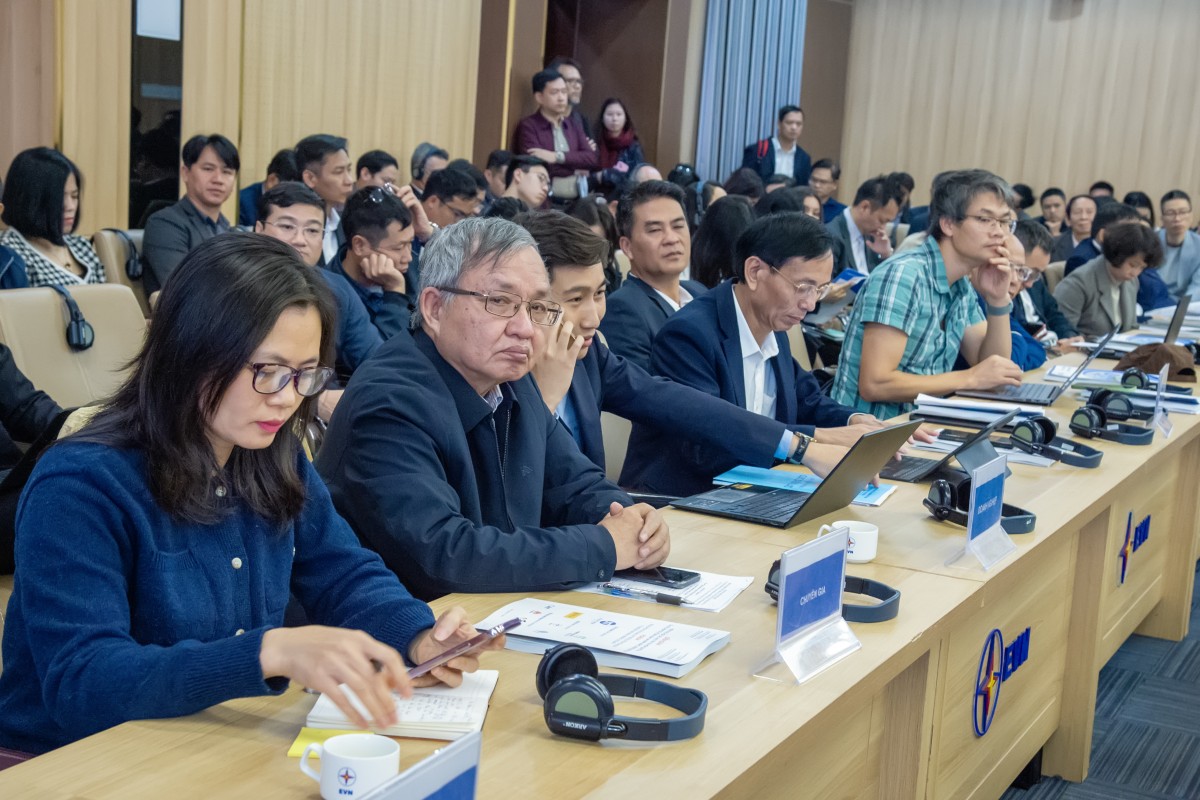
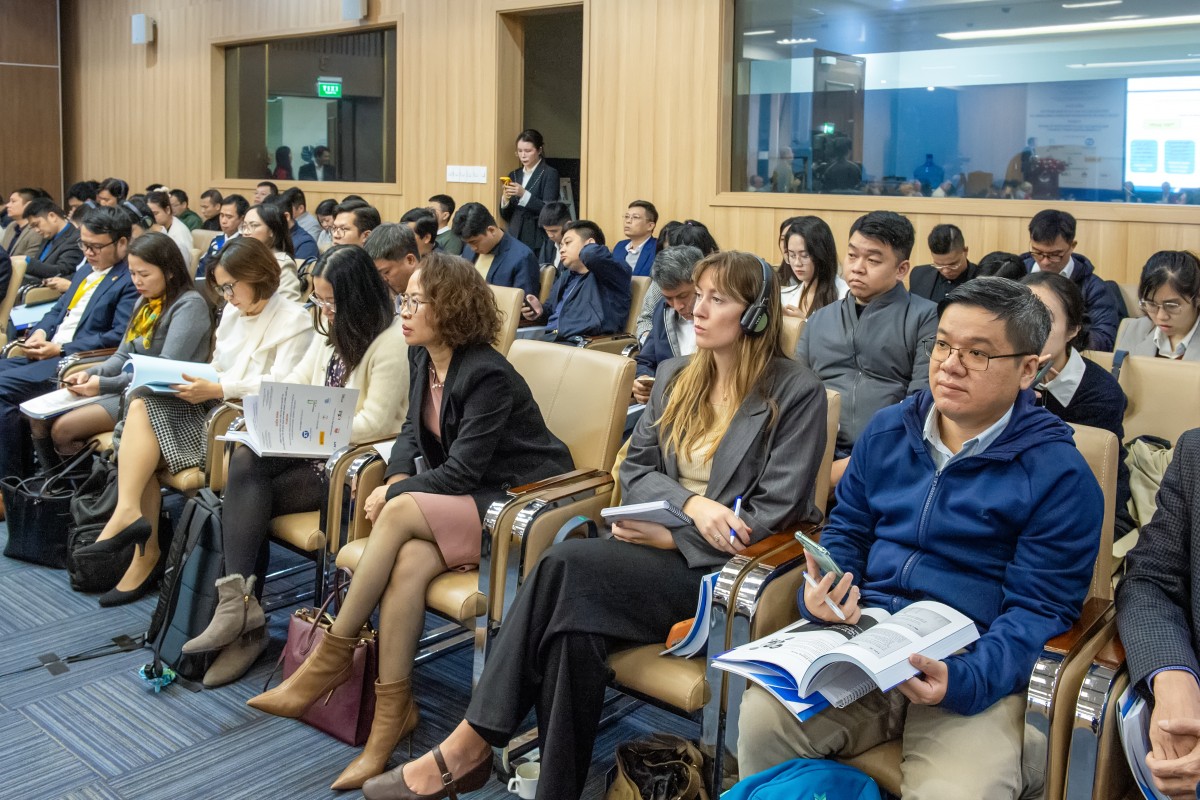
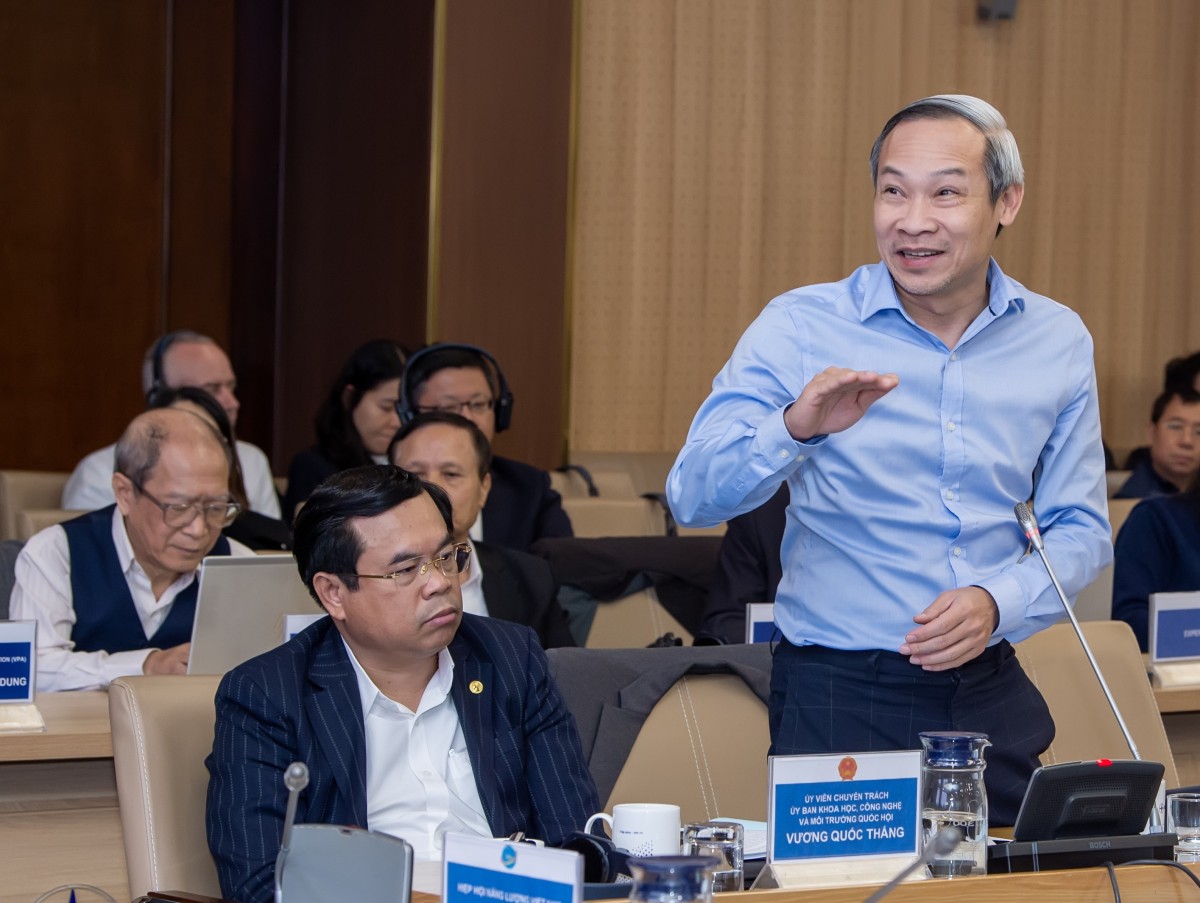
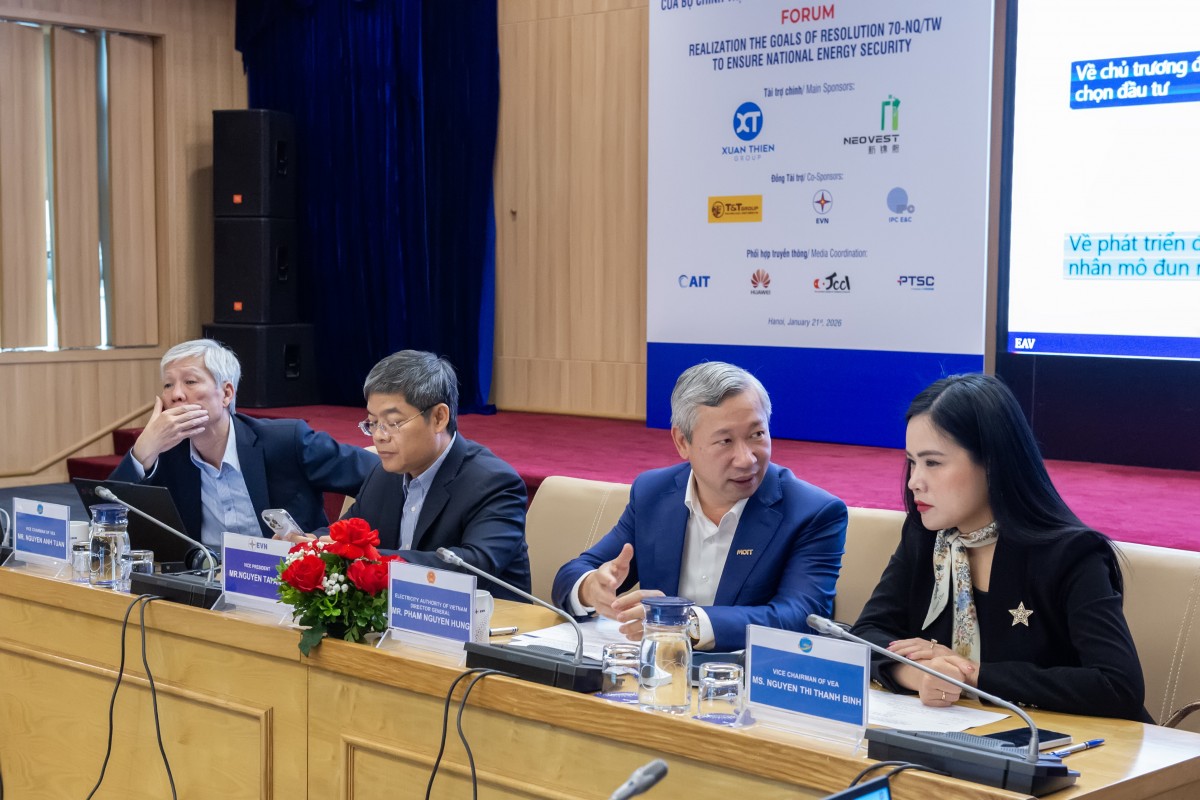
The Forum was attended by two Members of Parliament, the Director General of the Electricity Authority of Vietnam (under the Ministry of Industry and Trade), leaders of Vietnam Electricity (EVN), representatives of power sector regulatory agencies, domestic and international enterprises, and experts, with a total of more than 300 delegates.
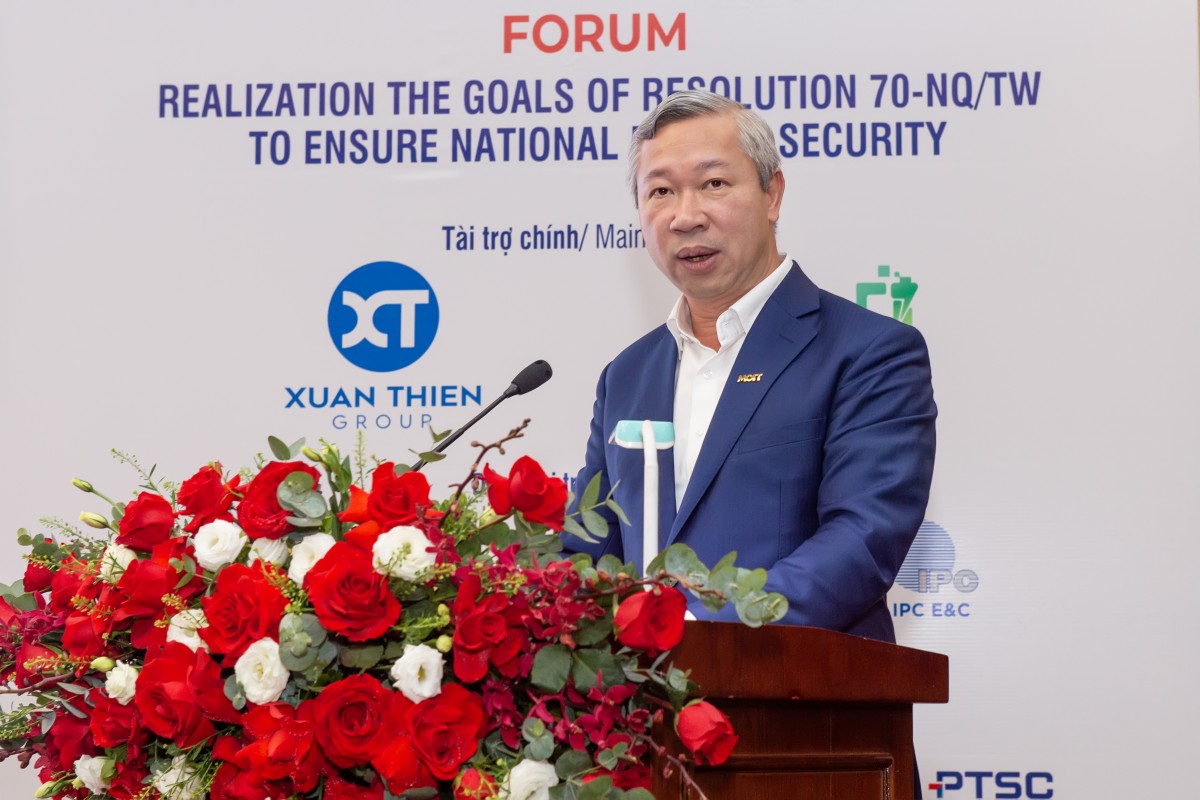 |
| Mr. Pham Nguyen Hung – Director General of the Electricity Authority (Ministry of Industry and Trade). |
Opening Remarks - Mr. Pham Nguyen Hung, Director General of the Electricity Authority (MOIT), delivered the opening speech. He emphasized that the Forum took place at a particularly critical time marked by unprecedented changes, with Vietnam entering a phase of double-digit economic growth, requiring electricity development to stay one step ahead. He noted that realizing Politburo Resolution No. 70/NQ-TW would face significant challenges, including meeting peak demand capacity, maintaining overall power system stability, and simultaneously ensuring the energy transition toward net-zero emissions. The Prime Minister has directly instructed that sufficient electricity must be secured for development, ensuring national energy security under all circumstances.
To implement Resolution 70 effectively, strong and decisive measures are required. The National Assembly has issued Resolution No. 253/2025/QH15, while the Government has promulgated Resolution No. 328/NQ-CP to implement Resolution 70. The Ministry of Industry and Trade has also issued an Action Plan to implement Resolution 328, outlining specific measures to ensure energy security through 2030, with a vision to 2045.
The adjusted Power Development Plan VIII (PDP8) was approved prior to administrative restructuring; therefore, localities are required to promptly review and identify policy bottlenecks and make necessary adjustments in line with the new administrative structure.
Morning Session:
Policy and Planning Framework - A representative of the Planning and Strategy Department of the Electricity Authority presented an overview of National Assembly Resolution No. 253/2025/QH15 on mechanisms and policies for national energy development during the 2026–2030 period.
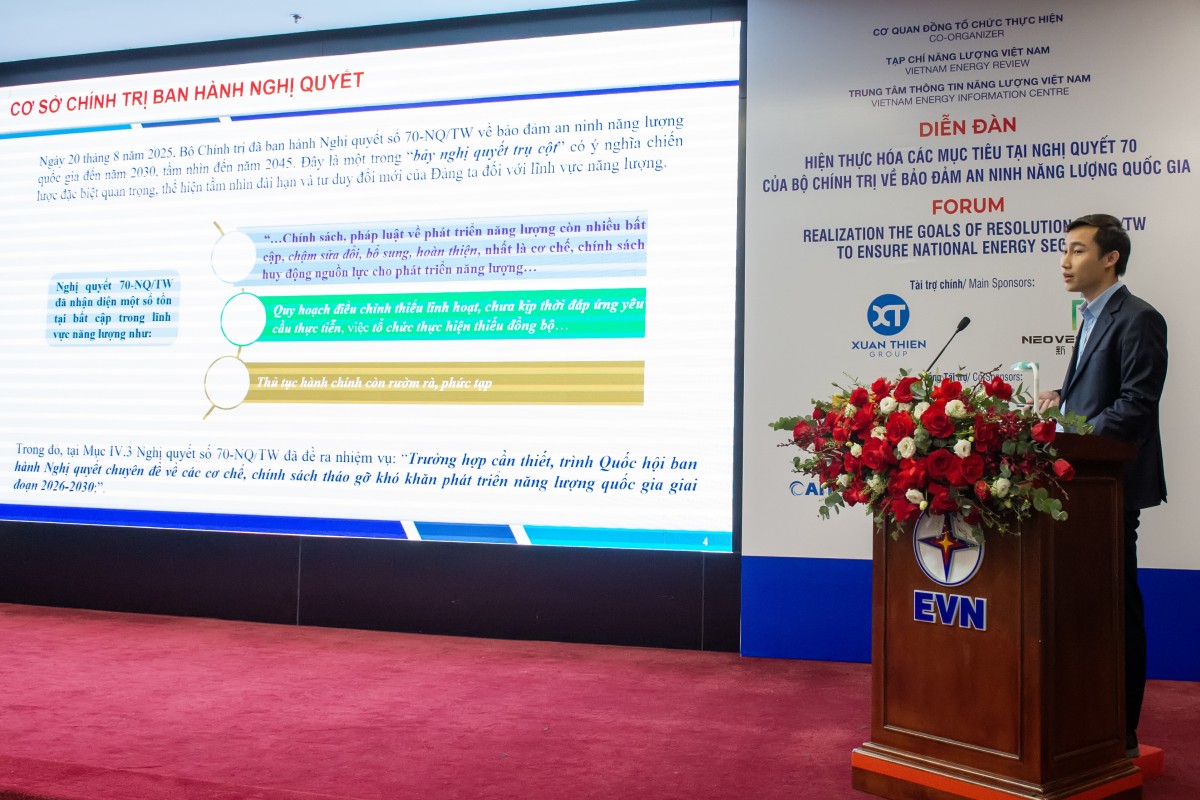 |
| Mr. Nguyen Manh Cuong – Department of Planning and Development, Electricity Authority, Ministry of Industry and Trade. |
It was noted that during the implementation of power planning, the Law on Planning lacks flexible adjustment mechanisms to respond to practical needs, resulting in numerous requests for plan revisions. Between 2021 and 2024, the power sector and local authorities faced significant difficulties in investor selection due to the application of the Law on Investment and the Law on Planning, making it necessary for adjustments to be approved at the National Assembly level.
A breakthrough is that projects included in the Power Development Plan are no longer required to obtain investment policy approval, and specific cases are identified in which investor approval may be granted without land-use right auctions or competitive bidding for investor selection. The Resolution also provides a pathway for allocating sea areas to conduct offshore wind power surveys.
Resolution 253 introduces notable breakthroughs, including opening small modular nuclear reactors (SMRs) to private sector participation, whereas previously nuclear power investment was limited to the state. The Resolution allows more frequent plan updates instead of waiting for five-year cycles and removes the requirement for investment policy approval for projects already included in power development plans.
 |
| Ms. Tran Thi Thu Hoai – Deputy Head of the Finance and Accounting Department, Vietnam Electricity (EVN). |
Financing Large-Scale Energy Projects: Ms. Tran Thi Thu Hoai, Deputy Head of EVN’s Finance and Accounting Department, presented on long-term capital mobilization mechanisms for EVN’s large-scale energy projects.
She highlighted that while state-owned enterprises have been granted greater autonomy in capital mobilization, most domestic banks have reached or exceeded their credit limits for power projects, which typically have long tenors. EVN has therefore relied on foreign financial institutions under self-borrowing, self-repayment arrangements, though these institutions impose strict environmental and social (E&S) requirements, limiting financing primarily to renewable energy and hydropower expansion projects.
Coal-fired power projects are no longer eligible for international financing, while LNG projects may be financed under certain conditions. EVN is preparing to issue bonds, which offer flexibility and large capital mobilization but involve complex and lengthy procedures similar to loan approvals. To date, EVN can secure domestic financing for grid and transmission projects, while foreign capital is mainly allocated to large-scale generation and LNG projects. Nuclear power projects will require government guarantees.
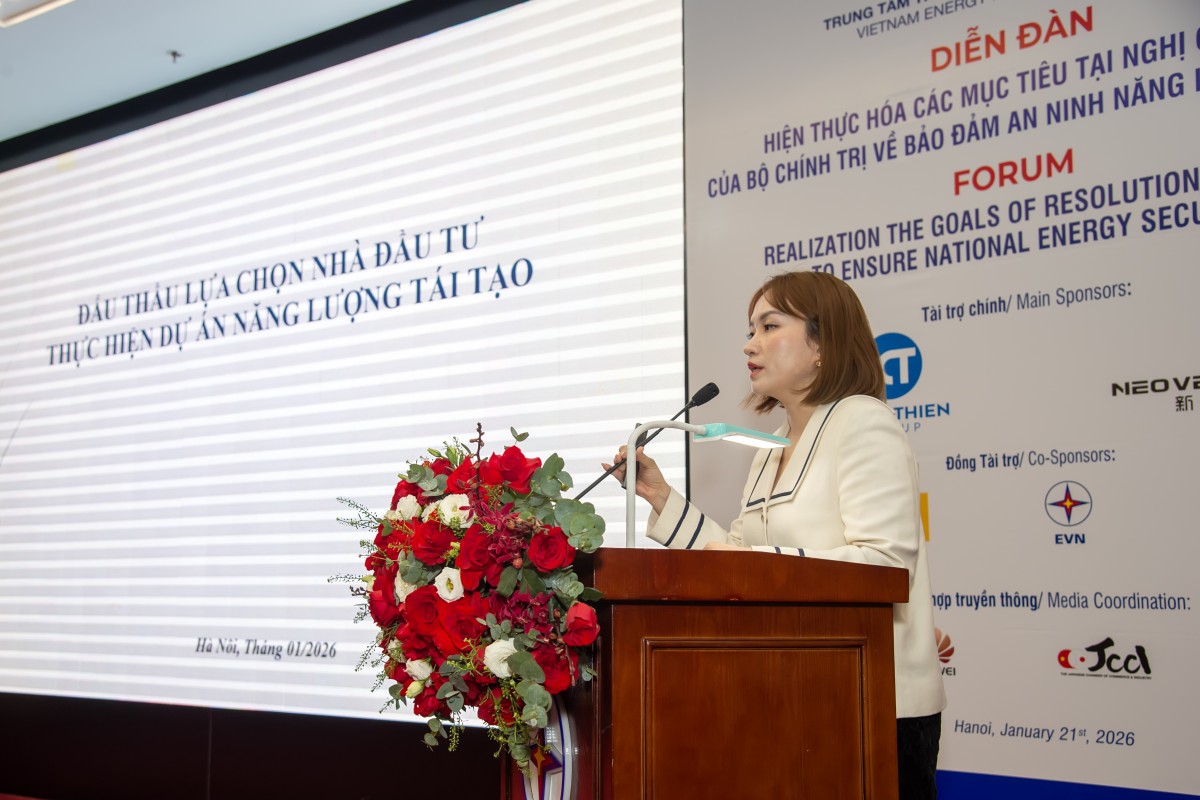 |
| Ms. Nguyen Thuy Chi – Office of the Public Procurement Management Agency, Ministry of Finance. |
Investor Selection and International Financing: Representatives from the Ministry of Finance presented updates on Bidding mechanisms for selecting investors in renewable energy projects, noting that international experience shows competitive bidding as a prevailing trend, dependent on clear legal frameworks, fair risk allocation, and transparent PPAs with payment guarantees.
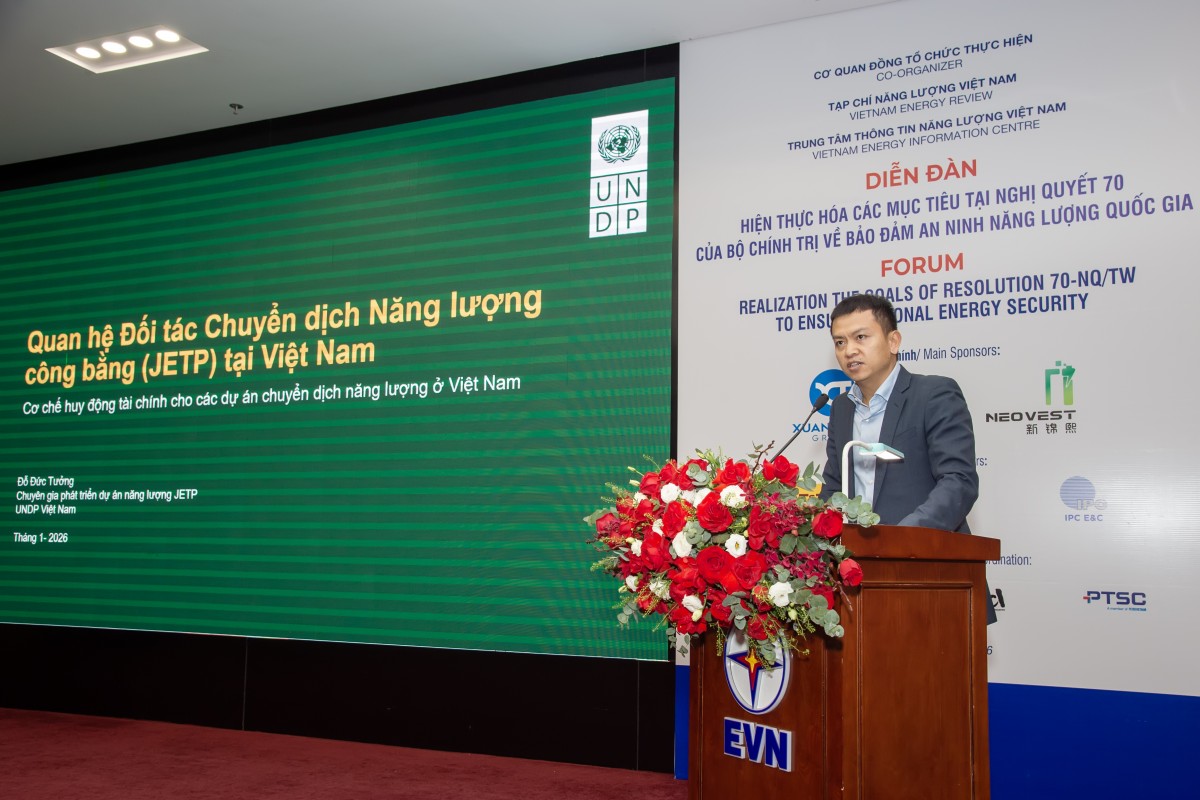 |
| Mr. Do Duc Tuong – JETP Energy Project Development Expert, UNDP Vietnam. |
A UNDP representative introduced the financial mobilization mechanisms for energy transition projects in Vietnam. The Just Energy Transition Partnership (JETP) was committed at COP26 in 2021 between Vietnam and its development partners.
Half of the committed capital comes from the International Partners Group (IPG), including donors and international financial institutions, while the other half is from GFANZ commercial banks. The total pledged amount of USD 15.5 billion remains modest compared to Vietnam’s need for hundreds of billions of US dollars for power system development over the next five years. The JETP project screening and matchmaking process consists of five steps and is guided by four key principles, as follows:
-
Renewable energy and energy efficiency.
-
Economic and social benefits.
-
Catalytic effect.
-
Just transition impact.
To date, the JETP Secretariat has received more than 60 project proposals, of which approximately 44 meet the JETP criteria.
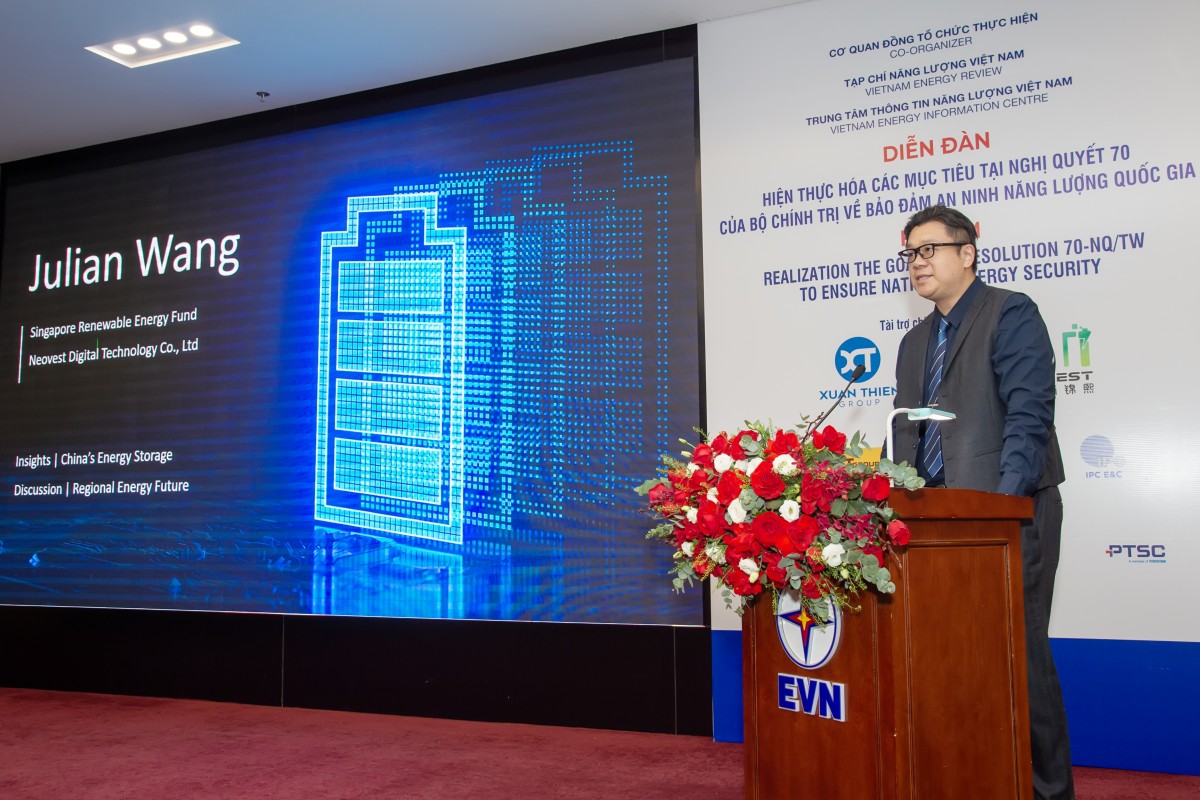 |
| Mr. Qiang Wang – Chairman of Neovest Nanjing Digital Technology Co., Ltd. |
Energy Storage and International Cooperation - Mr. Qiang Wang, Chairman of Neovest Nanjing Energy Digital Technology, presented on “China’s Energy Storage Technology and Singapore Capital – Co-creating Vietnam’s Energy Future.”
He emphasized that energy storage has become an integral part of modern power systems, essential for balancing both regional and temporal supply-demand fluctuations. With renewable energy expected to reach 30% of Vietnam’s total installed capacity, system imbalance will intensify without adequate storage solutions. Drawing from China’s experience, he noted that energy storage services have evolved from cost centers into profit centers once ancillary services were properly priced. Neovest proposed treating energy storage as a virtual power plant.
Singapore has readily available investment capital, combined with Neovest’s provision of technology solutions. However, Neovest called for Vietnam to officially recognize energy storage as an essential grid service with appropriate compensation mechanisms.
Three representatives of the Asia Zero Emission Community (AZEC) delivered presentations on “Joint Recommendations to Remove Bottlenecks in the Development of Large-Scale Gas and LNG Power Projects”.
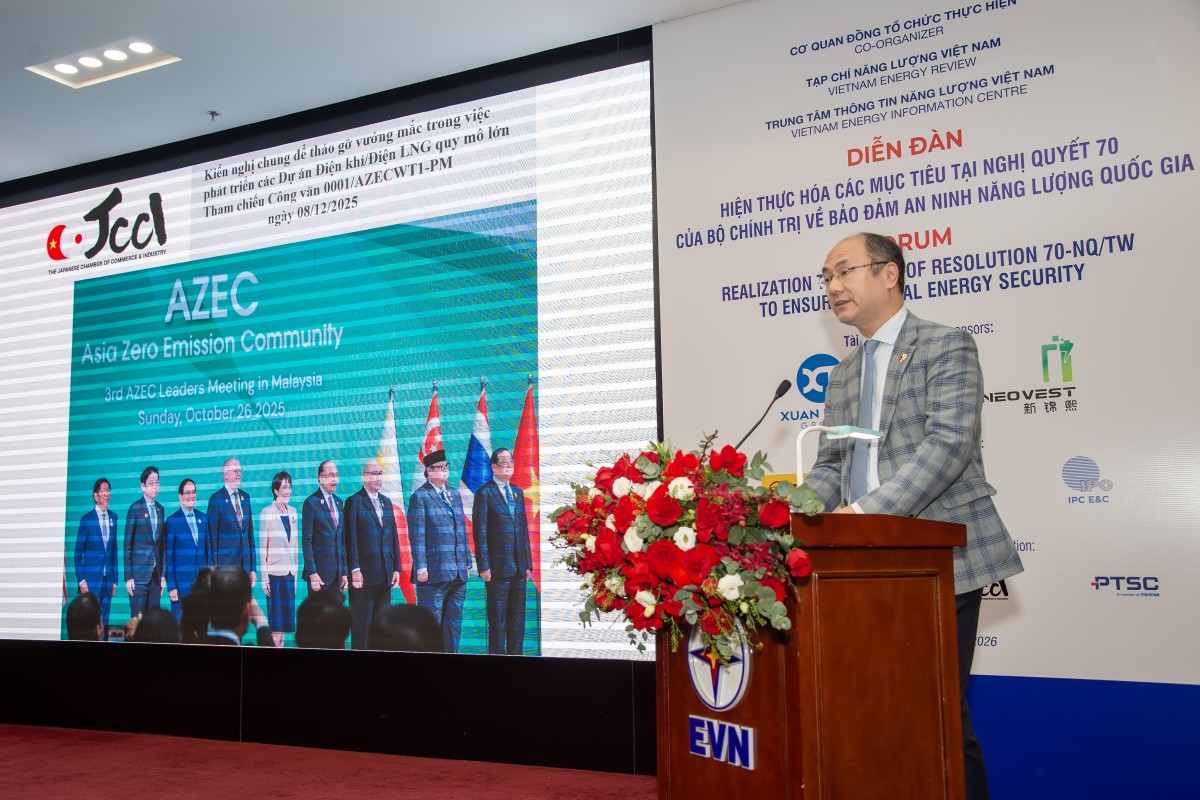 |
| Mr. Toru Aguin – Chief Representative of JBIC in Hanoi. |
Mr. Toru Aguin, Chief Representative of the Japan Bank for International Cooperation (JBIC) in Hanoi, stated that the Japanese Government strongly supports the Asia Zero Emission Community (AZEC).
AZEC has selected 15 initial flagship projects with a total investment value of approximately USD 20 billion and a combined installed power generation capacity of 13 GW. These projects include large-scale gas-fired and LNG power plants, renewable energy projects, and transmission infrastructure.
He cited examples such as financing support for solar energy enterprises in Thang Long II Industrial Park. Large-scale projects typically apply project finance structures, under which debt repayment relies solely on cash flows generated by the project itself. As a result, risks should be allocated to the parties best able to control and manage them. “Fair and reasonable risk allocation” is a core principle advocated by AZEC members, he emphasized.
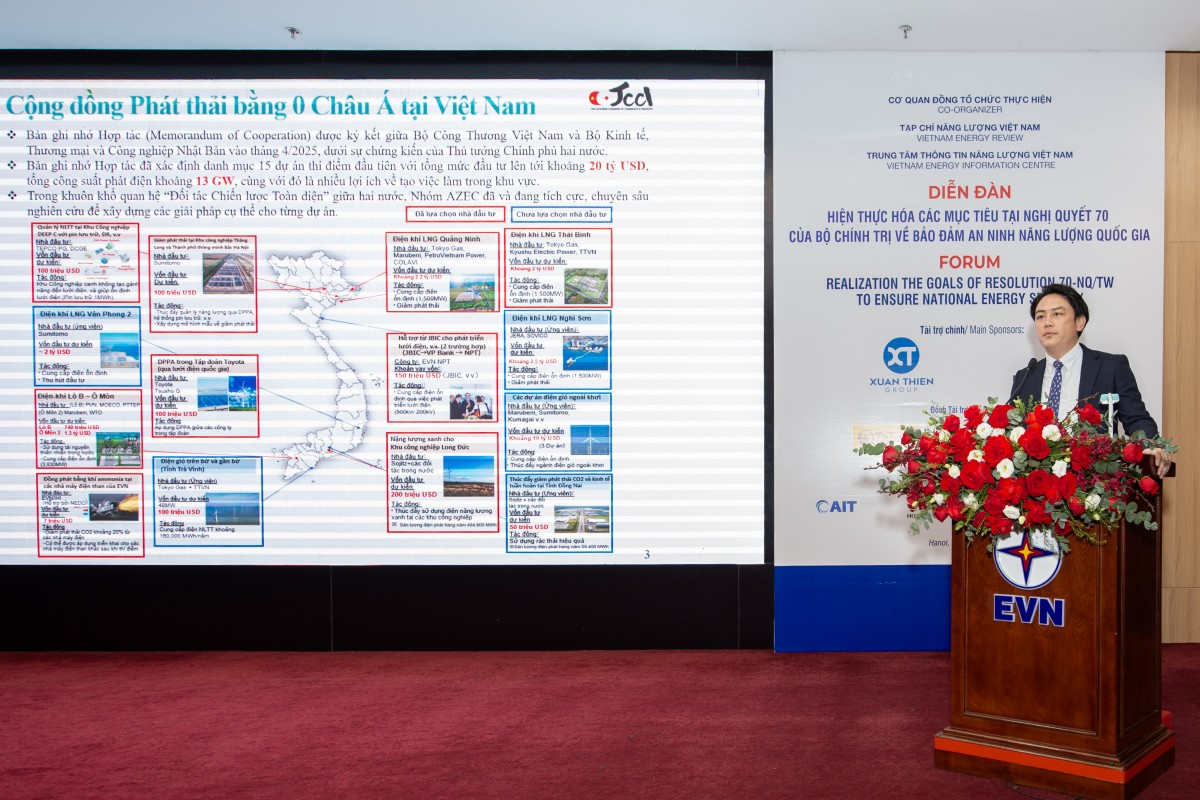 |
| Mr. Tomoya Kawabata – Deputy General Director, Marubeni Power Vietnam. |
Mr. Tomoya Kawabata, Deputy General Director of Marubeni Power Vietnam, noted that AZEC members have submitted formal recommendation letters to the Government of Vietnam to address existing bottlenecks.
For domestic gas-fired power projects, there is currently no contractual protection in cases where the National System and Market Operator (NSMO) dispatches power at levels lower than projected. Meanwhile, LNG fuel must be imported under long-term take-or-pay contracts, meaning that insufficient dispatch can result in contractual penalties. Therefore, investors have proposed the adoption of appropriate cost recovery mechanisms in cases where actual dispatch falls below contracted output levels.
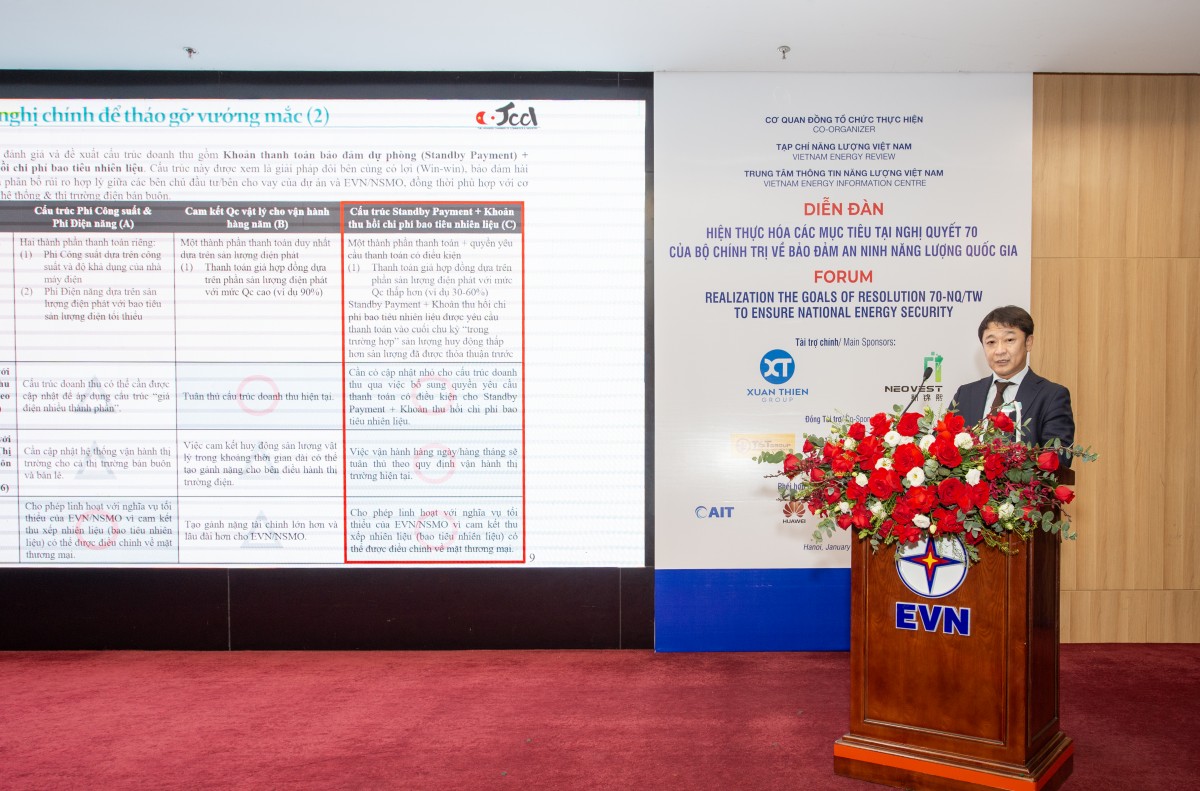 |
| Mr. Yosuke Fujii – Chief Representative, Tokyo Gas Asia in Vietnam. |
Mr. Yosuke Fujii, Chief Representative of Tokyo Gas Asia in Vietnam, recommended that gas/LNG power projects be granted: Standby or availability payments (similar to capacity payments under a two-part electricity tariff structure), and Fuel cost recovery mechanisms to cover take-or-pay fuel commitments.
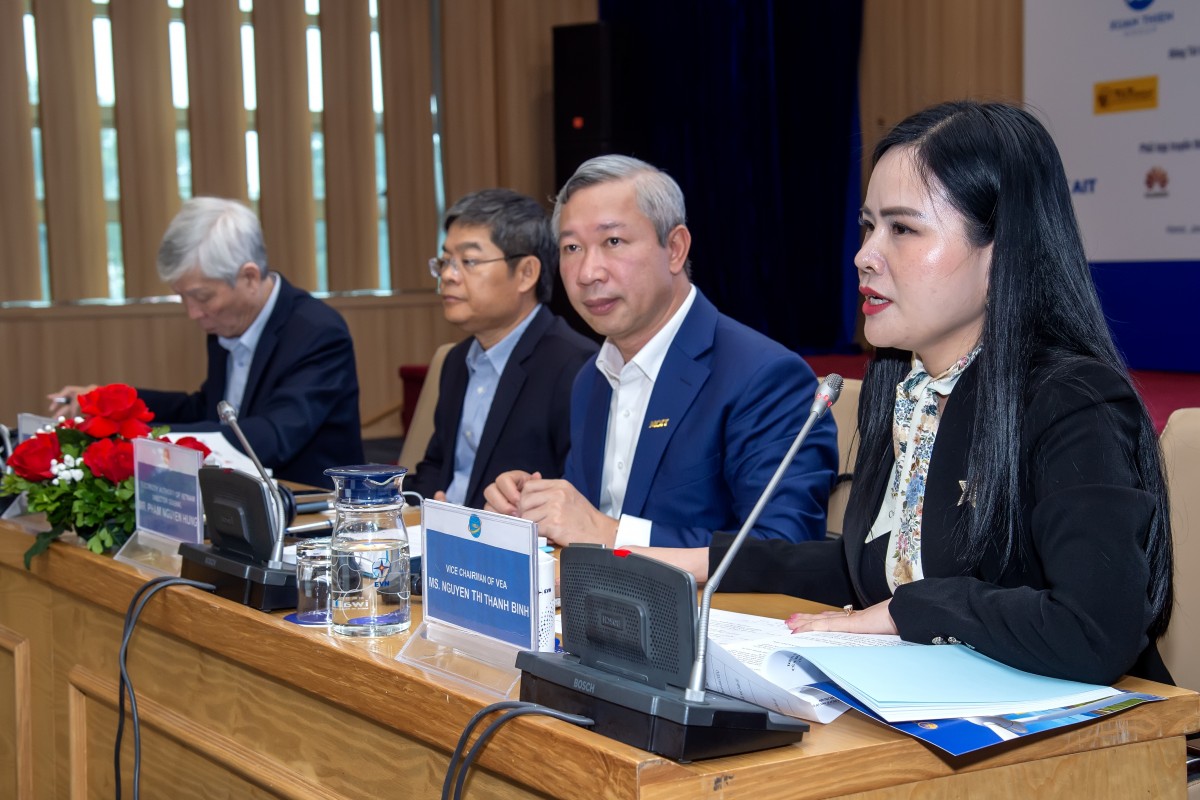
Morning Panel Discussion: The morning panel discussion was moderated by Mr. Nguyen Thai Son, Vice Chairman of the Vietnam Energy Association (VEA).
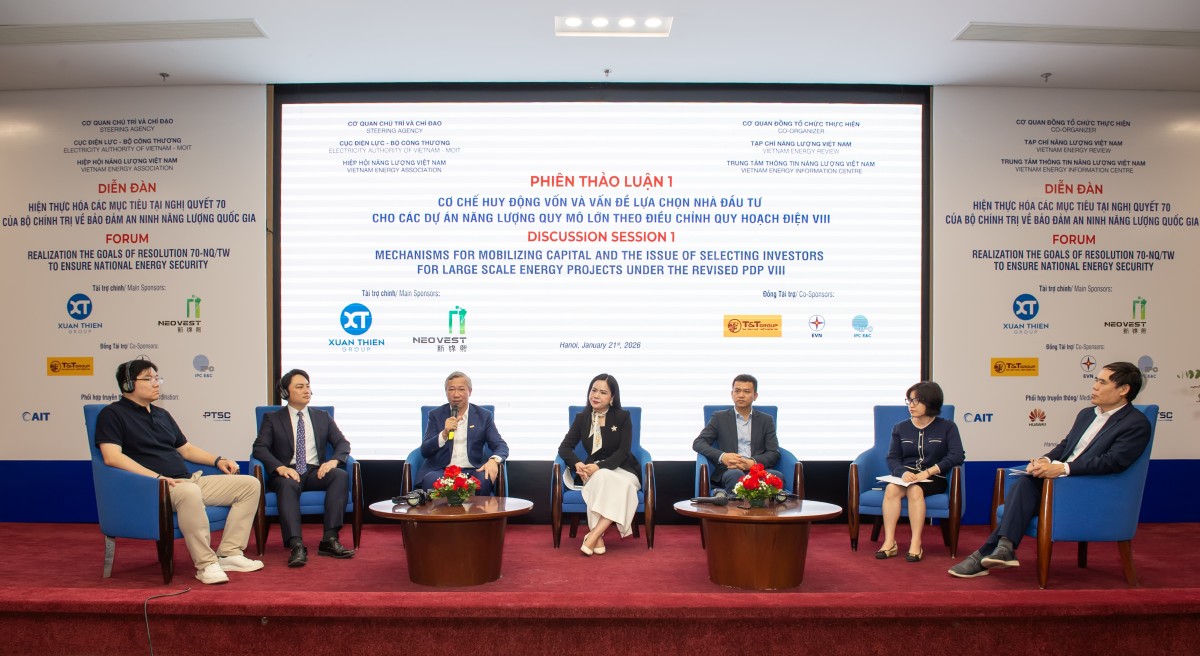 |
| Panel Topic: Mechanisms for mobilizing capital for large-scale energy projects and the issue of selecting investors for energy projects under the revised PDP VIII. |
The Director General of the Electricity Authority further elaborated on AZEC’s recommendations. He noted that LNG power projects currently involve many mechanisms similar to BOT models, even though the BOT framework is no longer in effect. The Ministry of Industry and Trade has proposed that the National Assembly introduce specific mechanisms to resolve issues related to delayed projects; however, after several rounds of discussion, these mechanisms have yet to be approved.
Regarding power transmission, EVN will remain the primary investor to ensure sufficient grid capacity for large-scale generation sources. Private investors will only invest in their own connection lines. Any privately invested transmission assets must undergo total investment verification for handover or transmission cost calculation purposes.
The LNG investor group has also submitted recommendation letters. Issues related to LNG projects fall under the authority of the Government and were therefore not included in National Assembly Resolution No. 253. AZEC’s recommendations remain unchanged, particularly those concerning financial institutions. Financial institutions are requesting contracted capacity (Qc) levels above 90%-this is not a demand from project developers, but a requirement from lenders providing financing. A second recommendation concerns gas price pass-through mechanisms, while the third relates to capacity payments, given the long-term nature of gas supply contracts.
Under the current LNG power pricing formula, only the investment costs of power plants are included. Costs for LNG terminals and storage facilities are not treated as fixed costs but are excluded altogether. Time is becoming critical, as turbine orders must be placed now to ensure delivery by 2030.
Energy Storage and Regional Cooperation: Current energy storage technology presents opportunities to leverage a “golden triangle”: Vietnam as the market, China as the technology provider, and Singapore as the capital hub.
Singapore, as ASEAN’s financial center, has invested tens of billions of U.S. dollars across the region. While energy storage remains a relatively new sector for Singapore, Vietnam is expected to transform from an energy consumption hub into a regional center for green energy supply.
Business Perspectives and Renewable Energy Challenges: The Vietnam Wind Power Association voiced concerns from the business community. Although Power Development Plan VIII is ambitious - requiring 15 - 20 GW of new grid capacity annually-actual implementation has achieved only 1.5 - 2.4 GW per year.
The primary challenge identified is electricity pricing. Enterprises recognize EVN’s accumulated losses under the current tariff structure. The Government has now allowed EVN to adjust electricity tariffs quarterly to better reflect changes in the power generation mix. Industry stakeholders at the grassroots level have expressed their willingness to support public communication efforts.
Afternoon Session
In the afternoon session, representatives of EVN’s Construction Investment Management Board presented on “Investor Selection for EVN Power Generation Projects under the Adjusted Power Development Plan VIII.”
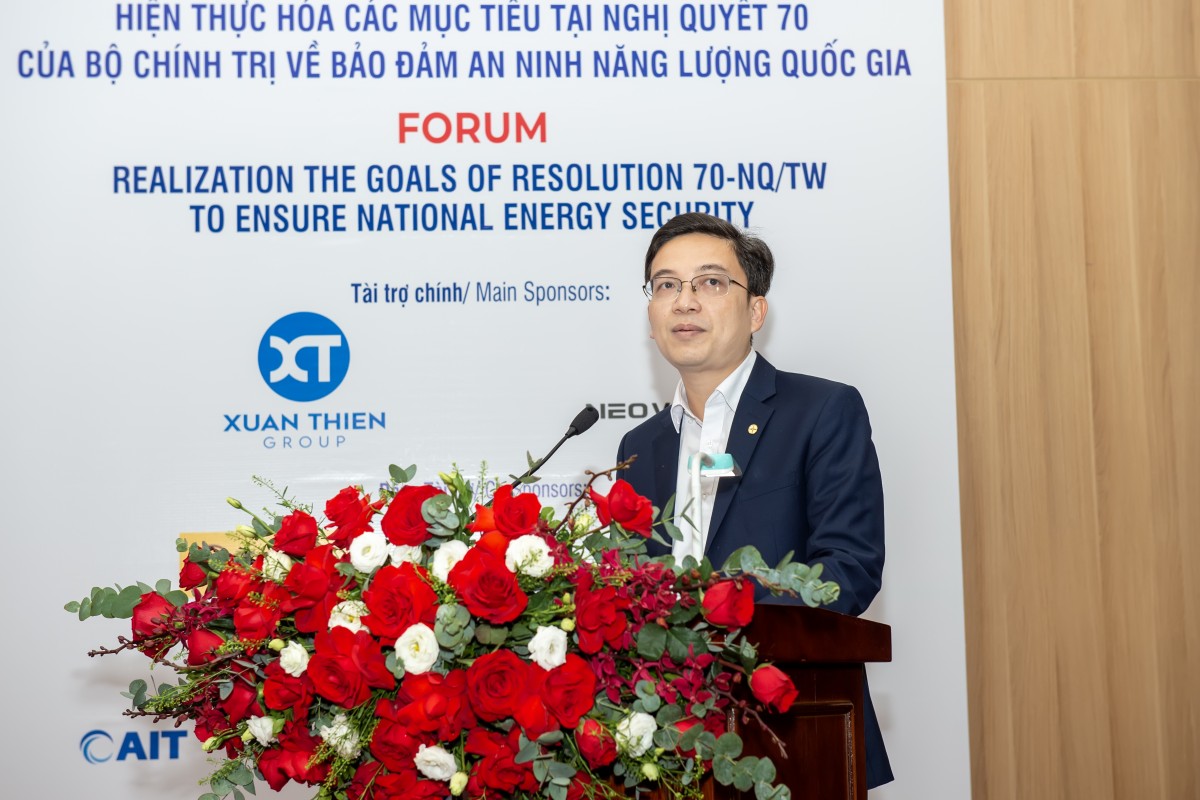 |
| Mr. Nguyen Quang Linh – Deputy Head of the Investment and Construction Management Board, Vietnam Electricity (EVN). |
The adjusted Power Development Plan VIII prioritizes renewable energy, LNG-fired power, and offshore wind power. The Investment Law, the Bidding Law, and the Electricity Law govern the legal framework. To date, EVN has not yet implemented any projects under the new mechanisms in practice.
Proposed solutions to address existing bottlenecks include: completing the legal and regulatory frameworks, and developing transparent bidding procedures tailored to each project type (with hydropower differing from thermal power and renewable energy projects.
A representative of PetroVietnam Technical Services Corporation (PTSC) delivered a presentation entitled “Overview of Survey Activities as the Foundation for Sustainable Offshore Wind Power Development in Vietnam.”
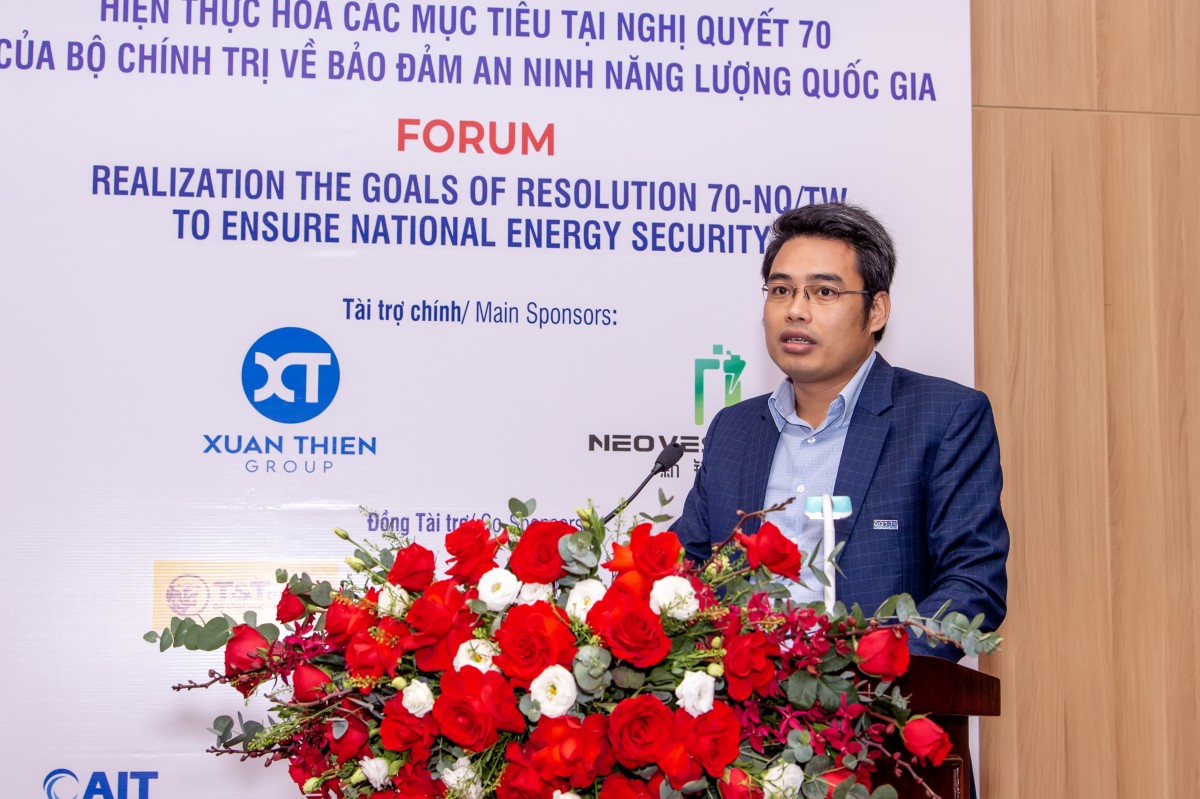 |
| Mr. Pham Dang Minh – Head of the Renewable Energy Department, under the Commercial Department of PTSC. |
Mr. Pham Dang Minh, Head of Renewable Energy Division, PTSC Commercial Department, noted that Vietnam and the Philippines possess the highest offshore wind potential in Southeast Asia. He emphasized that surveys are not merely a technical step, but a critical foundation for investment decision-making, as international experience shows that successful projects are underpinned by thorough and long-term survey work.
International practices include two main approaches: (i) government-led preliminary surveys, as seen in the UK, Denmark, the Netherlands, and Germany; and (ii) developer-led surveys, as in Japan and South Korea, where some companies have conducted surveys for three to four years before discontinuing projects.
In Vietnam, five entities have been assigned to conduct offshore wind surveys, including EVN, PVN, PTSC, REE, and HBRE. PTSC recommended accelerating the completion of technical standards and regulations, finalizing the legal framework for survey activities and sea area allocation, and revising the current allocation ratio of 20 hectares per MW, which is considered insufficiently flexible for offshore wind development
Also addressing offshore wind surveys, a representative of IPC Construction Corporation (IPC E&C) presented “IPC E&C’s Experience and Capabilities in Offshore Wind Surveys, Wind Measurement, and Investment Potential Assessment for Offshore Wind Power Projects”.
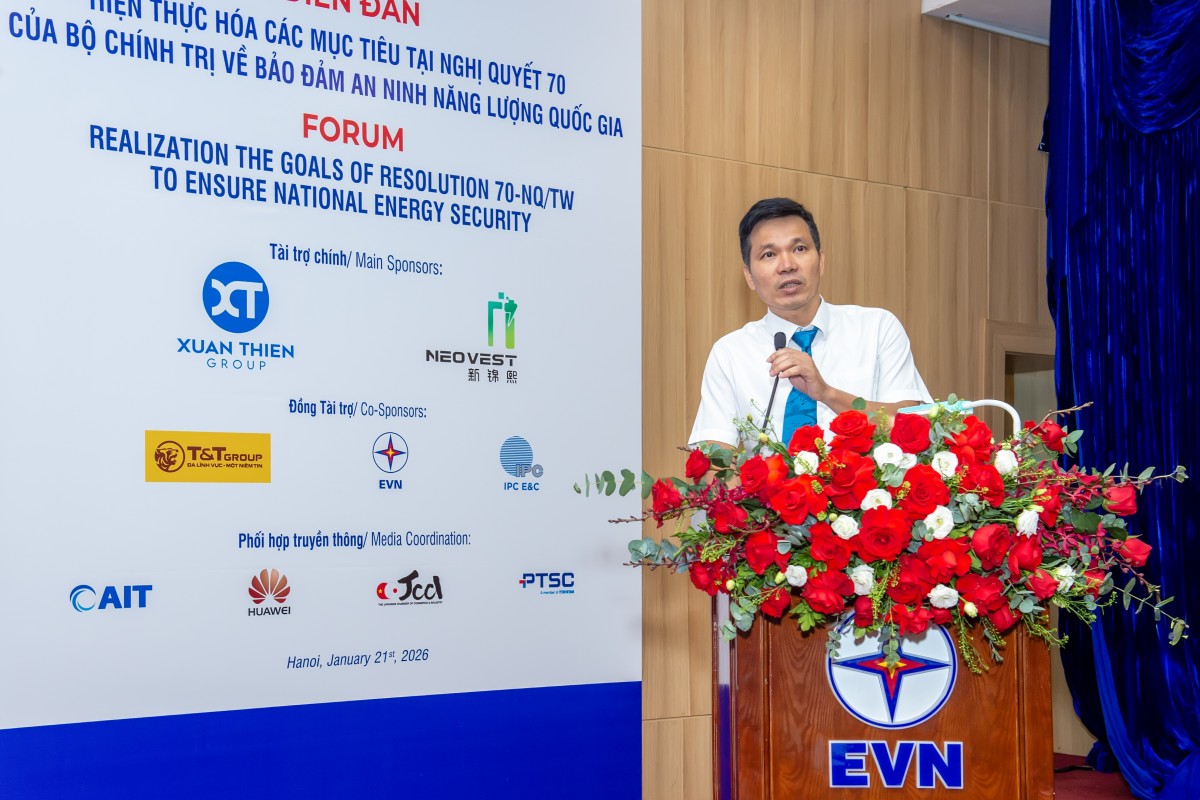 |
| Mr. Nguyen Ngoc Tu, Director of Business and Project Development at IPC. |
Mr. Nguyen Ngoc Tu, Director of Business and Project Development at IPC, emphasized that preliminary surveys are essential to obtain sufficient data for estimating project costs and preliminary IRR. Banks require reliable wind measurement data; however, installing met masts at 120 meters can cost tens of millions of USD, while Floating LiDAR offers a more cost-effective alternative. Continuous wind measurement over 18–24 months is required, alongside geotechnical and geophysical surveys to provide sufficient data for foundation design.
A presentation by the Institute of Energy Economics, Japan (IEEJ) focused on “Power Source Investment Programs to Meet Growing Electricity Demand and Accelerate Large-scale Renewable Energy Deployment”.
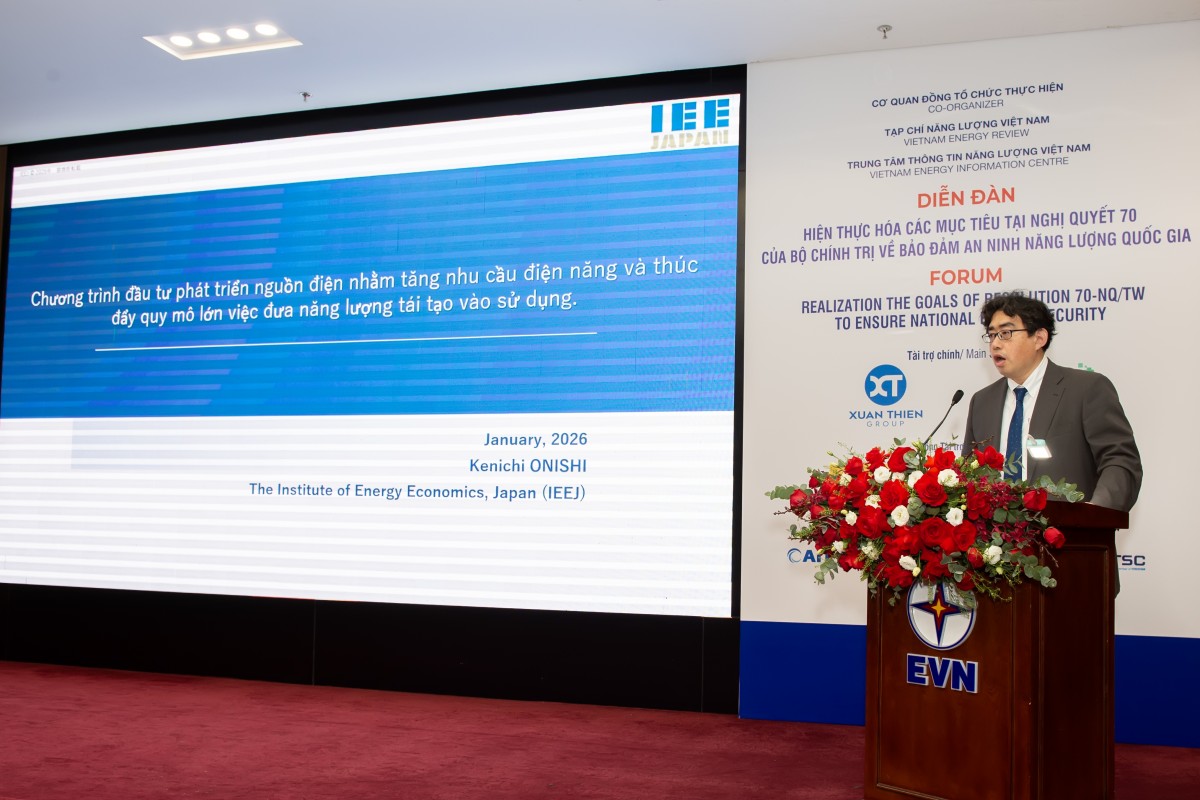 |
| Mr. Kenichi Onishi, Executive Research Manager of the Power Industry Board at IEEJ. |
Mr. Kenichi Onishi, Executive Research Manager of the Power Industry Board at IEEJ, noted that Japan’s power development plan anticipates rapid growth in renewable energy, while the declining profitability of power plants has weakened investment incentives. Rising capital costs would significantly increase generation costs. Electricity demand is expected to surge after 2025 due to the AI and semiconductor industries, similar to the U.S., where data centers and cryptocurrency mining are driving demand. Improving the investment environment to lower the cost of capital is therefore critical, with Contracts for Difference (CfD) and capacity markets highlighted as key risk-mitigation mechanisms. Japan also introduced a non-carbon power auction model with requirements to ensure a certain level of firm supply capacity.
A representative of Huawei Technologies (Vietnam) presented “Smart String & Grid-Forming Energy Storage Systems: Enabling Solar Power to Become a Core Energy Source”.
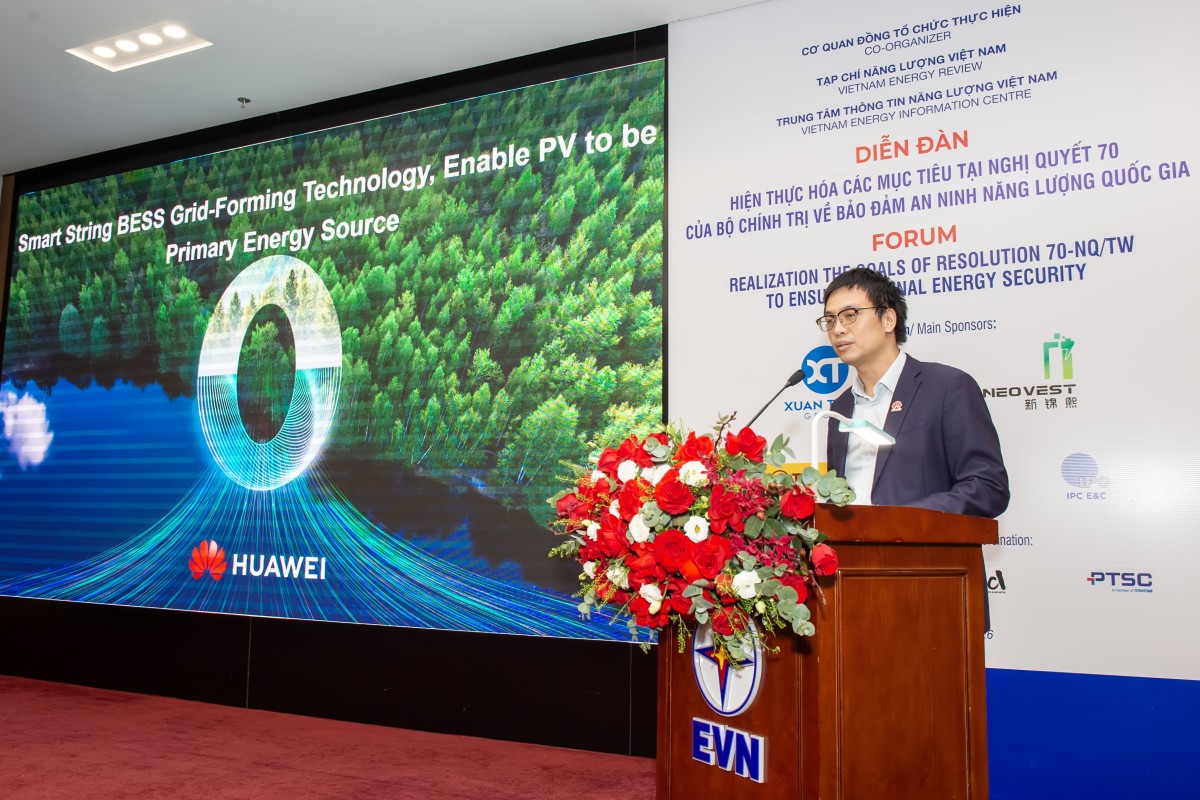 |
| Mr. Nguyen Anh Vu, Senior Business Development Manager of Huawei Digital Power Vietnam. |
Mr. Nguyen Anh Vu, Senior Business Development Manager of Huawei Digital Power Vietnam, shared that Huawei has globally deployed 34 GWh of energy storage and 650 GW of inverters, with installations in Vietnam totaling 60 MWh of BESS and 9 GW of inverters. Despite relatively high upfront investment costs, Huawei’s storage systems offer competitive LCOS. Huawei’s grid-forming BESS provides virtual inertia, where 1 MW of BESS delivers frequency regulation equivalent to 1.7 MW of hydropower, 2.7 MW of simple-cycle gas power, or 27.5 MW of combined-cycle gas power, alongside advanced safety features.
UL Solutions Vietnam also participated in the Forum with a presentation on “Promoting Offshore Wind Development in Vietnam: Building the Foundation through Project Characterization Assessment”.
UL Solutions Renewables has provided technical advisory services for over 1,500 wind and solar projects worldwide.
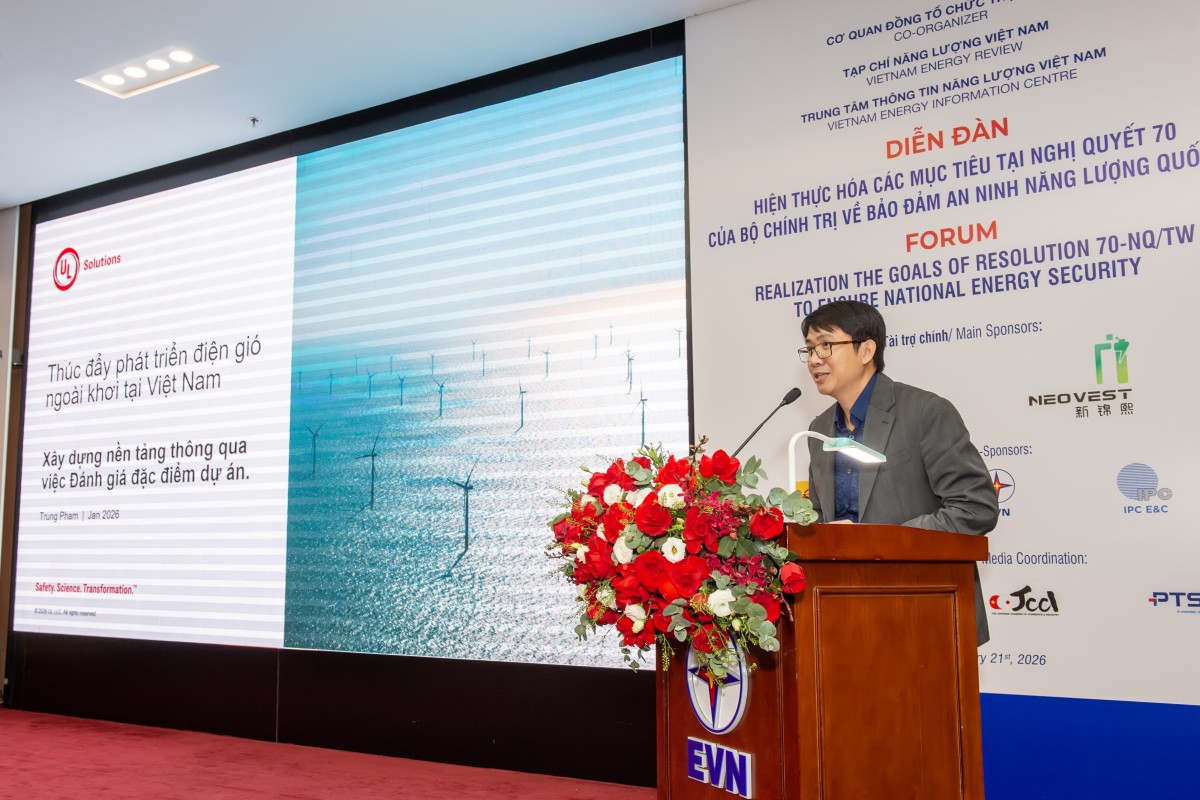 |
| Mr. Pham Vuong Trung, Technical Director, Renewable Energy Advisory – Asia Pacific, UL VS Vietnam. |
He emphasized that site characterization surveys are the first step in optimizing project site selection and form the foundation for developing optimal technical and economic solutions. Adhering to a structured site assessment process enables the estimation of CAPEX, OPEX, and LCOE for prospective wind power projects.
The survey scope includes environmental and social conditions, maritime navigation, fishing areas, infrastructure, resource extraction, military zones, shipwrecks, and unexploded ordnance. Consultants overlay multiple datasets to eliminate hard constraints-such as island boundaries, steep shorelines, environmental impacts, and lighthouse interference-thereby identifying suitable locations for offshore wind turbine development.
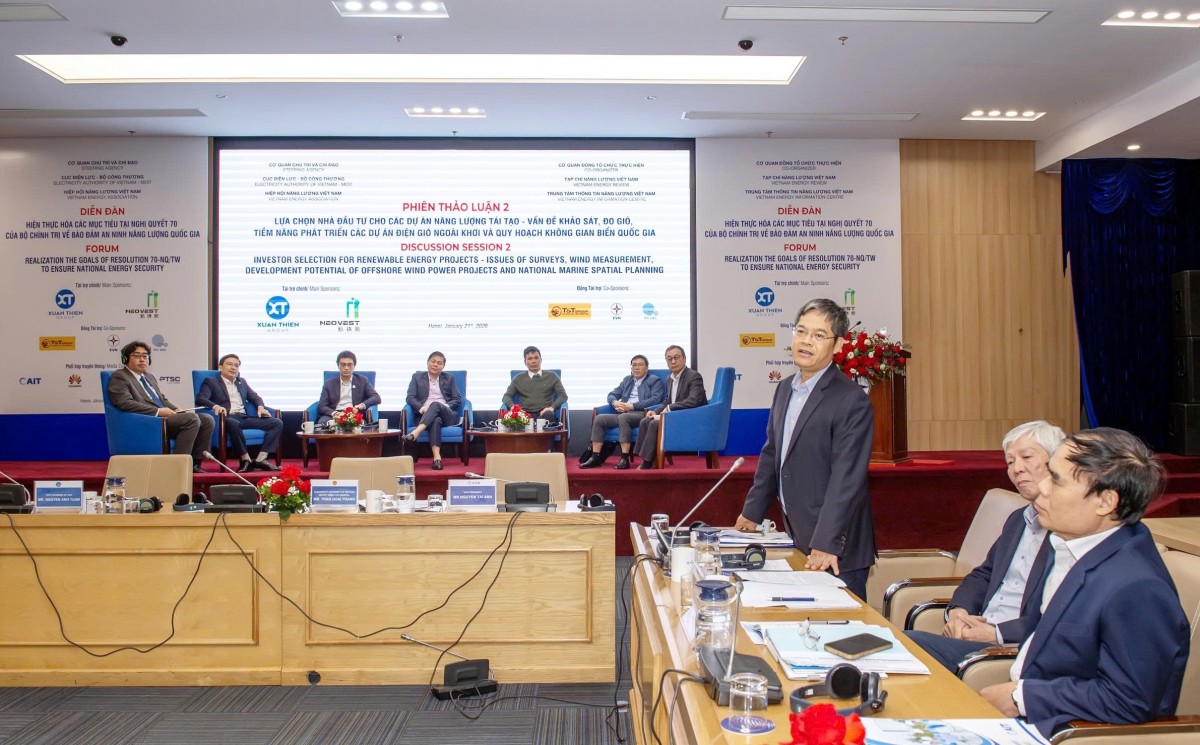
Afternoon panel discussion: Mr. Nguyen Anh Tuan (B) – Vice Chairman of VEA, moderating the discussion.
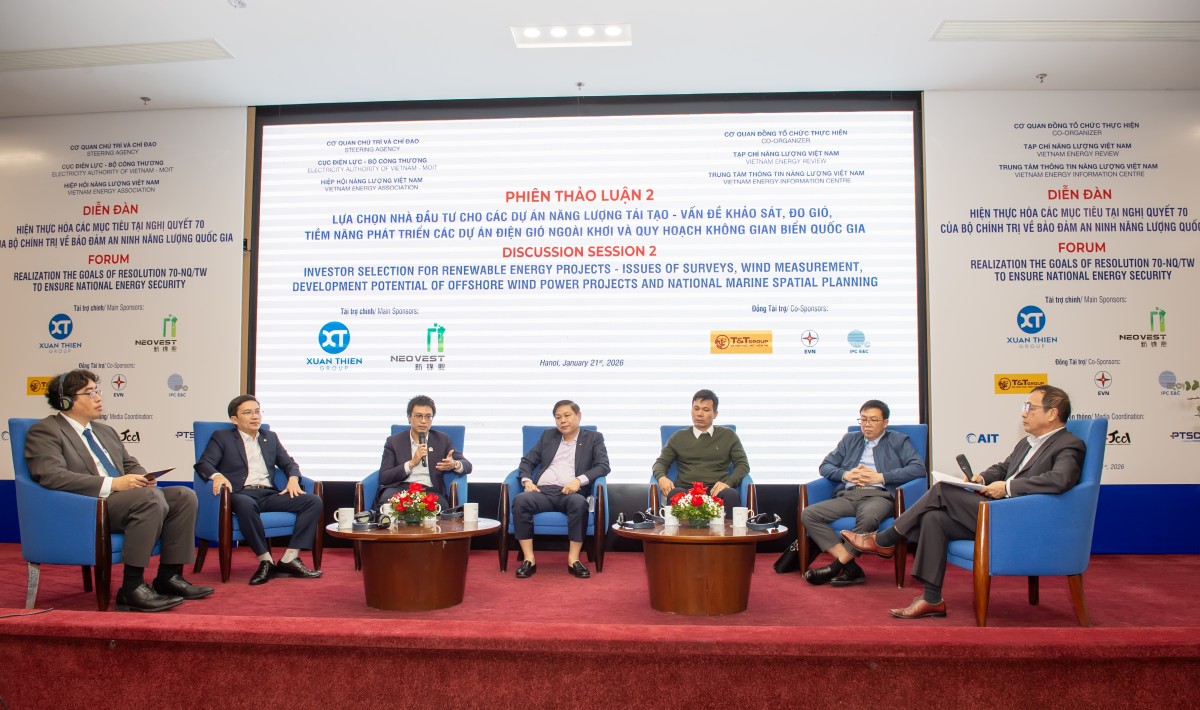 |
| Panel Topic: Investor selection for renewable energy projects, issues related to surveys, wind measurement, assessment of the development potential of offshore wind power projects, and national marine spatial planning. |
According to EVN, the preparation of a pre-feasibility study is the first step for power generation projects, and investors must bear the associated costs. If an investor fails to win the bid, they must assume all related risks. The quality of the project dossier is therefore critical to investor selection, including the proposed pricing.
A representative from the Vietnam Administration of Seas and Islands (Ministry of Agriculture and Environment) stated that the National Marine Spatial Plan has been approved. Vietnam has a marine area of approximately 1 million km², yet sufficient data is still lacking to plan the entire sea area fully. More than 17% of Vietnam’s maritime zones have been allocated for offshore wind development, and additional multi-purpose planning zones may also accommodate offshore wind projects. Offshore wind surveys must comply with multiple relevant laws and regulations.
Key questions raised include whether survey activities should align strictly with the planning scale. For example, if offshore wind capacity is planned at 6 GW by 2030, should permits be issued only for 6 GW or for a higher capacity? The State allows a maximum of three years for survey activities, but has yet to clearly define which survey activities are permitted. Following Decree No. 65, obstacles related to the use of sea areas for offshore wind surveys have been addressed. To date, five organizations have been allocated sea areas. Apart from PTSC, which received its allocation earlier, other companies were granted sea areas under Decree 65.
A representative from IPC noted that offshore wind projects require total investments of several billion US dollars, involving significant risk management considerations, thus demanding strong survey capabilities. Survey companies must possess adequate resources, including equipment, financial capacity, and especially qualified human resources. Surveying a site can cost tens of millions of US dollars.
According to the Electricity Authority, offshore wind development is divided into two phases. The 2026–2030 period is considered a pivotal phase, during which not only state-owned enterprises, whose survey costs may be reimbursed, but also other enterprises are allowed to participate in surveys. EVN, PVN, and private conglomerates are currently involved, and investor selection is not required at this stage. Projects developed after 2030 will be subject to competitive bidding.
A representative of the IEEJ noted that Power Purchase Agreements (PPAs) are inherently long-term contracts. Although capacity pricing may not be immediately implemented, PPAs should already incorporate provisions for future capacity payments. Enhancing the bankability of PPAs is critical to attracting investment and ensuring a secure power supply.
Drawing on Huawei’s experience, the most critical factor is ensuring that energy supply meets economic growth demand. If GDP grows by 10%, energy demand must grow at an even higher rate. Solar power can expand rapidly; however, unlike turbines, it lacks rotational inertia, which may cause grid instability. In 2017, China required renewable energy projects to install Battery Energy Storage Systems (BESS) equivalent to 10–20% of installed capacity, depending on the province. Most of these systems were installed merely for compliance and were largely left unused. Currently, some provinces are facing new requirements to install BESS, effectively necessitating reinvestment from scratch. Renewable energy penetration cannot exceed 30% of total installed capacity without energy storage.
Regarding Small Modular Reactors (SMRs), Mr. Nguyen Tai Anh, Deputy CEO of EVN, stated that it will take another 5–6 years for SMRs to demonstrate commercial viability. Only then can their advantages and disadvantages be meaningfully compared with other power generation sources.
Forum Conclusion:
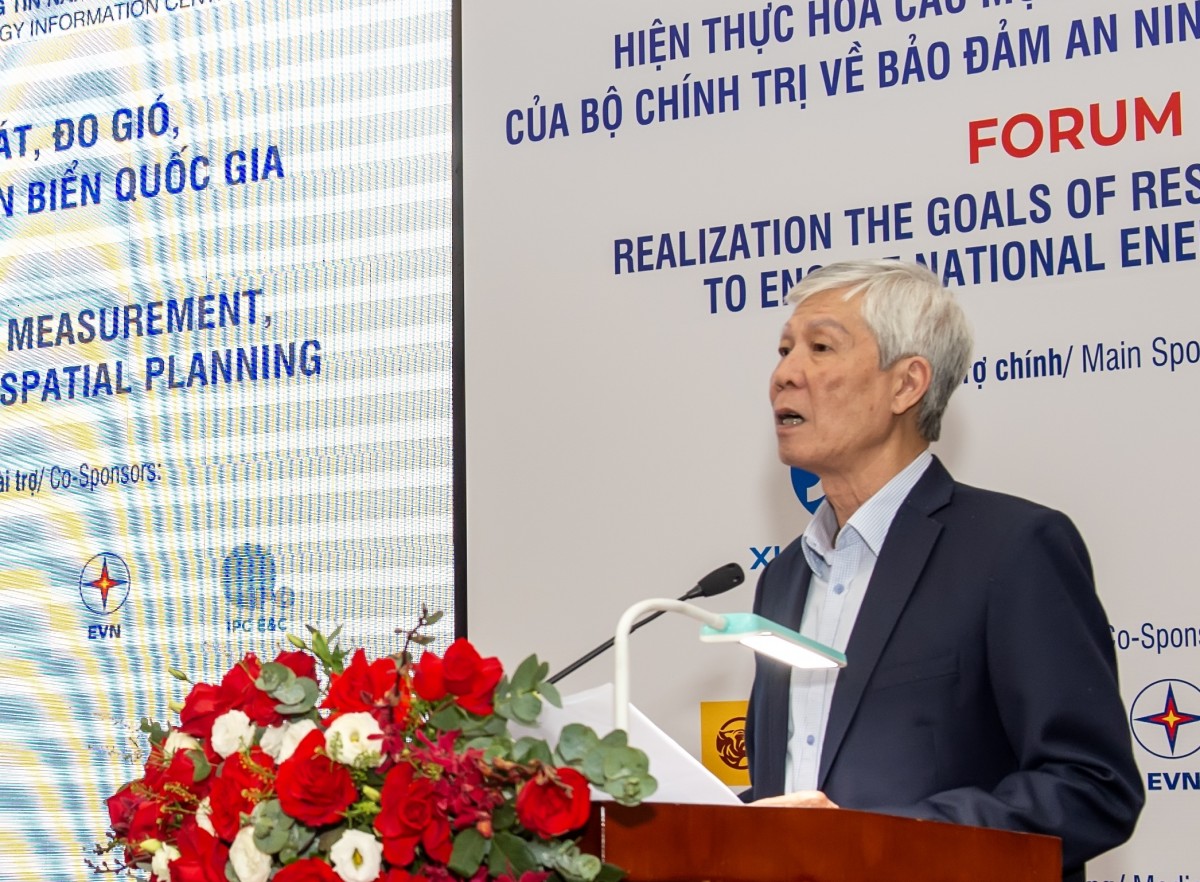 |
| Mr. Nguyen Anh Tuan – First Vice Chairman and Secretary General of VEA. |
Reviewing all discussion tracks at the Forum, it is evident that issues related to LNG-fired power, offshore wind, energy storage, and the electricity market - while critically important - ultimately converge on a single, fundamental point: removing institutional bottlenecks to enable the selection of suitable investors and the mobilization of long-term capital for large-scale energy projects.
The overarching spirit of Resolution 70 was strongly emphasized throughout the Forum, particularly the requirement to review and address institutional constraints in planning, licensing, and capital mobilization, while concurrently developing special, breakthrough mechanisms and policies to implement nationally important and urgent energy projects.
Practical discussions clearly demonstrated that without the timely completion of investor selection mechanisms, bidding frameworks, risk allocation mechanisms, and long-term financing instruments, even projects already included in national plans and strategies will struggle to move into actual implementation.
In this sense, institutional reforms in investment, bidding, and capital mobilization are not merely technical matters, but rather the decisive foundation for realizing Resolution 70 and Resolution 253 during the 2026–2035 period. These reforms are essential to ensuring sufficient power supply for economic growth, advancing a sustainable energy transition, and safeguarding national energy security over the long term.
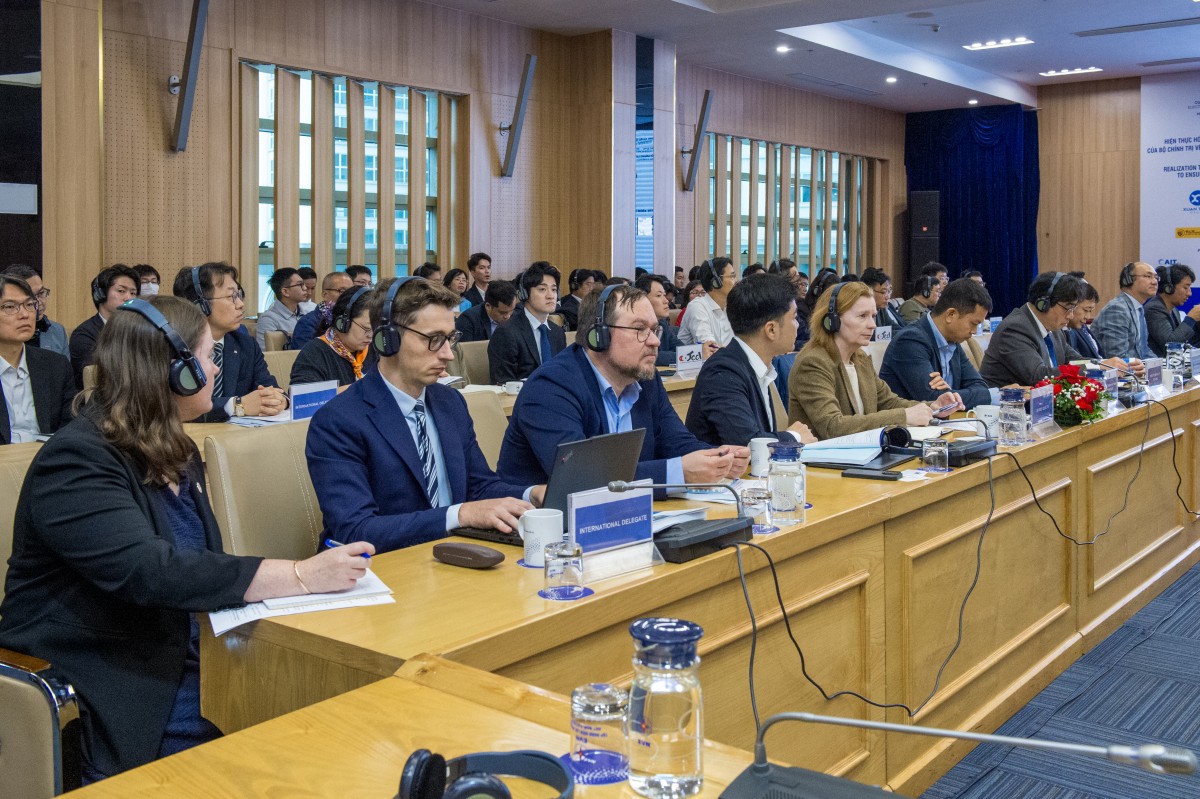
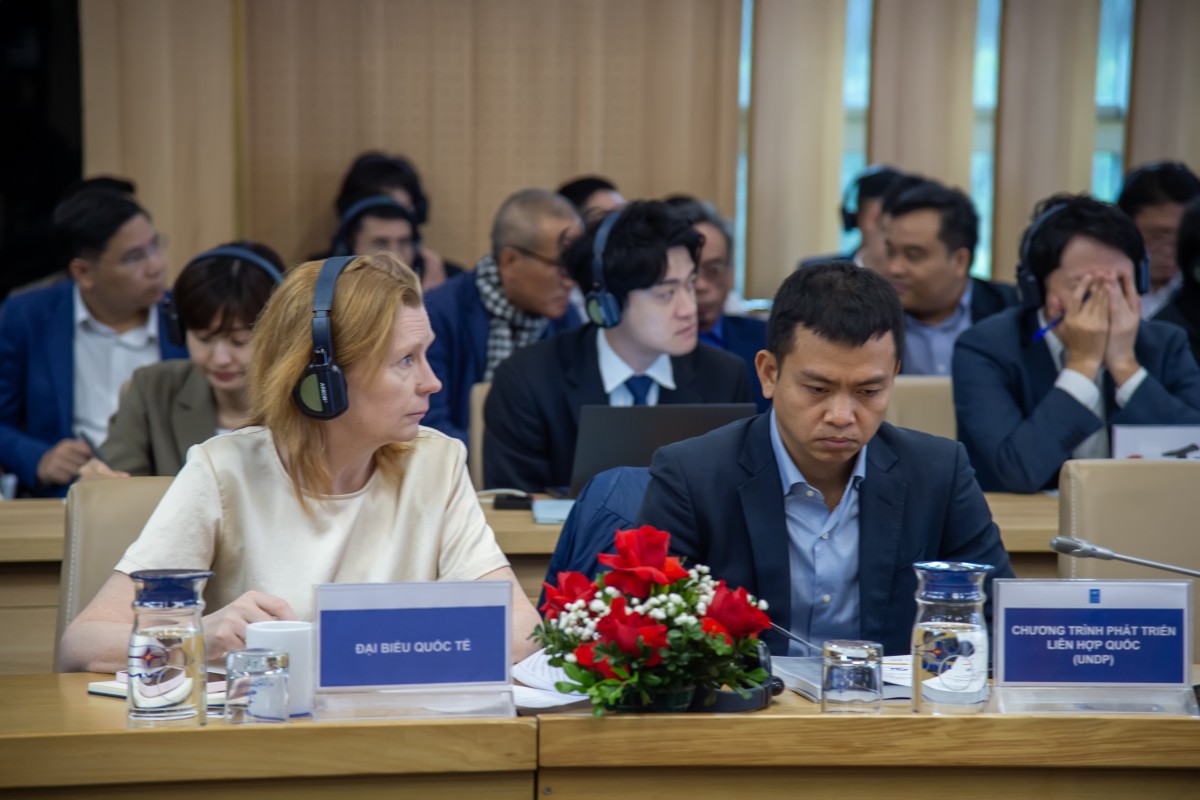
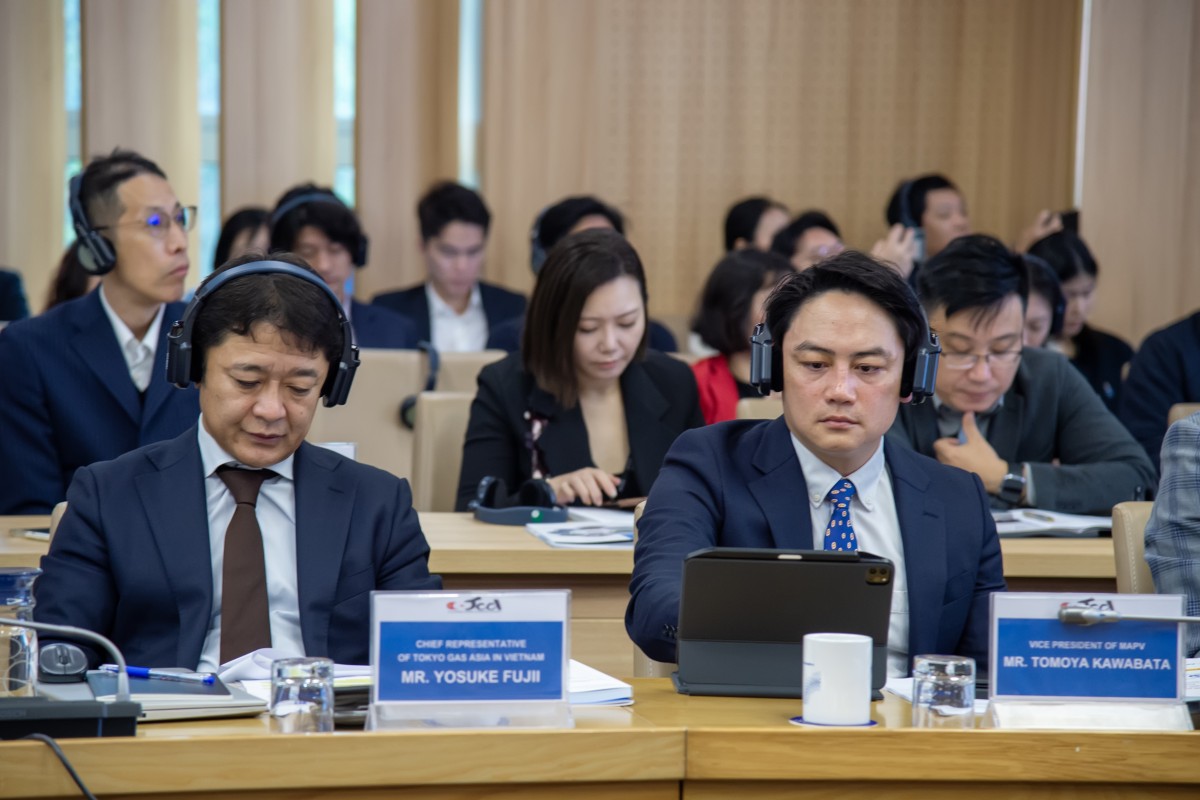
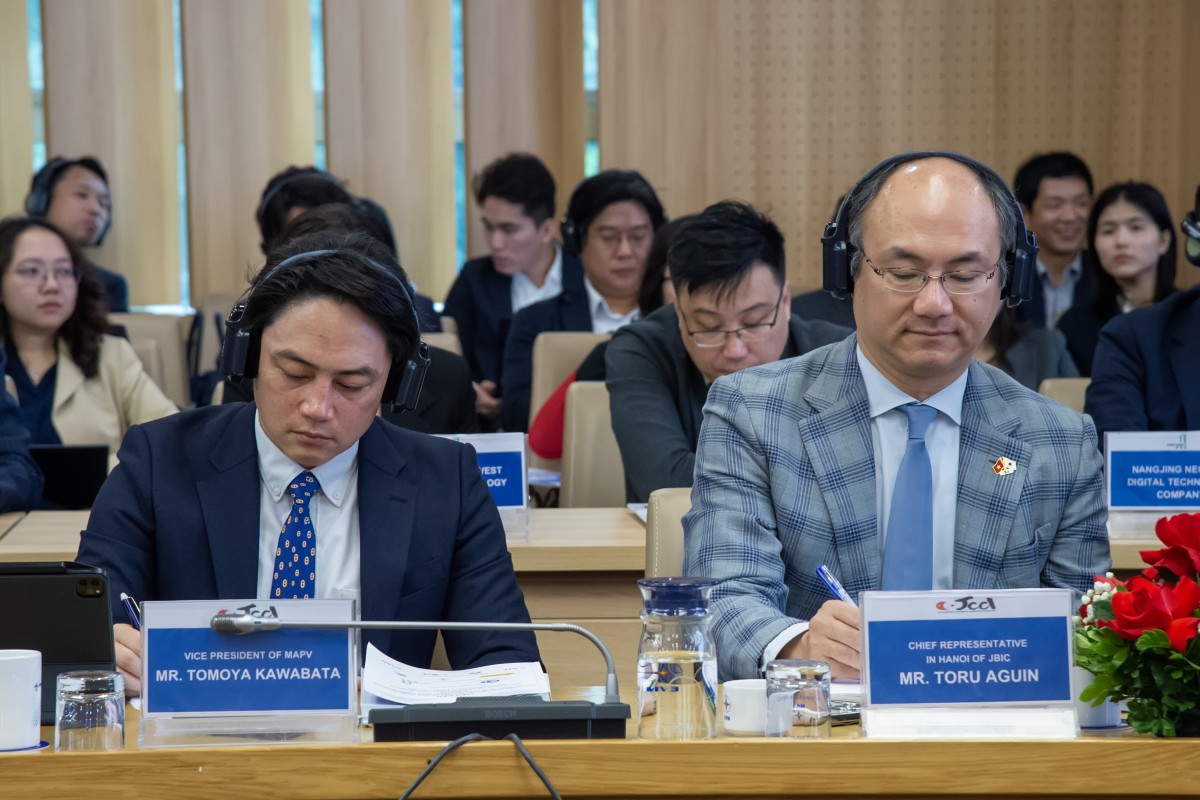
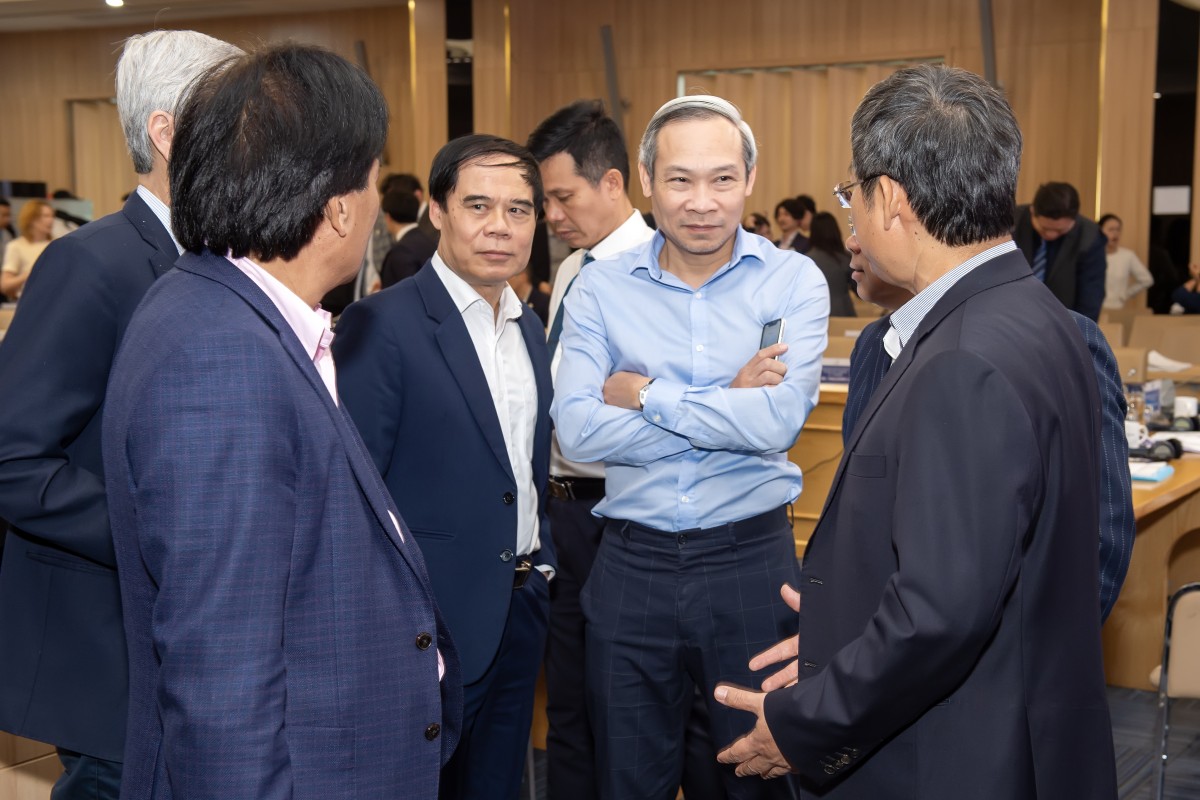
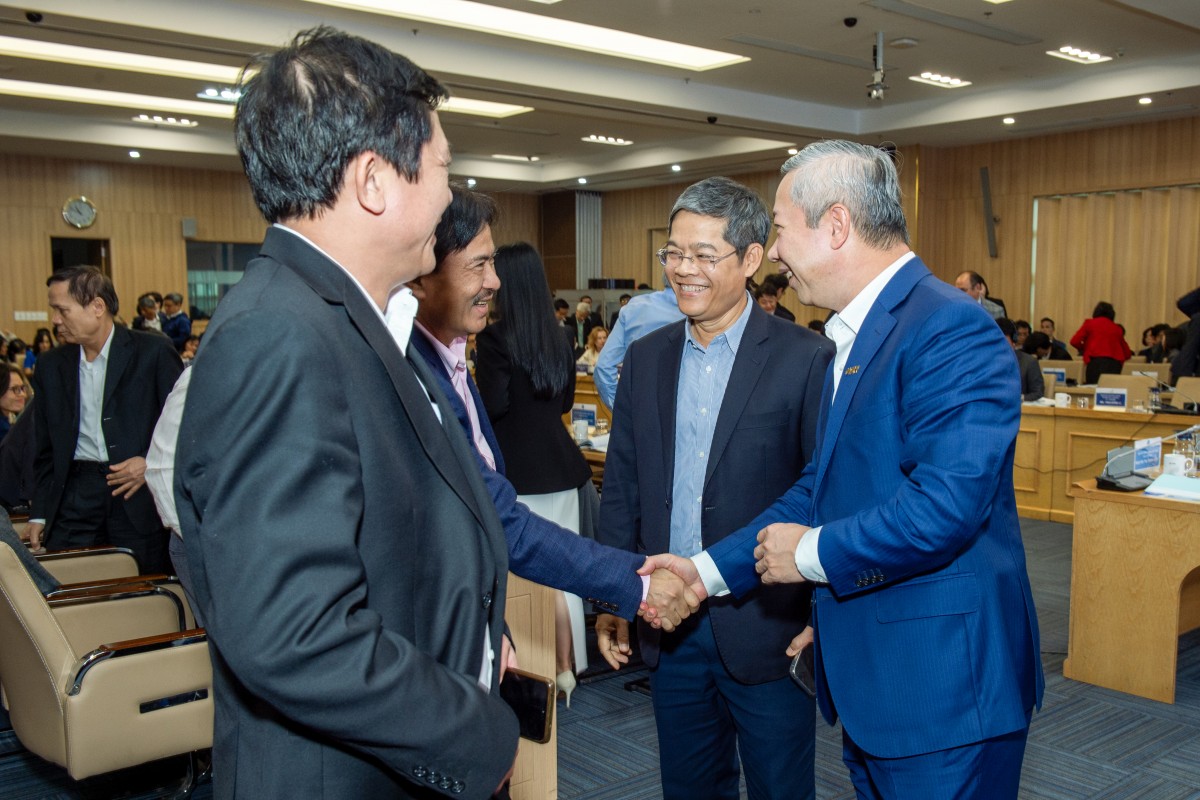
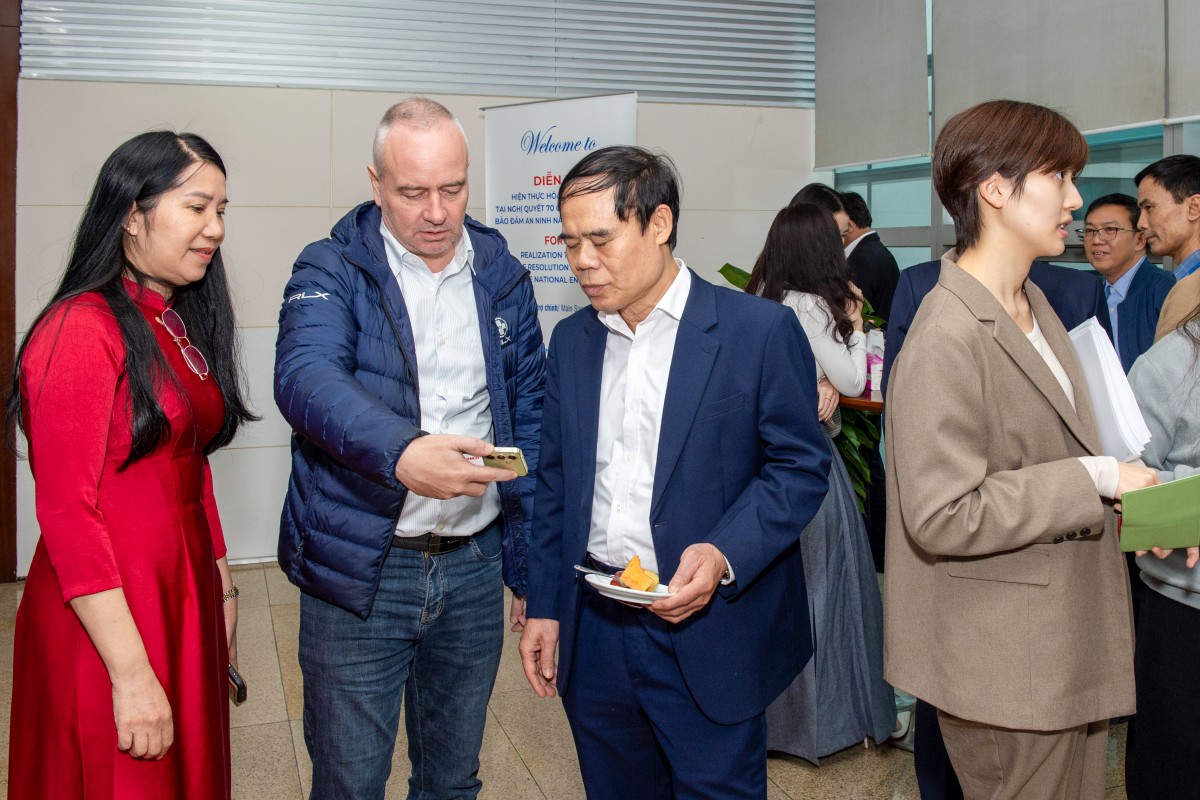
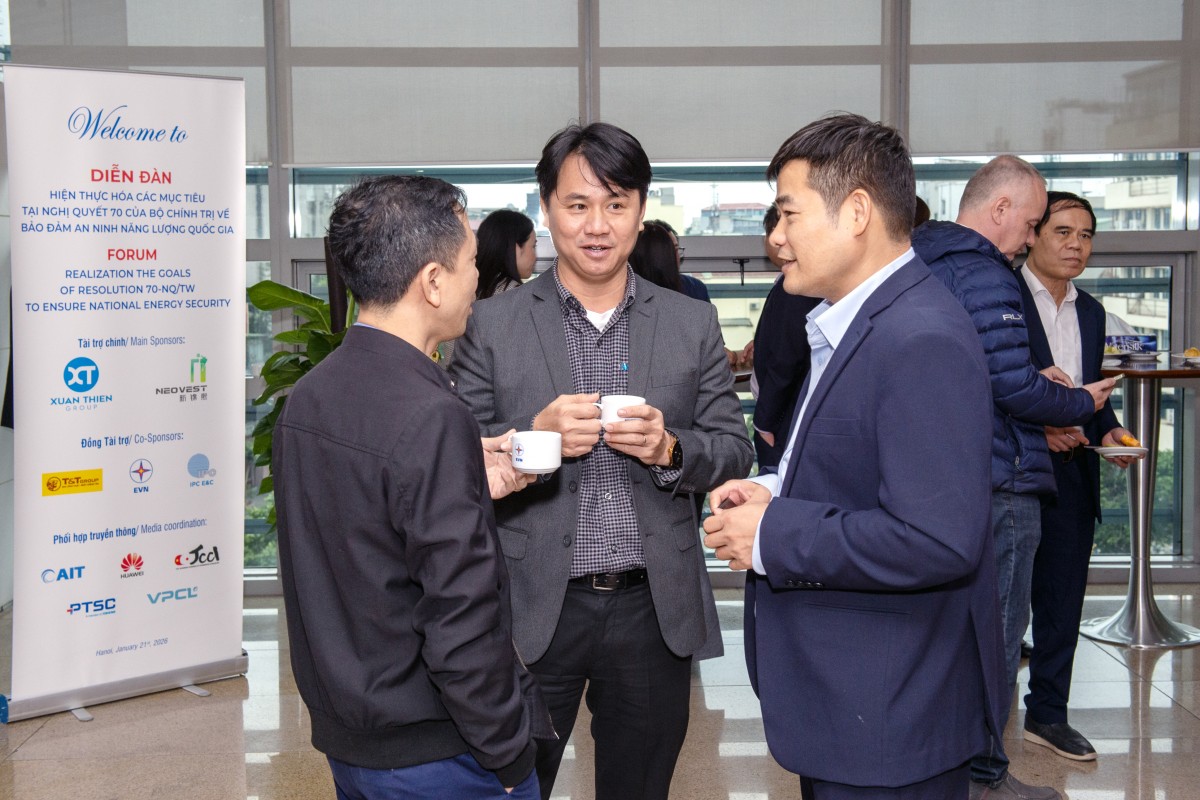
Selected photos from the Forum:
 |
 |
 |
 |
 |
 |
 |
 |
 |
 |
 |
 |
 |
 |
 |
 |
 |
 |
 |
 |
 |
 |
 |
 |
 |
 |
 |