


Accelerating the realization of LNG and offshore in 2026 - Opportunities and institutional tests
10:19 | 24/02/2026
2026: A Strategic Inflection Point
As Vietnam enters 2026, it stands at a critical juncture in its energy transition. This year is not only about accelerating the implementation of the adjusted PDP VIII, but also about testing the country’s governance capacity to translate political commitment into tangible outcomes across the national power system.
In the renewed development mindset following the successful 14th National Party Congress, green growth, emissions reduction, and energy system modernization have become core national policy objectives. Against this backdrop, LNG power and offshore wind have been identified as the two key pillars for the 2026–2035 period.
Adjusted PDP VIII: Ambitious Targets, High Execution Demands
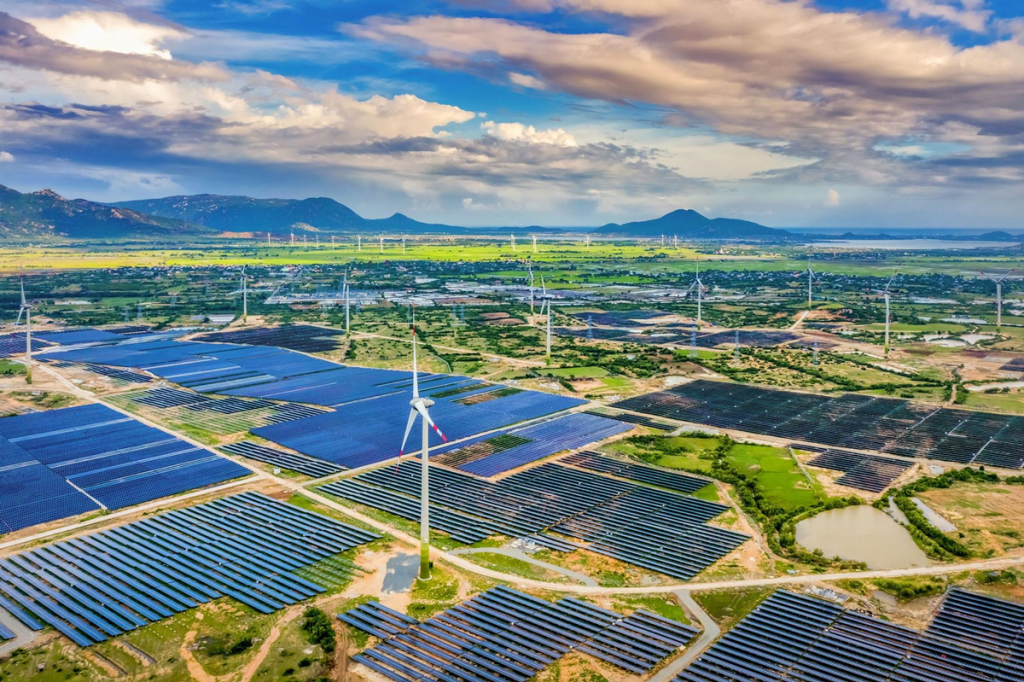
Under the adjusted PDP VIII, Vietnam aims to bring approximately 22,500 MW of LNG-fired power and 6,000 MW of offshore wind capacity into operation by 2030. This represents a profound structural shift—from a coal-heavy system toward one that is lower-emission, more flexible, and better integrated with regional energy markets.
However, these ambitions place immense pressure on investment mobilization, project management capacity, and the legal framework. Estimated capital requirements for LNG and offshore wind during 2026–2030 amount to tens of billions of US dollars. This underscores the need not only to attract international finance but also to establish a stable, transparent, and predictable regulatory environment for investors.
Accordingly, 2026 is widely viewed as a year to unblock institutional bottlenecks. Success should not be measured solely by the number of megawatts launched, but by the quality of the legal framework, electricity market mechanisms, and inter-agency coordination.
Policy Guidance from Resolution 70 and Resolution 253
Resolution No. 70-NQ/TW (dated August 25, 2025) of the Politburo and Resolution No. 253/2025/QH15 of the National Assembly (effective from March 1, 2026) together provide a strong political–legal foundation for the energy transition.
-
Resolution 70 emphasizes energy security, the development of a managed market-based electricity system, diversification of energy sources, and reduced reliance on coal.
-
Resolution 253 translates these priorities into concrete requirements to improve legislation, remove investment bottlenecks, and accelerate strategic LNG and offshore wind projects.
Together, these resolutions serve as policy compasses for 2026, enabling ministries and agencies to introduce tailored mechanisms and address cross-sectoral constraints more decisively.
Offshore Wind: Opening Development Space with Control
A major institutional breakthrough in 2025–2026 was the issuance of Decisions No. 137/QD-BNNMT and 138/QD-BNNMT by the Ministry of Agriculture and Environment, allocating nearly 64,000 hectares of sea area to state-owned enterprises for offshore wind surveys.
-
Vietnam Electricity (EVN) was allocated 24,000 hectares offshore Long Chau–Bach Long Vi (Hai Phong).
-
The Vietnam National Industry – Energy Group (PVN) was allocated over 39,800 hectares offshore Lam Dong Province for a 36-month survey period, with no sea-use fees during the survey phase.
These decisions reflect three key principles: proactive state-led marine spatial planning for renewable energy; early surveys by state-owned enterprises to reduce information asymmetry for the market; and strict requirements on environmental protection, national defense, security, and data confidentiality to ensure sustainable development.
In parallel, Circular No. 79/2025/TT-BNNMT has standardized offshore wind survey allocation procedures before investor selection, enhancing transparency and accountability.
A Year of Preparation, Not Mass Construction
International experience shows that offshore wind projects typically require 5–8 years from initial surveys to commercial operation. As such, 2026 is more likely to be a year of investment preparation, power purchase agreement (PPA) finalization, and legal framework consolidation, rather than widespread construction.
The success of 2026 should therefore be assessed against three criteria:
1/ Bankable and transparent PPAs;
2/ Clear and credible tendering mechanisms;
3/ A stable, long-term framework for offshore power transmission.
If these foundations are laid effectively, Vietnam will be well-positioned to accelerate offshore wind deployment during 2027–2030.
LNG Power: A Transitional Pillar with Significant Challenges
For LNG, challenges extend beyond power plants to the entire import infrastructure chain, including LNG ports, storage facilities, pipelines, and long-term supply contracts. Financial risks and electricity pricing remain the most critical concerns. Without risk-sharing mechanisms, credit guarantees, and a viable power pricing framework, the 22,500 MW LNG target by 2030 will be difficult to achieve on schedule.
Nevertheless, LNG remains an essential transitional energy source, helping to reduce emissions compared to coal and supporting large-scale integration of renewable energy.
Strengthening Inter-Agency Coordination
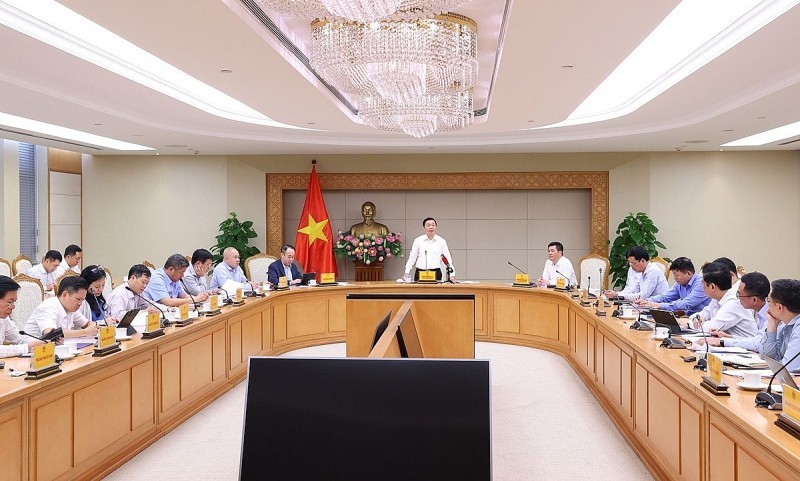
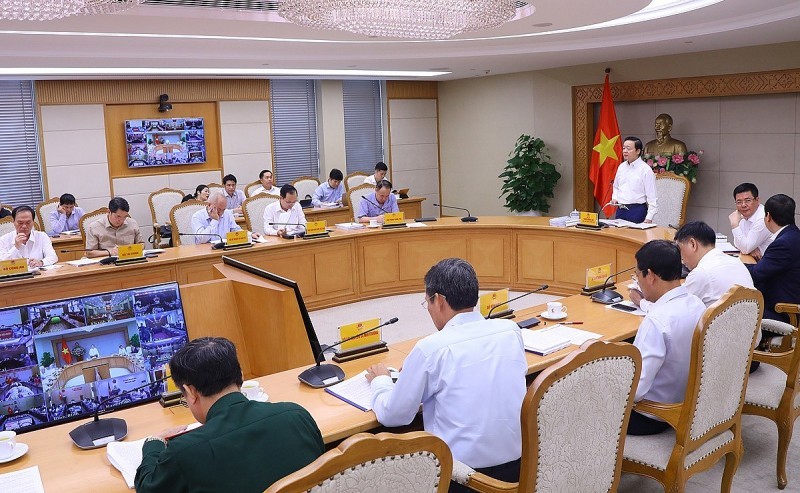
Encouragingly, coordination among the Ministry of Industry and Trade, the Ministry of Agriculture and Environment, the Ministry of Transport, and the Ministry of National Defense has improved in managing marine space and offshore energy development. This is particularly important given the geopolitical and maritime sensitivities of the East Sea, where offshore wind projects must balance economic development with the protection of national sovereignty.
Three Conditions for 2026 to Become a True Turning Point
For 2026 to become a year of high-quality acceleration, three conditions must be met:
1/ Harmonized institutional frameworks across power development, maritime sovereignty, environmental protection, and investment.
2/ Sound financial mechanisms that attract international capital without causing electricity price shocks.
3/ Strategic-level inter-agency coordination under unified government leadership.
Concluding Remarks
The Year of the Horse (2026) marks Vietnam’s transition from strategic orientation to concrete execution of the adjusted PDP VIII. If the policy momentum from the Politburo’s Resolution 70 and the National Assembly’s Resolution 253 is effectively leveraged, LNG power and offshore wind projects can begin to materialize within the power system, rather than remaining on paper.
The true value of 2026 lies not in the number of projects breaking ground, but in the establishment of a functional institutional foundation—bankable PPAs, balanced risk allocation, effective inter-agency coordination, and a stable investment climate. These are the prerequisites for mobilizing long-term capital and ensuring energy security during the transition.
The spirit of the Horse should be understood as controlled acceleration: decisive in pace, rigorous in legal foundations, and resilient in system safety. If 2026 delivers institutional and governance breakthroughs, Vietnam will be well-positioned to build a modern power system that balances baseload capacity with renewable energy, contributing meaningfully to its net-zero emissions target by 2050.
Dr. Nguyen Huy Hoach - Scientific Council of the Vietnam Energy Review.
References
1/ Resolution No. 70-NQ/TW dated August 25, 2025, on orientations for national energy development to 2030, with a vision to 2045.
2/ Resolution No. 253/2025/QH15 on further improving institutions and policies for energy development and the electricity market.
3/ Ministry of Agriculture and Environment (2025): Decision No. 137/QD-BNNMT on the allocation of sea areas to Vietnam Electricity (EVN) for surveying the Northern Offshore Wind Power Projects 1.3 and 1.4.
4/ Ministry of Agriculture and Environment (2025): Decision No. 138/QD-BNNMT on the allocation of sea areas to the Vietnam National Industry – Energy Group (Petrovietnam) for surveying the South Central Offshore Wind Power Project No. 1.
5/ Ministry of Agriculture and Environment (2025): Circular No. 79/2025/TT-BNNMT stipulating the order and procedures for assigning state-owned enterprises to conduct offshore wind surveys before investor selection.