


Top 10 Landmark Events of Vietnam’s Energy Sector in 2025
09:30 | 06/01/2026
Against this backdrop, the Scientific Council of Vietnam Energy Review selected the ten most significant energy events of 2025, offering a comprehensive and vivid overview of the major transformations shaping the national energy system over the past year.
The year 2025 also saw Vietnam’s energy sector simultaneously accelerating its energy transition while facing unprecedented pressures. Increasingly extreme climate events, rapidly growing electricity demand, and an accelerated transition toward cleaner energy sources, combined with lagging generation capacity, transmission infrastructure, and market institutions, have placed the energy system under mounting stress in terms of security, efficiency, and sustainability.
In this context, decisions related to electricity, oil and gas, or coal are no longer purely technical or economic choices. Still, they are directly linked to macroeconomic stability and national energy security.
1. A Wave of New Policies and Regulatory Frameworks
The year 2025 was widely regarded as a pivotal moment, as the revised Power Development Plan VIII (PDP8) moved beyond strategic orientation toward concrete implementation through generation and grid investment decisions. Long-standing bottlenecks related to administrative procedures, project timelines, and project portfolios were gradually addressed. While progress remained uneven, this marked a fundamental shift from a “planning mindset” to a focus on executing the plan.
In parallel, 2025 witnessed strong institutional efforts by the Party, the National Assembly, the Government, and the Ministry of Industry and Trade to complete the legal framework for the energy sector. A series of key documents were adopted, including the Politburo’s Resolution No. 70-NQ/TW; the amended Law on Atomic Energy; the National Assembly’s resolution on mechanisms and policies for national energy development for the 2026–2030 period; along with decrees and circulars guiding the implementation of the Electricity Law No. 61/2024/QH15.
Notably, several cornerstone regulations were issued, such as Decree No. 56/2025/ND-CP on power development planning, grid development schemes, and competitive bidding for power projects; Decree No. 57/2025/ND-CP on the Direct Power Purchase Agreement (DPPA) mechanism; and Decree No. 58/2025/ND-CP on renewable and new energy sources. At the same time, the Ministry of Industry and Trade released timely circulars defining power generation price frameworks for solar and onshore/offshore wind power, LNG-fired power, pumped-storage hydropower, and battery energy storage systems (BESS).
As regulatory mechanisms began to unlock capital flows, 2025 marked a clear transition in governance, from an approval-based approach to one centered on competitive bidding, transparency, and market principles. The practical implementation of the amended Electricity Law and DPPA regulations significantly strengthened investor confidence, particularly among foreign investors.
A key highlight was the revival of multiple offshore wind and gas-to-power projects that had been stalled due to pricing uncertainties. Many of these projects resumed site surveys, preparatory works, and EPC contract negotiations, signaling that the Government has started to address the complex challenge of balancing the interests of the State, investors, and consumers.
The legal foundation for nuclear power development was also established when, on June 27, 2025, the 15th National Assembly passed the amended Law on Atomic Energy. Comprising 12 chapters and 73 articles and effective from January 1, 2026, the law focuses on promoting the peaceful use of atomic energy, ensuring nuclear safety and security, and creating a legal basis for future nuclear power projects.
By clarifying technical, safety, security, and lifecycle management requirements for nuclear power plants, the new law is expected to enhance transparency and credibility, paving the way for Vietnam to cautiously and confidently re-enter the nuclear power era in a safe, sustainable, and internationally aligned manner.
2. Nhon Trach 3 and 4 LNG Power Plants Enter Commercial Operation
On December 14, 2025, the Nhon Trach 3 and Nhon Trach 4 LNG power plants, with a combined capacity of 1,624 MW, were officially inaugurated and put into operation. The project is invested by PetroVietnam Power Corporation, a member of the Vietnam National Industry - Energy Group. This is widely regarded as the most impactful event of Vietnam’s energy sector in 2025.
As the two plants were sequentially connected to the national grid, Vietnam entered a phase of full-scale, practical operation of LNG-fired power generation, adding a large baseload capacity to the southern power system. Beyond capacity expansion, the project represents a strategic shift in the national power mix, supporting the gradual reduction of coal-fired generation amid climate change pressures and increasingly stringent decarbonization requirements.
The official launch of the LNG power era was marked by the commercial operation of Nhon Trach 3 and 4, placing Vietnam among the group of countries producing electricity from liquefied natural gas (LNG).
In terms of scale and technology, with a total capacity of 1,624 MW, the project employs the cleanest fossil fuel currently available and is equipped with H-class gas turbines, the world’s highest-efficiency gas turbine technology.
From a system perspective, as conventional hydropower resources are nearly fully exploited and coal power development faces growing constraints, the addition of approximately 9-10 billion kWh per year from this LNG power complex to Vietnam’s southern key economic region is of critical importance for national energy security. The successful operation of Nhon Trach 3 and 4 demonstrates that LNG power is no longer a conceptual option, but a practical and urgent baseload solution in Vietnam’s evolving energy system.
3. Major 500 kV and 220 kV Transmission Projects have been put into operation
In 2025, a large number of 500 kV and 220 kV power transmission projects were completed and commissioned, particularly in key load centers and power evacuation regions. The reinforcement of transmission infrastructure directly reduced congestion risks, improved supply reliability, and enabled more flexible system operation. As new generation capacity continued to come online, transmission development proved to be a critical pillar of national energy security.
A notable milestone was the completion and energization of the 500 kV Lao Cai – Vinh Yen transmission line, nearly 230 kilometers in length, on October 17, 2025 - just over six months after construction began. This exceptional timeline demonstrated not only extraordinary efforts but also marked a new level of capability in project execution and system management within Vietnam’s power transmission sector.
The “lifelines” of the 500 kV and 220 kV grid were effectively unblocked as Vietnam Electricity (EVN) and the National Power Transmission Corporation (EVNNPT) completed a massive workload to address long-standing grid bottlenecks. Building on the success of the 500 kV Circuit 3 line (Quang Trach – Pho Noi) completed the previous year, the focus in 2025 shifted toward power evacuation and the mitigation of localized overloads.
In practice, the commissioning of multiple 500 kV substations and associated transmission lines in the Central Highlands and South Central regions helped resolve the long-standing issue of renewable energy projects facing curtailment due to insufficient grid capacity. The power grid is no longer merely a transmission network, but is increasingly evolving into a foundational infrastructure enabling a more flexible, intelligent, and resilient power system.
4. Major Power Generation and Cross-Border Projects Commissioned
In 2025, Vietnam saw the completion and commissioning of several key power generation projects, including large-scale facilities playing a critical role in balancing and stabilizing the national power system. Notable milestones included the full operation of the Hoa Binh Hydropower Expansion, the resolution of legal bottlenecks for transitional power projects, and the practical commissioning of cross-border electricity projects.
On July 22, 2025, Unit 1 (665 MW) of the Vung Ang 2 BOT Thermal Power Plant in Ha Tinh officially entered operation. The plant applies ultra-supercritical (USC) coal-fired technology, contributing baseload capacity while improving fuel efficiency during the transitional phase of Vietnam’s energy transformation.
At the same time, the Savan 1 Wind Power Plant, a renewable energy project invested by T&T Group in Laos, commenced commercial operation, delivering clean electricity to Vietnam. Phase 1 of the project consists of 48 wind turbines with a total capacity of 300 MW, marking an important milestone in cross-border energy cooperation between Vietnam and Laos. Together, these projects directly increased system capacity, enhanced operational flexibility, and helped ease power supply pressure during peak periods.
Regarding the Hoa Binh Hydropower Expansion, amid the rapid growth of variable renewable energy, large hydropower continues to serve as the “heart” of the power system thanks to its fast start-up and frequency regulation capabilities. The successful commissioning of both units of the 480 MW Hoa Binh Hydropower Expansion in 2025 was a major technical achievement in underground construction. While the project adds approximately 233 million kWh per year, its core value lies in its peaking and system-stabilizing function, particularly during evening hours when solar output declines sharply.
For the Savan 1 Wind Power Project (Laos), with a total installed capacity of 495 MW across two phases and an estimated investment of USD 768 million, the project is expected to become a flagship example of Vietnam–Laos energy cooperation. In 2025, the investor completed a double-circuit 220 kV transmission line over 50 kilometers in length connecting the plant to Vietnam’s grid and successfully brought Phase 1 (300 MW) into commercial operation on December 26, 2025.
The key message from the Savan 1 project extends beyond capacity figures. It demonstrates how bilateral cooperation agreements are being translated into practical, efficient, and sustainable projects, while also highlighting the growing capabilities of Vietnamese enterprises in project execution and overall management. Led by IPC Construction Engineering Joint Stock Company (IPC E&C), the Vietnamese contractor consortium played a central role in the project’s implementation.
More broadly, projects such as Truong Son wind power and Savan 1 reflect not only investments in energy infrastructure, but also the aspiration and rising role of Vietnam’s private sector in partnering with the country to develop a sustainable energy future.
5. Ban Ve Hydropower Plant Mitigates a Historic Flood, Protecting Downstream Areas
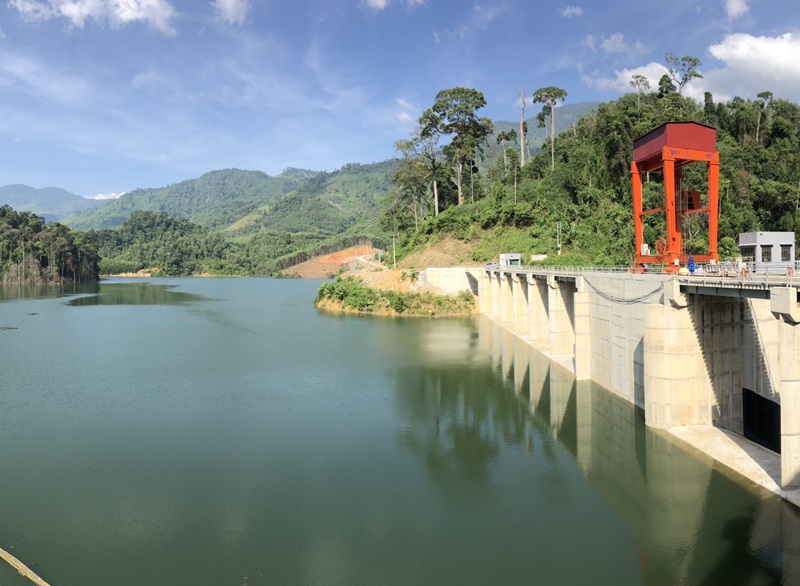
During the 2025 rainy season, the Ban Ve Hydropower Plant successfully mitigated a rare and extreme flood event with inflows exceeding its design frequency, playing a critical role in protecting downstream areas along the Ca River. This event once again underscored the irreplaceable role of large hydropower reservoirs in disaster risk management, particularly as climate change increases the frequency and intensity of extreme weather events.
A landmark flood mitigation achievement unfolded amid the highly volatile 2025 monsoon season, when La Niña-driven conditions caused unusually high rainfall and inflows across the North Central region. Located in Nghe An Province, Ban Ve Hydropower Plant - the largest reservoir in North Central Vietnam — became a key defensive barrier safeguarding millions of downstream residents.
Faced with flood inflows exceeding design thresholds, Ban Ve Hydropower Plant prioritized flood control over power generation, maintaining flood storage capacity to completely cut the flood peak. As a result, widespread downstream flooding along the Ca River was effectively avoided, significantly reducing potential human and economic losses.
The broader message from this event is clear: large hydropower projects are not merely power generation assets, but multi-purpose infrastructure that plays a vital role in social welfare, national water security, and climate resilience.
6. Pilot Implementation of a Two-Part Electricity Tariff
The pilot implementation of a two-part electricity tariff, comprising a capacity charge and an energy charge, in 2025 was widely regarded as a significant step in Vietnam’s electricity market reform. This pricing mechanism more accurately reflects both capacity-related investment costs and energy costs, encouraging more efficient electricity use while laying the groundwork for a transparent and sustainable competitive power market in the years ahead.
A structural shift in electricity pricing was marked as Vietnam, for the first time, piloted a two-part tariff model aligned with international market practices.
In essence, instead of paying solely for electricity consumption measured in kilowatt-hours (kWh), large electricity consumers are also required to pay a charge based on their registered capacity (kW). This approach reflects the reality that the power system must invest in generation and grid infrastructure to meet peak demand, regardless of actual energy consumption levels.
In terms of impact, for the power sector, the two-part tariff enables a more rational recovery of fixed investment costs, reducing risks associated with customers registering high capacity but utilizing it inefficiently. For consumers, particularly industrial users, the mechanism encourages more disciplined load management and demand planning, helping to avoid unnecessary strain on system resources. In the longer term, this reform is expected to enhance cost transparency and attract greater private investment into power infrastructure.
7. Thi Vai LNG Terminal Enters Stable Commercial Operation
In 2025, the Thi Vai LNG terminal entered a phase of stable commercial operation, completing a critical link in Vietnam’s national LNG supply chain. In parallel, on August 23, 2025, Phase 1 of the Cai Mep LNG port and terminal, invested by Hai Linh Phu Tho Co., Ltd., was officially inaugurated. These facilities play a pivotal role in securing fuel supply for LNG-fired power plants in the Southeast region, while opening new development space for Vietnam’s liquefied natural gas market.
The Thi Vai LNG terminal - a new energy supply source entering full operation - has a designed capacity of 1 million tons per year, with plans to expand to 3 million tons per year. Its stable commercial operation in 2025 is widely seen as the final missing piece in Vietnam’s gas-to-power value chain, covering LNG importation, storage, regasification, and power generation.
In strategic terms, Thi Vai is currently Vietnam’s first and largest LNG terminal. Its successful operation enhances Vietnam’s energy supply autonomy, reducing reliance on rapidly declining domestic gas fields. At the same time, it lays the foundation for Vietnam to participate more actively in the global LNG trading market, diversify primary energy sources, and strengthen national energy security.
8. Key Construction Milestones Restarted in the Block B - O Mon Gas-to-Power Project
After years of stagnation, 2025 marked tangible progress in the Block B - O Mon gas-to-power project chain, as major bottlenecks related to investment mechanisms and financing were gradually resolved. The revival of this project is of critical importance to energy security in Vietnam’s Southwest region, while reviving expectations for a large-scale domestic gas supply for power generation in the medium and long term.
After more than two decades of delays, the Block B - O Mon mega project, with a total investment of nearly USD 12 billion, officially regained momentum on the ground in 2025.
In terms of implementation, Final Investment Decisions (FID) for the upstream components (gas production facilities) and midstream infrastructure (gas pipelines) were activated. Downstream, the O Mon 2, 3, and 4 power plants successfully addressed key issues related to project financing and gas offtake arrangements, paving the way for synchronized construction.
From a strategic perspective, once completed, the Block B - O Mon project chain will supply gas to four power plants with a combined capacity of approximately 3,800 MW, serving as a cornerstone of energy security for the entire Southwest region over the next two decades, while helping balance Vietnam’s power mix between domestic gas resources and imported LNG.
9. Coal Sector Expands Mining Capacity and Stabilizes Fuel Supply for Power Generation
In 2025, Vietnam’s coal sector recorded notable progress with the completion of several mine expansion projects, alongside the implementation of long-term coal supply contracts for key thermal power plants. These developments contributed to stabilizing fuel supply for power generation, reducing reliance on coal imports, and ensuring the safe and reliable operation of the power system amid steadily rising electricity demand.
As open-pit coal reserves continue to decline, many subsidiaries of Vietnam National Coal – Mineral Industries Group (TKV) accelerated the transition toward deep underground mining, reaching depths of -300 meters, -500 meters, and beyond. Ha Lam Coal Joint Stock Company began constructing inclined shafts down to -550 meters, with a mechanized mining approach targeting an output of approximately 2.4 million tons per year.
A key milestone was achieved on 25 December 2025, when Nui Beo Coal Joint Stock Company produced its 2-millionth ton of underground coal at level MB+35, officially reaching the designed capacity of the Nui Beo underground mining project. This event marked a significant step in the coal industry’s strategic transition from open-pit mining to underground operations.
A silent but resilient backbone:
Amid the global energy transition, coal remains a critical baseload energy source, particularly for Northern Vietnam during peak dry-season demand. In 2025, TKV and Dong Bac Corporation undertook a challenging dual mission: maintaining production levels while progressively greening mining and coal utilization processes.
The expansion of large-scale underground mines, the adoption of modern technologies, and the stabilization of long-term coal supply agreements helped shield the power sector from global fuel price volatility. These efforts reaffirmed coal’s indispensable role in maintaining system load balance, frequency stability, and voltage reliability within Vietnam’s national power system.
10. National Power System Operates Safely Under Extreme Weather Conditions
The year 2025 posed unprecedented challenges for Vietnam’s power system operation as extreme weather events, prolonged heatwaves, and sharp load fluctuations put significant pressure on system dispatch and balancing. Through close coordination among operating entities, flexible generation dispatch, and effective utilization of the transmission network, the national power system was able to maintain overall operational safety, with no widespread outages.
Notably, electricity generation in 2025 increased by only around 4.8%, lower than in 2022 and 2024. During 2022–2023, electricity demand growth was dampened by the lingering effects of the Covid-19 pandemic. With Vietnam’s GDP growth in 2025 estimated at approximately 8%, the electricity-to-GDP elasticity for the 2021–2025 period is estimated at 0.99, below unity.
This outcome offers an important insight: electricity demand does not necessarily need to grow faster than GDP, nor does it always have to reach the commonly cited ratio of 1.3–1.5. Improvements in energy efficiency, load optimization, and structural economic shifts are gradually reshaping the traditional relationship between electricity consumption and economic growth.
A stress test for system operation:
The year 2025 also marked a critical test for the National Power System and Market Operator (NSMO) following its organizational separation from EVN and transition under the Ministry of Industry and Trade.
The system faced increasingly pronounced “duck curve” load profiles due to the high penetration of solar power, combined with record-breaking heatwaves that pushed peak demand (Pmax) beyond previous forecasts. Nevertheless, through the deployment of advanced dispatch algorithms and coordinated operation—utilizing hydropower for peak shaving, thermal power for baseload, and renewables as supplementary supply-the Vietnamese power system operated reliably, avoiding any nationwide blackout.
This achievement reflects not only the robustness of the physical infrastructure but also the technical competence, experience, and resilience of Vietnam’s power system operators amid an increasingly complex energy transition.
Conclusion:
Looking back at 2025, Vietnam’s energy sector was not defined by grand slogans but by tangible projects, difficult policy choices, and high-pressure system operations. From wind power, LNG-fired generation, hydropower, and transmission infrastructure to coal, gas, and evolving electricity demand patterns, each of the year’s landmark events reflected a critical transitional phase of the national energy system-one in which energy security, system flexibility, and operational efficiency have become paramount.
The close of 2025 serves as a clear reminder that national energy security can only be ensured when policy decisions are grounded in operational realities, aligned with the broader economic interest, and guided by a long-term vision. These fundamentals now form the basis for the next stage of development-one that is more pragmatic, resilient, and sustainable.
Towards 2030 – An Era of Efficiency and Sustainability
A review of the ten most significant energy events of 2025 reveals a Vietnamese energy sector undergoing a genuine transformation. The phase of rapid, extensive expansion is gradually giving way to a new cycle of deep, quality-driven development, characterized by more rigorous considerations of cost, system efficiency, and environmental impact.
The foundations laid in 2025, ranging from LNG infrastructure and reinforced transmission networks to smarter grid operation and market-based electricity pricing mechanisms, will serve as a critical launchpad for Vietnam to achieve the objectives set out in the Power Development Plan VIII for the 2026–2030 period, while moving steadily toward its Net Zero commitment by 2050.
Alongside these positive developments, 2025 also exposed unresolved issues and emerging challenges that warrant continued, candid assessment. These aspects will be further analyzed, discussed, and accompanied by policy recommendations in forthcoming publications by the Scientific Council of Vietnam Energy Review./.
SCIENTIFIC COUNCIL OF VER