

Building Vietnam's Nuclear Energy Future Through Codes, Qualification, and Quality Management
12:48 | 04/07/2026
Yet, through recent discussions with Korean nuclear industry experts, former executives of electric utilities, technical specialists, and nuclear training institutions, another issue has consistently emerged as equally significant:
What codes, standards, supplier qualification systems, and quality management frameworks will underpin Vietnam's future nuclear industry?
Although far less visible than reactor technologies or construction activities, the answer to this question may ultimately determine Vietnam's ability to establish a sustainable domestic nuclear supply chain and co.
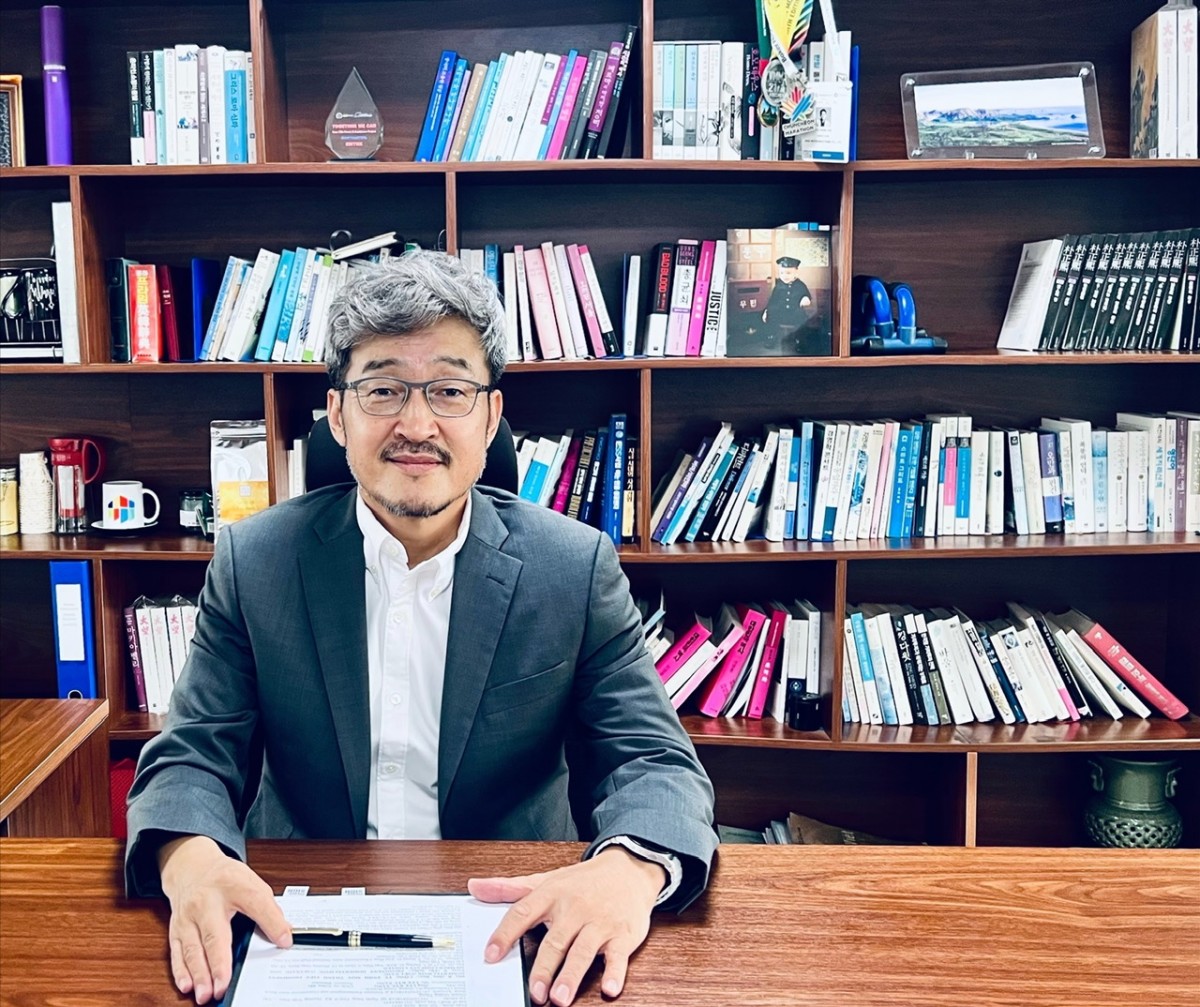 |
| Mr. Lee Kyu Sang, Founder of Asia Networks PEMS Company Limited. |
Nuclear Power Is Far More Than Building a Reactor:
Many people naturally associate nuclear power with reactors, turbines, and large-scale construction sites. In reality, however, a nuclear power plant is fundamentally an industrial ecosystem driven by uncompromising quality, built upon rigorous engineering discipline and robust institutional governance.
Every Structure, System and Component (SSC)—including valves, pumps, heat exchangers, electrical equipment, instrumentation and control systems, cables, structural materials, welds, fixtures, and countless auxiliary components—must be designed, manufactured, inspected, tested, documented, and maintained in accordance with internationally recognized nuclear requirements.
For this reason, successful nuclear programmes depend not only on engineering excellence but also on comprehensive codes and standards, robust supplier qualification systems, quality assurance programmes, conformity assessment procedures, document control systems, and long-term regulatory oversight.
Codes and Qualification: Similar Terms, Distinct Roles:
Within the nuclear industry, the terms Code, Certification, and Qualification are often mentioned together. While they are closely related, each serves a fundamentally different purpose.
A Code establishes the technical rules governing design, fabrication, examination, testing, construction, and maintenance. Typical examples include:
1. ASME Section III
2. KEPIC
3. RCC-M
Qualification and certification, on the other hand, demonstrate that organizations, products, manufacturing processes, and personnel comply with these technical requirements.
- Codes establish the rules.
- Qualification demonstrates compliance with those rules.
Both are indispensable to ensuring nuclear safety, product reliability, regulatory confidence, and public trust.
Beyond ISO 9001: Many industrial companies are already familiar with ISO 9001.
Nuclear projects, however, demand an entirely different level of discipline.
ASME Section III sets out detailed technical requirements for safety-related Structures, Systems and Components (SSCs) in nuclear facilities.
ASME NQA-1 establishes stringent quality assurance requirements covering documentation, procurement control, independent audits, corrective actions, configuration management and full material traceability.
ISO 19443 further strengthens this framework by placing emphasis on nuclear safety culture, supplier oversight, risk-based thinking, traceability, and the prevention of counterfeit, fraudulent and suspect items (CFSI).
Meanwhile, South Korea’s KEPIC has evolved over decades of operating experience, successfully integrating international nuclear engineering principles with domestic industrial capabilities.
For suppliers, the critical question therefore becomes:
“Can we demonstrate compliance throughout the entire product lifecycle?” rather than merely “Can we manufacture this equipment?”
Lessons from International Nuclear Projects: Recent international nuclear projects offer valuable insights.
The Dukovany nuclear project in the Czech Republic shows that successful nuclear development extends far beyond reactor selection. Industry discussions increasingly focus on:
- Local industrial participation.
- Contractor and supplier qualification.
- Supply chain development.
- Applicable codes and standards.
- Quality assurance.
- Long-term industrial capability.
In practice, safety-related SSCs are typically governed by internationally recognized nuclear codes, while balance-of-plant (BOP) systems may follow national regulations and locally accepted industrial standards.
The Czech experience demonstrates that successful nuclear projects require a careful balance between uncompromising nuclear safety requirements and practical industrial participation.
Strengthening Institutional Capacity:
Recent developments also indicate that Vietnam is steadily strengthening its institutional framework in preparation for the revival of its nuclear power programme. Dedicated coordination mechanisms are being established within key government agencies, reflecting a growing recognition that a successful nuclear programme requires far more than technology and investment alone.
It demands effective governance, strong institutional coordination, capable regulatory oversight and long-term strategic planning. These foundations will become increasingly critical as Vietnam moves forward with one of the most ambitious national infrastructure programmes in its history.
Vietnam's Multi-Vendor Challenge:
Vietnam's nuclear programme presents a uniquely complex industrial and governance challenge.
The planned parallel deployment of Russian and South Korean reactor technologies means that Vietnam may need to manage multiple engineering philosophies, regulatory approaches, supplier qualification systems and quality standards simultaneously. This naturally raises a critical strategic question:
How can Vietnam establish a national quality governance framework capable of supporting multiple international nuclear ecosystems while maintaining consistent regulatory oversight and public confidence?
Rather than adopting a single foreign model, Vietnam has a valuable opportunity to develop its own sustainable framework-one that ensures safety, transparency, consistency and long-term industrial competitiveness.
South Korea's experience offers an important reference. Through the coexistence of ASME and KEPIC standards, South Korea has successfully supported both its domestic nuclear programme and international projects, including the Barakah Nuclear Power Plant in the United Arab Emirates. This demonstrates that multiple international standards can coexist effectively within a well-designed national quality system.
Building Vietnam's Nuclear Ecosystem:
Ultimately, the challenge extends well beyond obtaining certifications. Vietnam must establish an integrated quality governance system supported by:
- The Ministry of Science and Technology (MOST).
- The Vietnam Agency for Radiation and Nuclear Safety (VARANS).
- The Vietnam Atomic Energy Institute (VINATOM).
- The Directorate for Standards, Metrology and Quality (QUATEST).
- Independent Technical Support Organizations (TSOs).
Together, these institutions will play indispensable roles in supplier qualification, independent verification, regulatory oversight, traceability and the prevention of counterfeit, fraudulent and suspect items (CFSI).
Vietnam already possesses extensive experience in thermal power plants, combined-cycle power stations, oil refineries and petrochemical complexes. Nuclear projects, however, demand an entirely different level of quality discipline. Such capabilities cannot be developed overnight.
Looking Ahead:
The success of the Ninh Thuan Nuclear Power Programme will not depend solely on selecting advanced reactor technology or completing construction on schedule. Its long-term success will depend just as much on Vietnam's ability to build:
- Robust codes and technical standards.
- Credible supplier qualification systems.
- Strong regulatory oversight.
- Independent technical support capability.
- A highly skilled workforce.
- A deeply rooted nuclear safety culture.
- A competitive domestic nuclear supply chain.
Nuclear power projects begin long before the first concrete is poured. They begin with institutions, governance, quality systems and people.
For Vietnam, reviving nuclear power is not simply about constructing power plants. It is about building a national nuclear ecosystem.
The institutions, quality governance frameworks and industrial capabilities established today will shape the credibility, competitiveness and sustainability of Vietnam's nuclear industry for decades to come./.
EDITORIAL BOARD OF VIETNAM ENERGY MAGAZINE